Josephine Forsberg is a Chicago-based improvisation teacher and theater administrator who trained under Viola Spolin, became Spolin's teaching assistant, and took over the central improvisational teaching role in Chicago when Spolin relocated to the West Coast. In the early 1970s she founded The Players Workshop, widely described as Chicago's first fully structured independent improv school, where she organized exercises into a graduated syllabus, built a faculty, and created a pathway through which large numbers of students could study improvisation outside the Second City company structure. She also helped run the Second City Touring Company, produced children's theatre programming, and in the early 1980s invited David Shepherd back to Chicago, helping create the conditions from which ImprovOlympic would emerge.
Josephine Forsberg entered Chicago improv history through Playwrights Theatre Club and then The Second City, where she became part of the core operational and pedagogical machinery rather than a performer passing through the cast list. She worked as an understudy, assistant stage director, and producer of children's programming, building deep institutional familiarity with the practices and organizational structures through which Second City sustained itself as a performing and training institution.
Forsberg trained in Viola Spolin's workshops in Chicago and became Spolin's teaching assistant, working directly with the originator of Theatregames and the foundational system of improvisation exercises that Paul Sills had applied at Second City. When Spolin moved to Los Angeles in the early 1960s, Forsberg took over much of the improvisational teaching responsibility in Chicago, carrying forward Spolin's methods in daily practice during the years when the field was still consolidating itself. That transfer of pedagogical responsibility placed her at a critical juncture in the art form's transmission, ensuring continuity between Spolin's originating system and the generation of teachers and performers who came of age in Chicago improv through the 1960s and 1970s.
In the early 1970s Forsberg founded The Players Workshop, widely described as Chicago's first fully structured independent improv school. At The Players Workshop she organized exercises into a graduated syllabus that could be delivered consistently to students who were not already inside the Second City company structure, building a faculty that included family members and later major teachers, and creating a civic public for improvisation education that extended well beyond the professional performance community. She ran long-standing children's theatre programming and helped launch and manage the Second City Touring Company, developing her organizational and administrative capacity alongside her teaching work.
Forsberg mentored students who later became major performers, directors, teachers, and producers throughout the Chicago comedy ecosystem. In the early 1980s she invited David Shepherd back into Chicago teaching, a move that helped create the conditions from which ImprovOlympic, the institution co-founded by Shepherd and Charna Halpern, would emerge. Her role in facilitating Shepherd's return to the Chicago improv community places her as an indirect structural contributor to the institutional development of long-form improvisation in the city during the 1980s.
Historical Context
Forsberg's career represents a dimension of improv history that is not primarily about breakthrough performances but about transmission and institutional continuity. The challenge facing the post-Spolin generation of Chicago practitioners was not only to perform well but to ensure that the methods Spolin had developed and Paul Sills had applied could be taught systematically to a growing population of students who did not have direct access to Spolin's ongoing instruction.
Forsberg addressed that challenge directly. Through The Players Workshop she helped create one of the first organized school structures for improvisation in North America, complete with graduated progression, a faculty capable of delivering consistent instruction, and a student population that included aspiring professionals and community members alike. The school's existence as an independent institution, separate from Second City's proprietary training operations, made improvisation education available to a broader public and established the model of the independent improv school that would later multiply across Chicago and other cities.
Her work connects the Spolin-Sills era directly to the institutional expansion that characterized Chicago improv through the 1980s and 1990s. Her students and the students trained by teachers she mentored became part of the faculty networks at Second City, iO, and the independent school culture that transformed improvisation from a company-specific practice into a teachable field accessible to anyone willing to enroll in classes.
The invitation to David Shepherd in the early 1980s documents Forsberg's role not only as a teacher and administrator but as a connector within the Chicago improv community, recognizing value in Shepherd's experience with ensemble improvisation and creating the opportunity for his methods to re-enter Chicago's teaching ecology at a formative moment for the institutions that would emerge from that environment.
Key Events
Josephine Forsberg Founds the Players Workshop, Chicago's First Independent Improv School
Josephine Forsberg founded the Players Workshop in 1971, establishing the first independent school of improvisational theatre in Chicago. Forsberg had been a student of Viola Spolin and a teacher at The Second City since 1959, and the Players Workshop carried Spolin's theatre games methods into a formal curriculum designed to prepare students for Second City auditions. The school operated in close proximity to The Second City and was commonly referred to as the Players Workshop of the Second City.
The Players Workshop Closes After Thirty-Two Years as Chicago's Primary Improv Training School
The Players Workshop closed in the early 2000s as Josephine Forsberg retired and competition from The Second City Training Center and iO Theater's school grew to a scale the independent school could not match. The closure ended more than three decades of training that had prepared the majority of Second City performers from the late 1960s through the mid-1980s, including Bill Murray, Harold Ramis, Dan Castellaneta, and Bob Odenkirk.
Josephine Forsberg, Founder of the Players Workshop, Dies in Chicago
Josephine Forsberg died on December 10, 2011 in Chicago at the age of 84. Forsberg founded the Players Workshop in 1971, one of the earliest structured improv schools in the United States, and trained a generation of Chicago performers, including several future Second City cast members.
Teaching Philosophy
Forsberg's teaching carried forward the practical spirit of Viola Spolin's Theatregames while broadening it into a school culture accessible to students who were not professional actors. She treated improvisation as foundational actor training rather than as a minor elective or an entertainment add-on, and she was known for helping students build imagination, ensemble trust, and stage confidence through repeatable exercises and performance opportunities organized into a graduated curriculum.
Because her career sat close to The Second City's operating culture, she understood how classroom work had to translate into actual stage function. Her pedagogy was not abstract or theoretical; it prepared students to improvise, create material, and collaborate inside live productions. The exercises she taught were oriented toward developing practical ensemble skills applicable to performance contexts rather than to academic study of the form.
The durability of The Players Workshop reflects a foundational aspect of her teaching philosophy: she believed improvisation was for a much wider population than a select professional elite. That democratizing conviction, expressed in the school's structure and public availability, helped expand the field's student base in Chicago and established the model of the community-accessible improv school that would proliferate as the form grew through the 1980s and beyond.
Legacy
Forsberg's legacy lives in the thousands of students who trained through The Players Workshop and the wider Chicago institutions she helped support. The deeper contribution is structural: she helped make improv education a public, organized practice with a graduated curriculum, a committed faculty, and a home outside the proprietary structures of Second City's training program.
Without the sustained daily teaching work that Forsberg and teachers like her performed across decades, the line from Viola Spolin to the major Chicago institutions of the 1980s and 1990s would be much thinner and more mythologized. Spolin's methods survived and became foundational to Chicago improv pedagogy not because they were remembered in theory but because practitioners like Forsberg applied them class after class, year after year, adapting them for new students and new contexts while maintaining their essential character.
Her facilitation of David Shepherd's return to Chicago teaching in the early 1980s demonstrates the kind of institutional connection-making that shapes the development of a field without producing visible credit for the connector. ImprovOlympic's emergence from the conditions that Shepherd and Halpern built after his return represents one of the most significant institutional developments in improv history, and Forsberg's role in facilitating that return places her among the structural contributors to that outcome.
Forsberg should be understood not as a secondary supporting player but as one of the field's central transmitters, a builder of pedagogy whose influence is embedded in the very existence of Chicago-lineage improv schools as organized institutions rather than informal apprenticeship traditions.
Companies and Organizations
Associated venues and institutional relationships currently documented in the archive.
Recommended Reading
Books are ordered from the strongest direct connection outward to broader relevance.

Something Wonderful Right Away
An Oral History of The Second City and The Compass Players
Jeffrey Sweet

The Art of Chicago Improv
Short Cuts to Long-Form Improvisation
Rob Kozlowski
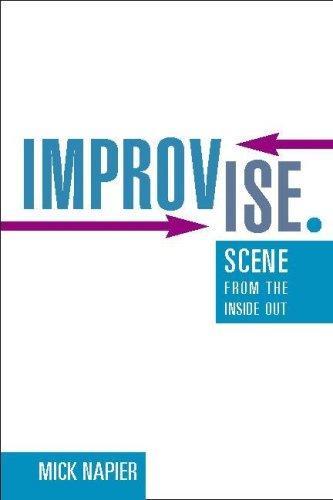
Improvise
Scene from the Inside Out
Mick Napier

The Funniest One in the Room
The Lives and Legends of Del Close
Kim Howard Johnson

The Second City Unscripted
Revolution and Revelation at the World-Famous Comedy Theater
Mike Thomas
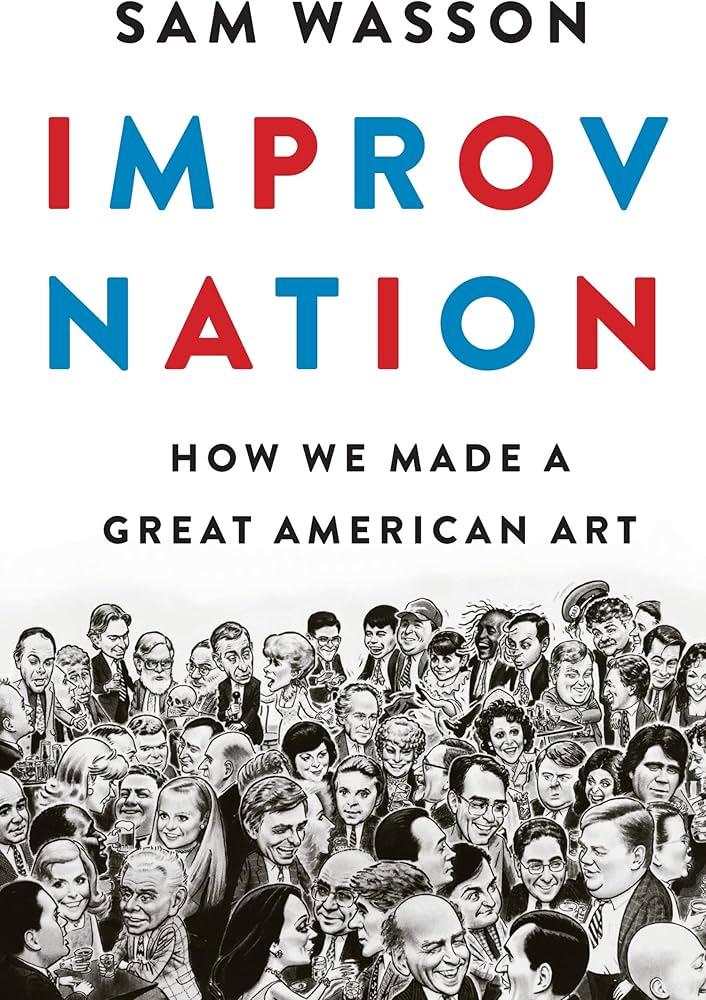
Improv Nation
How We Made a Great American Art
Sam Wasson
References
In the Archive
How to Reference This Page
The Improv Archive. (2026). Josephine Forsberg. Retrieved October 11, 2026, from https://improvarchive.org/people/josephine-forsberg
The Improv Archive. "Josephine Forsberg." The Improv Archive, 2026. https://improvarchive.org/people/josephine-forsberg.
The Improv Archive. "Josephine Forsberg." The Improv Archive, 2026, https://improvarchive.org/people/josephine-forsberg. Accessed October 11, 2026.
The Improv Archive is a systemically maintained repository. The archive itself acts as the corporate author.