Kim Howard Johnson
Kim Howard Johnson (born August 6, 1955) is an American author, actor, and improv practitioner who co-wrote Truth in Comedy: The Manual of Improvisation with Del Close and Charna Halpern, published in 1994. The book codified the Harold long-form improv structure developed at the ImprovOlympic and became the foundational pedagogical text of long-form improvisation training worldwide. Johnson is a founding member of the Baron's Barracudas, the first house team at the ImprovOlympic, and later wrote The Funniest One in the Room: The Lives and Legends of Del Close (2008), the authorized biography of the legendary improv teacher.
Johnson grew up in small-town Illinois and began his career in journalism, with his first paid writing assignment being an interview with Curly Joe DeRita of The Three Stooges. He worked in radio news before a fateful opportunity brought him to Tunisia to work on the set of Monty Python's Life of Brian, where John Cleese served as his boss. This experience launched a decades-long relationship with Monty Python that would produce multiple books including The First 280 Years of Monty Python, Monty Python from the Inside Out, and Monty Python's Tunisian Holiday.
Johnson moved to Chicago, where he lived for twelve years and became deeply involved in the city's improv scene. He studied improvisation under Del Close during the founding days of the Improv Olympic, now known as iO Theater. Johnson became a founding member of the Baron's Barracudas, the first house team at the ImprovOlympic, placing him at the very beginning of the Harold-based long-form tradition that would transform American comedy.
In 1994, Johnson co-authored Truth in Comedy: The Manual of Improvisation with Charna Halpern and Del Close. The book presented the Harold as a groundbreaking performance structure that emphasized pattern recognition, subversion of audience expectations, and the discovery of connections between seemingly unrelated scenes. Truth in Comedy became the single most influential pedagogical text in long-form improvisation, used as a core curriculum resource at improv theatres across the world. Its articulation of the principles underlying the Harold gave performers and teachers a shared vocabulary for discussing and refining long-form work.
Johnson continued his relationship with Del Close by writing The Funniest One in the Room: The Lives and Legends of Del Close, published in 2008 by Chicago Review Press. The biography documented Close's extraordinary and tumultuous life, from his early work with The Committee in San Francisco through his decades at Second City and his creation of the Harold at the ImprovOlympic. The book drew on Johnson's personal relationship with Close and extensive interviews with Close's students and collaborators.
Beyond his improv writing, Johnson has taught comedy at iO Theater in Chicago, bringing his firsthand experience with Close's methods into the classroom. He has also pursued acting for stage and screen, and his broader bibliography includes the graphic novel Superman: True Brit, the young adult novel The Dare Club: Nita (co-written with his wife Laurie Bradach), and the science fiction series The Last of the Time Police and The Return of the Time Police.
Historical Context
Johnson's involvement with the ImprovOlympic during its founding period placed him at the epicenter of one of the most significant developments in American comedy. When he studied under Del Close in the early days of the ImprovOlympic, the Harold was still being refined and the idea that improvisation could sustain complex, interconnected long-form structures was revolutionary. As a founding member of the Baron's Barracudas, Johnson participated in the earliest performances of the format that would become the standard framework for long-form improv worldwide.
His decision to document Close's methods in Truth in Comedy had consequences that extended far beyond a single book. Before its publication, the Harold existed primarily as an oral tradition, passed from Close and Halpern to their students through direct instruction. By codifying the form's principles in writing, Johnson, Halpern, and Close made the Harold accessible to performers and teachers who had no direct connection to the Chicago scene. This democratization of long-form knowledge accelerated the spread of the Harold to cities and countries that had previously practiced only short-form improvisation.
Teaching Philosophy
Johnson's approach to improv education is rooted in the belief that documenting and codifying improvisational principles serves the art form as much as performing does. His work on Truth in Comedy reflected a conviction that the Harold's underlying logic, including pattern recognition, thematic connection, and the discovery of meaning through juxtaposition, could be articulated clearly enough for self-directed study. This perspective distinguished him from teachers who believed long-form improvisation could only be transmitted through direct mentorship. His teaching at iO Theater drew on his years of observing Close's methods firsthand, emphasizing the same principles of honest performance and ensemble awareness that Close championed. Johnson has described the essence of Close's teaching as the insistence that performers pursue truth over comedy, trusting that genuine human behavior onstage produces deeper and more lasting humor than manufactured jokes.
Legacy
Johnson's authorship of Truth in Comedy and The Funniest One in the Room gave the improv community two of its most important texts. Truth in Comedy remains the most widely read introduction to long-form improvisation, and its articulation of the Harold's structure and philosophy has shaped how tens of thousands of performers understand and practice long-form improv. The book's influence extends to every major improv institution that teaches the Harold, from iO and UCB to independent theatres worldwide. The Funniest One in the Room provided the definitive biographical account of Del Close, preserving the history of one of improv's most important and complex figures for future generations. Together, these two books constitute an essential contribution to the documentation and transmission of improvisational art.
Recommended Reading
Books are ordered from the strongest direct connection outward to broader relevance.

Truth in Comedy
The Manual of Improvisation
Charna Halpern; Del Close; Kim Howard Johnson

The Funniest One in the Room
The Lives and Legends of Del Close
Kim Howard Johnson

Whose Improv Is It Anyway?
Beyond Second City
Amy E. Seham

Improv Ideas
A Book of Games and Lists
Mary Ann Kelley; Justine Jones

Long Form Improvisation and American Comedy
The Harold
Matt Fotis
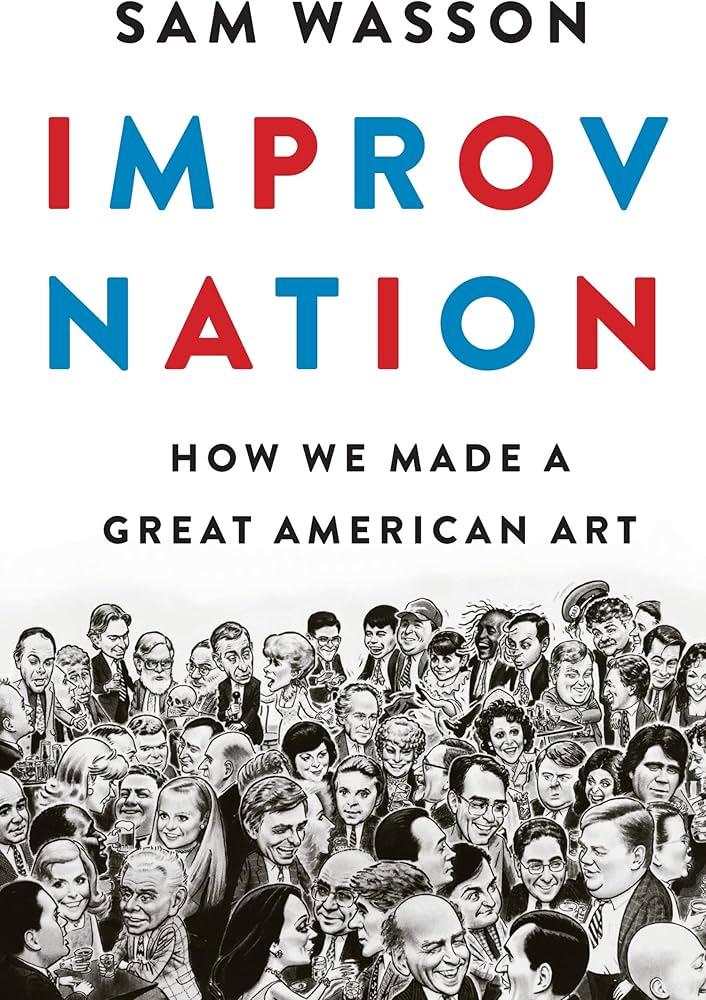
Improv Nation
How We Made a Great American Art
Sam Wasson
References
In the Archive
How to Reference This Page
The Improv Archive. (2026). Kim Howard Johnson. Retrieved October 10, 2026, from https://improvarchive.org/people/kim-howard-johnson
The Improv Archive. "Kim Howard Johnson." The Improv Archive, 2026. https://improvarchive.org/people/kim-howard-johnson.
The Improv Archive. "Kim Howard Johnson." The Improv Archive, 2026, https://improvarchive.org/people/kim-howard-johnson. Accessed October 10, 2026.
The Improv Archive is a systemically maintained repository. The archive itself acts as the corporate author.