Mike Myers
Mike Myers (born 1963) is a Canadian performer and writer whose career began in the Second City Toronto ensemble and ran through Saturday Night Live, Wayne's World, Austin Powers, and the Shrek franchise. He is one of the most commercially successful performers to emerge from the North American improv and sketch tradition, and his trajectory from Second City Toronto to global franchise stardom documents how the Canadian improv pipeline, parallel to but distinct from the Chicago lineage, produced performers capable of sustaining characters across multiple formats and decades. His foundation in ensemble improvisation shaped his character-building methods and his instinct for sustained comic personas.
Career
Myers joined the Second City Toronto touring company in 1982 at age nineteen, beginning his professional comedy training at the institution that had been operating as the Canadian branch of the Second City network since 1973. He advanced to the Second City Toronto mainstage by 1986, where he continued developing the character work and ensemble discipline that defined the institution's training. During his Toronto years he developed early versions of Wayne Campbell, the hard-rock-loving suburban teenager who would later anchor his SNL breakthrough, as well as Dieter, the pretentious host of the fictional German television program Sprockets.
In 1988 Myers relocated to Chicago to perform with the Second City mainstage there. The Chicago tenure gave him direct experience of the institution's original home and connected him to the Second City lineage in its most established form. He joined the cast of Saturday Night Live midway through the 1988-1989 season, debuting on January 21, 1989. He remained a cast member for seven seasons through 1994-1995, appearing in 122 episodes.
On SNL, Wayne Campbell debuted on October 21, 1989, and became one of the show's most popular recurring characters, evolving into a full sketch format called Wayne's World with co-star Dana Carvey. Other characters included Dieter and Linda Richman from the Coffee Talk sketch. Wayne's World was adapted into a feature film in 1992, which grossed $183 million worldwide on a $20 million budget and established Myers as a bankable film comedian outside the sketch format.
Myers departed SNL in 1995 and created the Austin Powers franchise, a spy film parody that ran across three films from 1997 to 2002, earning over $676 million across the trilogy as Myers performed both the title character and the villain Dr. Evil. In 2001 he began voicing the title character in DreamWorks' Shrek, initially recording in an American accent before re-recording with a Scottish brogue. The Shrek franchise collectively earned over $3 billion across four theatrical films and spawned additional television specials and a later continuation in Puss in Boots films. Myers's ability to sustain comic characters across decades, and across feature film franchises, demonstrated a character-building capacity rooted directly in his years of ensemble development at Second City.
Historical Context
Myers occupies a specific historical position as one of the most commercially successful products of the Canadian improv and sketch tradition. Second City Toronto, where he began his training in 1982, was part of the same franchise network as Second City Chicago but developed a distinct national identity within Canadian comedy culture. The Toronto company produced a parallel pipeline of performers and writers who fed into North American television and film, and Myers is among its most prominent graduates.
His SNL tenure coincided with a period in which the show's character-based sketch format was developing some of its most durable recurring premises. The Wayne's World sketches and their film adaptation demonstrated how a character built through ensemble improvisation at Second City could sustain itself across multiple years of television and then migrate into franchise film production. That translation from improv origins to franchise became a model that subsequent performers and producers studied.
For the archive, Myers also illustrates how the improv tradition functions across national contexts. Chicago and Toronto developed in parallel, with distinct comedy cultures but shared institutional frameworks. The performers who emerged from both cities shared training methods while reflecting different cultural comedic sensibilities.
Teaching Philosophy
Myers has not published a systematic teaching text, but his approach to character can be inferred from his practice and from the Second City tradition in which he trained. At Second City, character development is understood as an ensemble process: characters emerge through repetition, audience response, and the pressure of live performance rather than through advance planning. Myers's sustained characters, from Wayne Campbell through Austin Powers to Shrek, all show the marks of that process, beginning as sketches of behavior and physical specificity and deepening through iteration across live performance, television seasons, and eventually film.
His emphasis on specificity of voice, physical mannerism, and internal logic in comic characters reflects the core Second City training principle that a strong point of view produces stronger scenes than general relatability. The Scottish brogue he introduced for Shrek, chosen after completing the original recording, is representative of this character-first instinct: the detail that makes the character fully itself is not always the one planned in advance.
Legacy
Myers's legacy within the improv tradition is primarily the demonstration that characters built through Second City ensemble training could sustain commercial careers at the largest scale. Wayne's World, Austin Powers, and Shrek were not developed as improv performance; they were films and a franchise. But each was built on a character whose original development had occurred through the ensemble improvisation process Myers learned and practiced at Second City Toronto and Chicago.
His career also contributed to the international visibility of the Canadian improv pipeline. Second City Toronto's role in producing performers of Myers's range and commercial reach demonstrated that the franchise model had created a genuinely powerful second node in the North American improv system, and that Toronto was not simply a regional outpost of the Chicago original but a distinct comedy institution with its own productive lineage.
For the archive, Myers serves as one of the clearest examples of how ensemble improv training, accumulated over years of character work in live performance, translates directly into the sustained character-performance capacity that franchise entertainment requires.
Early Life and Training
Myers was born on May 25, 1963, in Scarborough, Ontario, Canada. His parents were British immigrants from Liverpool, England, who arrived in Canada in 1956. His father Eric worked in insurance and his mother Alice was an office supervisor and Royal Air Force veteran. Myers grew up in a household with strong British comedy influences and began pursuing performance professionally immediately after high school.
Personal Life
Myers was born on May 25, 1963, in Scarborough, Ontario, Canada, and grew up in a household influenced by his parents' British background. He married Robin Ruzan in 1993; they divorced in 2006. He married Kelly Tisdale in 2010; they have three children.
Companies and Organizations
Associated venues and institutional relationships currently documented in the archive.
Recommended Reading
Books are ordered from the strongest direct connection outward to broader relevance.

Improv Yourself
Business Spontaneity at the Speed of Thought
Joseph A. Keefe

The Art of Chicago Improv
Short Cuts to Long-Form Improvisation
Rob Kozlowski

The Improv Handbook
The Ultimate Guide to Improvising in Comedy, Theatre, and Beyond
Tom Salinsky; Deborah Frances-White

Theatrical Improvisation
Short Form, Long Form, and Sketch-Based Improv
Jeanne Leep

The Second City Unscripted
Revolution and Revelation at the World-Famous Comedy Theater
Mike Thomas
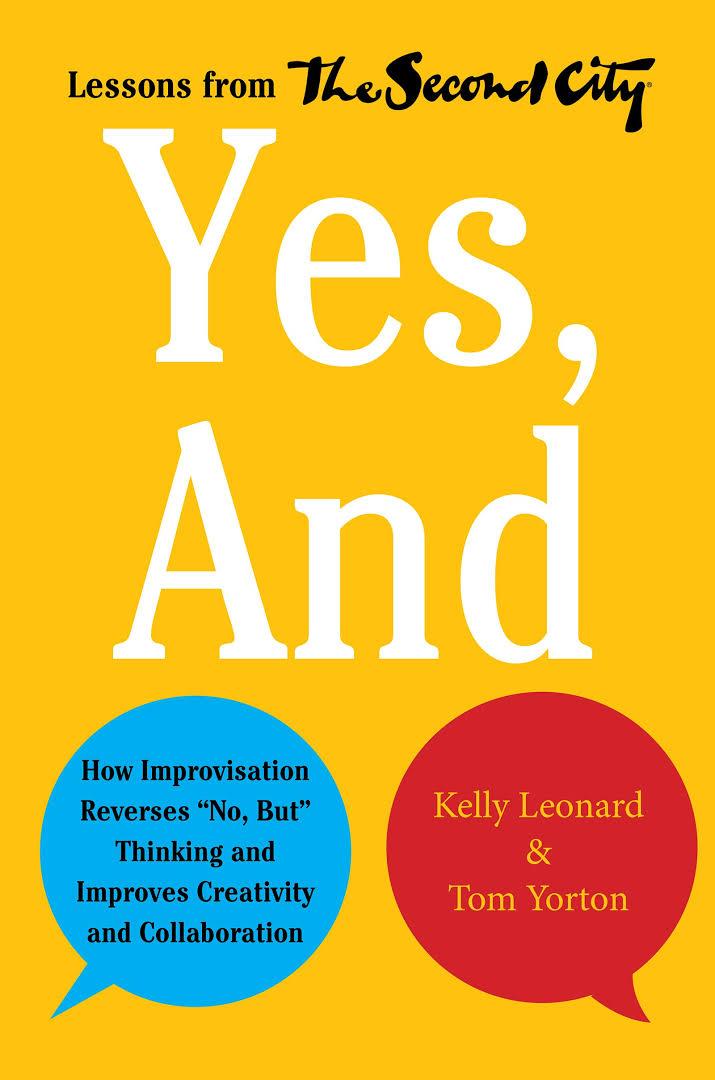
Yes, And
How Improvisation Reverses No, But Thinking and Improves Creativity and Collaboration
Kelly Leonard; Tom Yorton
References
In the Archive
How to Reference This Page
The Improv Archive. (2026). Mike Myers. Retrieved September 29, 2026, from https://improvarchive.org/people/mike-myers
The Improv Archive. "Mike Myers." The Improv Archive, 2026. https://improvarchive.org/people/mike-myers.
The Improv Archive. "Mike Myers." The Improv Archive, 2026, https://improvarchive.org/people/mike-myers. Accessed September 29, 2026.
The Improv Archive is a systemically maintained repository. The archive itself acts as the corporate author.