Randy Dixon is an American improviser, director, author, and educator who co-founded Unexpected Productions in Seattle in 1983 and served as its artistic director from 1988 to 2021, making him one of the longest-serving artistic directors in American improv history. He holds a B.F.A. in Drama from Seattle University and a Master's degree in Mythological Studies with an emphasis in Jungian Depth Psychology. He authored Being Present: Spontaneous Storytelling and the Art of Improvisation and has originated numerous improv formats including Spoken, Campfire, Afterlife, and Found Objects.
Dixon holds a B.F.A. in Drama from Seattle University and a Master's degree in Mythological Studies with an emphasis in Jungian Depth Psychology, an unusual academic background that has informed his distinctive approach to improvisation.
In 1983, Dixon co-founded Unexpected Productions in Seattle, one of the Pacific Northwest's earliest dedicated improv companies. He became the company's artistic director in 1988 and served in that role until 2021, a tenure of over three decades that made him one of the longest-serving artistic leaders of any American improv theater. Under his direction, Unexpected Productions became the anchor institution of Seattle's improv scene, performing at the Market Theater in Pike Place Market.
Dixon's approach to improvisation was shaped by his studies and friendships with three of the form's most influential figures: Del Close, the creator of the Harold; Paul Sills, the co-founder of The Second City; and Keith Johnstone, the author of Impro. This unusual combination of influences, drawing from both the Chicago and Calgary traditions, gave Dixon a synthesized perspective on improvisation that informed both his teaching and his format development.
He originated numerous improv formats including Spoken, Campfire, Afterlife, Blank Slate, Black Eyed Blonde, Found Objects, Threads, and Half and Half. His book Being Present: Spontaneous Storytelling and the Art of Improvisation has been translated into German, Slovene, Swedish, and Japanese.
Outside of Unexpected Productions, Dixon has written plays, served on the board of Theater Puget Sound and Seattle Sketchfest, sat on the editorial board of the Salt Journal (a journal of myth, religion, psychology, and ideas), and served on the advisory board of Foolproof: the Northwest Comedy Festival. He continues to teach workshops internationally, including at venues such as The Hideout Theatre in Austin and dasTAG in Austria.
Historical Context
Dixon's founding of Unexpected Productions in 1983 established one of the earliest dedicated improv companies in the Pacific Northwest, at a time when improvisation was primarily centered in Chicago, Toronto, and Calgary. Seattle's improv scene grew around Unexpected Productions, and Dixon's thirty-three-year tenure as artistic director provided the institutional stability that allowed the city to develop its own improv traditions.
His personal connections to Del Close, Paul Sills, and Keith Johnstone gave him access to three distinct improvisational lineages that are often treated as separate or competing traditions. Close's long-form work at iO, Sills's theater games derived from his mother Viola Spolin, and Johnstone's spontaneity-focused Theatresports approach each offered different answers to the question of what improvisation is for. Dixon's synthesis of these influences, filtered through his Jungian studies, produced a uniquely integrative approach to the art form.
Teaching Philosophy
Dixon's teaching draws on his Jungian studies and his relationships with Close, Sills, and Johnstone to create an approach that emphasizes storytelling as a mythological and psychological practice. His concept of being present connects the improviser's moment-to-moment awareness to deeper currents of narrative archetype and spontaneous creation, treating improvisation not merely as a performance technique but as a practice of attentive engagement with the unconscious processes that generate story. Dixon's documented workshop practice at iO Chicago and in independent teaching contexts applies this Jungian framework to exercises that push performers toward emotional authenticity and archetypal character work. His association with Paul Sills, who taught him story-based narrative games, and with Keith Johnstone, whose spontaneity and status work is central to Dixon's vocabulary, means that his approach synthesizes three of the most significant lineages in North American improvisation: the Chicago narrative tradition, the Johnstonian spontaneity tradition, and the Jungian depth psychology tradition.
In practical classroom terms, this manifests as an insistence that the most powerful improv scenes are those where performers are genuinely changed by what happens between them, rather than demonstrating pre-formed characters or executing predetermined gags. Dixon is known for using guided narrative exercises and reflective discussion to help performers access the emotional and psychological dimensions of character that game-based training sometimes deprioritizes. His teaching has shaped performers across decades of iO's ensemble culture, and his influence is visible in the strand of Chicago long-form work most concerned with psychological depth and narrative resonance.
Legacy
Dixon's legacy centers on Unexpected Productions and its role in establishing Seattle as a significant city in American improvisation. The company's longevity under his artistic direction demonstrated that improv theaters outside the traditional Chicago and New York centers could build sustainable institutions with distinct artistic identities. His thirty-three years as artistic director provided the continuity of vision that allowed Unexpected Productions to develop a recognizable performance aesthetic rooted in storytelling, psychological depth, and narrative improvisation.
Being Present has reached an international readership through its translations into four languages, carrying Dixon's integrative approach to improvisation to practitioners in Europe and Asia. The book's emphasis on spontaneous storytelling as a practice of presence and mythological engagement distinguishes it from the more technique-focused manuals that dominate improv publishing. His format innovations, including Found Objects and Campfire, have been performed by companies worldwide, contributing to the expanding repertoire of long-form improvisational structures available to the global improv community.
His international workshop career, spanning venues from Austin to Austria, has disseminated the Seattle-based approach he developed over decades, demonstrating that regional American improv traditions have value and distinctiveness beyond the dominant Chicago and New York schools.
Companies and Organizations
Associated venues and institutional relationships currently documented in the archive.
Recommended Reading
Books are ordered from the strongest direct connection outward to broader relevance.

The Funniest One in the Room
The Lives and Legends of Del Close
Kim Howard Johnson

The Improv Handbook
The Ultimate Guide to Improvising in Comedy, Theatre, and Beyond
Tom Salinsky; Deborah Frances-White

Applied Improvisation
Leading, Collaborating, and Creating Beyond the Theatre
Theresa Robbins Dudeck; Caitlin McClure

The Art of Chicago Improv
Short Cuts to Long-Form Improvisation
Rob Kozlowski
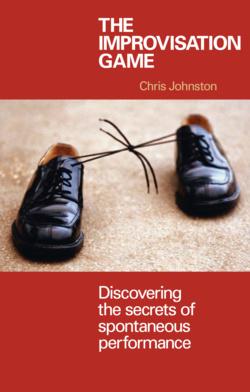
The Improvisation Game
Discovering the Secrets of Spontaneous Performance
Chris Johnston

Impro
Improvisation and the Theatre
Keith Johnstone
References
In the Archive
How to Reference This Page
The Improv Archive. (2026). Randy Dixon. Retrieved September 28, 2026, from https://improvarchive.org/people/randy-dixon
The Improv Archive. "Randy Dixon." The Improv Archive, 2026. https://improvarchive.org/people/randy-dixon.
The Improv Archive. "Randy Dixon." The Improv Archive, 2026, https://improvarchive.org/people/randy-dixon. Accessed September 28, 2026.
The Improv Archive is a systemically maintained repository. The archive itself acts as the corporate author.