Arm Zapper
Arm Zapper is a physical energiser in which players generate and rapidly release tension through sharp arm movements. The exercise wakes up the body, raises group energy, and serves as a quick reset between more intensive activities.
Structure
Setup
Players stand in the space with enough room to extend both arms freely.
Progression
Players extend both arms outward or overhead and hold tension throughout the body. On the facilitator's cue, they snap both arms downward sharply, releasing all tension at once with an audible sound or breath.
The sequence can be repeated in waves: build tension slowly, hold, then release on a shared count. Variations include shaking the arms rapidly before the release, or passing the release around a circle.
Conclusion
End after three to five rounds, or when the group's energy has shifted. The exercise is typically used as a two-minute reset rather than an extended activity.
How to Teach It
How to Explain It
"Reach both arms out and fill them with tension. Hold it. Hold it. Now: zap it out, all at once."
Objectives
This exercise quickly raises physical and vocal energy and provides a shared experience of synchronized group release.
Common Pitfalls
Players often release before the group does, reducing the collective impact. Build toward a synchronized release: the unified snap of a whole group is more energising than individual releases.
Worth Reading
See all books →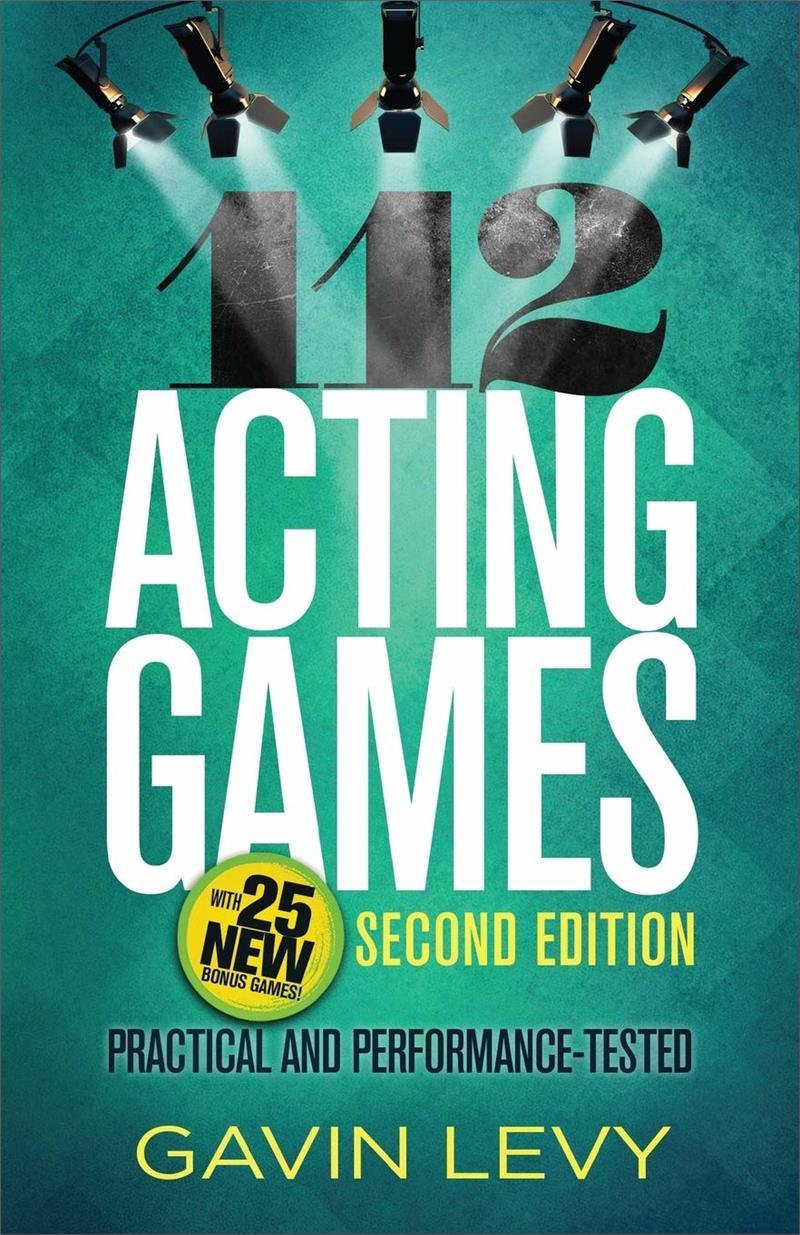
112 Acting Games
Gavin Levy

The Art of Making Sh!t Up
Using the Principles of Improv to Become an Unstoppable Powerhouse
Norm LaViolette; Bob Melley

Action Theater
The Improvisation of Presence
Ruth Zaporah

Group Improvisation
The Manual of Ensemble Improv Games
Peter Campbell Gwinn; Charna Halpern

Pirate Robot Ninja
An Improv Fable
Billy Merritt; Will Hines

Improvised Theatre and the Autism Spectrum
A Practical Guide
Gary Kramer; Richie Ploesch
Related Exercises
Arm Levitation
Arm Levitation is a relaxation and body-awareness exercise in which players press their arm against a wall or solid surface for thirty seconds, then step away and allow the arm to rise on its own. The involuntary lifting sensation demonstrates the nervous system's response to sustained isometric tension and provides a concrete experience of release and surrender.
Zulu
Zulu (1) is an energetic warm-up exercise in which players perform a series of synchronized group movements and chants, building collective rhythm and physical energy. The call-and-response format creates strong group cohesion and raises the energy level quickly. The exercise is commonly used as a pre-show warm-up to unite the ensemble.
Slappy Face
Slappy Face is a physical warm-up exercise in which players gently tap their own faces and bodies to wake up their physical awareness and increase blood flow, preparing the body and voice for performance through self-administered percussive stimulation.
Zip Zap Boing
Zip Zap Boing is a circle energy game in which players pass focus using three distinct actions: "zip" sends it to the next person, "zap" sends it across the circle, and "boing" reverses direction. The exercise builds focus, quick decision-making, and physical responsiveness. It is one of the most widely used warm-up games in improv worldwide.
Squeezer
Squeezer is a circle exercise in which players stand holding hands and pass a squeeze around the group as quickly as possible. The squeeze can change direction or split into multiple signals. The exercise builds physical connectivity, group rhythm, and nonverbal communication skills.
The Lineage
Explore the schools and structures that influenced or evolved from Arm Zapper.
112 Acting Games (Levy)
How to Reference This Page
The Improv Archive. (2026). Arm Zapper. Retrieved September 28, 2026, from https://improvarchive.org/exercises/arm-zapper
The Improv Archive. "Arm Zapper." The Improv Archive, 2026. https://improvarchive.org/exercises/arm-zapper.
The Improv Archive. "Arm Zapper." The Improv Archive, 2026, https://improvarchive.org/exercises/arm-zapper. Accessed September 28, 2026.
The Improv Archive is a systemically maintained repository. The archive itself acts as the corporate author.