Zulu
Zulu (1) is an energetic warm-up exercise in which players perform a series of synchronized group movements and chants, building collective rhythm and physical energy. The call-and-response format creates strong group cohesion and raises the energy level quickly. The exercise is commonly used as a pre-show warm-up to unite the ensemble.
Structure
Setup
- Players form a circle or stand in a group configuration.
- The facilitator leads a series of call-and-response patterns: a phrase or movement, followed by the group's collective repetition.
- No preparation is required from participants.
The Call-and-Response Structure
- The facilitator calls a phrase, a movement, or both simultaneously.
- The group echoes immediately, matching the physical and vocal quality as precisely as possible.
- The facilitator varies the energy: some calls quiet and careful, others loud and explosive.
- The sequence builds toward maximum collective energy, then may release or repeat.
What It Trains
- Ensemble cohesion: the group learns to move and sound as one unit.
- Commitment to group energy: players who hold back lower the collective ceiling.
- Listening and responsiveness: the group must track the facilitator precisely to echo cleanly.
Pre-Show Use
- As a pre-performance warm-up, the exercise builds the physical and vocal openness the ensemble needs to perform.
- The collective energy peak at the end of the exercise leaves the group ready to begin.
Variations
- One player leads rather than the facilitator, transferring leadership around the group.
- The call-and-response becomes competitive: the leader tries to trick the group into repeating something they should not.
How to Teach It
How to Explain It
"I lead, you follow. Immediately and completely. When I say it or do it, you say it or do it. We build together. Hold nothing back."
Common Notes
- The exercise only works when the full group commits. A single player holding back lowers the collective energy ceiling.
- The facilitator should model the full range of energy the exercise will reach. A leader who stays low does not give the group permission to go high.
- The final high-energy burst should be genuinely collective: every voice and body fully committed simultaneously.
Common Pitfalls
- Players echo more quietly or less fully than the leader's call. Match or exceed the leader's commitment.
- The facilitator runs the exercise at a single energy level without variation.
- The group peaks but the exercise ends without a clear landing, leaving the energy dispersed rather than channeled.
Variations
Known variants of Zulu with distinct rules or structure.
Zulu (2)
Zulu (2) is a variation of the Zulu warm-up that introduces additional movement patterns, vocal layers, or competitive elements to the base exercise. The increased complexity demands sharper focus and coordination from the group. The variation keeps the familiar exercise fresh for experienced ensembles.
Worth Reading
See all books →
Legislative Theatre
Using Performance to Make Politics
Augusto Boal

Business Improv
Experiential Learning Exercises to Train Employees
Val Gee

Putting Improv to Work
Spontaneous Performance for Leadership, Learning, and Life
Greg Hohn
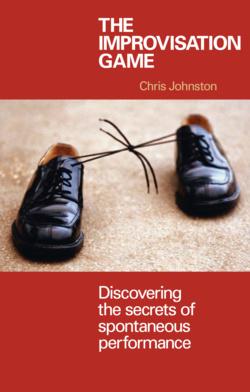
The Improvisation Game
Discovering the Secrets of Spontaneous Performance
Chris Johnston

Playing Along
37 Group Learning Activities Borrowed from Improvisational Theater
Izzy Gesell
Theater Games for Rehearsal
Viola Spolin
Related Exercises
Energy 1-10
Energy 1-10 is a calibration exercise in which a facilitator calls out a number from one to ten and performers immediately adjust their physical energy level to match. One is nearly motionless; ten is maximum sustainable physical exertion. The exercise trains rapid energy responsiveness, the ability to modulate physical commitment on command, and ensemble awareness of shared energy levels during warm-up.
Primal Screams
Primal Screams is a vocal and physical warm-up exercise in which players release tension through full-body vocalization. Participants produce loud, uninhibited sounds, shedding self-consciousness and activating the vocal instrument before a rehearsal or performance.
Barney
Barney is an energy and movement warm-up exercise in which players adopt an exaggerated, lumbering physical character and interact with the group through simple, playful commands. The exercise asks participants to embody a large, slow, friendly creature (often described as a dinosaur or monster) and move through the space with maximum physical commitment and minimum self-consciousness. The inherent silliness of the character lowers inhibitions quickly, making Barney effective as an early warm-up for groups that are new to physical work or uncomfortable with large physical choices. The exercise builds comfort with exaggerated movement, vocal projection, and the willingness to look ridiculous in front of others, all foundational skills for improv performance.
Flock Dance
Flock Dance is a group movement exercise in which all players move through the space together like a murmuration of birds or a school of fish, with leadership passing organically from player to player without spoken negotiation. Whoever is at the front of the group leads; as the group turns, a different player takes the front and assumes leadership automatically. The exercise trains ensemble sensitivity, the ability to lead and follow simultaneously, and group responsiveness without verbal coordination.
Shriner's Warm-Up
Shriner's Warm-Up is an energetic full-body warm-up in which players perform a series of exaggerated physical and vocal exercises in unison, building group energy and breaking down self-consciousness through shared silliness.
Volcano
Volcano is a group warm-up exercise in which the ensemble builds collective vocal and physical energy gradually from silence to a full explosive release, then returns to silence. The exercise calibrates the group's shared energy and teaches performers to build and release intensity together as a single unit. It functions as an energizer and ensemble-synchronization exercise.
How to Reference This Page
The Improv Archive. (2026). Zulu. Retrieved September 28, 2026, from https://improvarchive.org/exercises/zulu
The Improv Archive. "Zulu." The Improv Archive, 2026. https://improvarchive.org/exercises/zulu.
The Improv Archive. "Zulu." The Improv Archive, 2026, https://improvarchive.org/exercises/zulu. Accessed September 28, 2026.
The Improv Archive is a systemically maintained repository. The archive itself acts as the corporate author.