Character Mirror Circle
Character Mirror Circle is an exercise in which players stand in a circle and one player steps to the center, adopting a character through physicality and voice. The rest of the circle mirrors the character as precisely as possible. The exercise sharpens observational skills and teaches performers to read and reproduce physical character details.
Structure
Setup
Players stand in a large circle facing inward. One player steps to the center.
Phase 1: Physical Character Emergence
The center player begins moving, making simple adjustments to their normal physicality: a slight hunch, a widened stance, arms that swing differently, a quality of weight in the hips. They are not performing a character - they are discovering one through movement. No speaking yet.
Phase 2: Circle Mirrors
The circle watches and begins to mirror the center player's physicality as accurately as possible. Every shift in posture, weight, gesture, and pace is reflected by all players in the circle simultaneously. The center player looks out and sees their character reflected in 8-15 bodies.
Phase 3: Voice and Character
The center player adds voice - a word, a phrase, a characteristic sound - and the circle mirrors that too. The character should now have both a physical and vocal quality.
Phase 4: Observation and Rotation
The facilitator briefly freezes the scene and asks observers: "What do you know about this character from how they're moving?" Then the center player returns to the circle and a new player steps in.
Variation: Slow-Motion Mirroring
Center player moves in extreme slow motion, requiring the circle to track micro-movements with total attention.
Variation: Character Scene
After establishing a character in the circle, the center player initiates a scene with a partner while the rest of the circle watches - and the partner brings what they observed in the mirror.
How to Teach It
How to Explain It
"One person in the center. Start moving - let a character emerge through how your body wants to move. Circle: mirror everything as accurately as you can. When you add voice, we mirror that too. You're giving us your character; we give it back to you."
Why It Matters
Character Mirror Circle teaches physical character construction through observation and embodiment rather than intellectual invention. Players in the circle develop the ability to read detailed physical information - the angle of a shoulder, the quality of a breath, the pace of a turn - and reproduce it accurately. This sharpens the observational precision needed for strong ensemble work and for reading scene partners in detail. For the center player, seeing their character reflected in multiple bodies simultaneously reveals what actually communicates - the details the circle has correctly captured are the ones with real expressive clarity.
Common Coaching Notes
- Center players should discover, not perform. The exercise fails if the center player arrives with a pre-made character and simply "shows" it. Guide them: "Let the movement find you. What does your body want to do?"
- Circle mirroring should be silent and focused. Any self-conscious laughter or commentary breaks the exercise's observational quality. Establish seriousness before starting.
- The circle sees the character before the center player fully knows it. This is worth naming: the group sometimes perceives character qualities the performer hasn't consciously identified yet.
- Ask sharp observation questions. "What status does this character occupy?" "What do they want?" "What are they afraid of?" These questions teach the circle to read physical information analytically.
Debrief Questions
- What did seeing your character reflected back tell you?
- What detail did the circle pick up that surprised you?
- How does this change how you think about building character physically?
Worth Reading
See all books →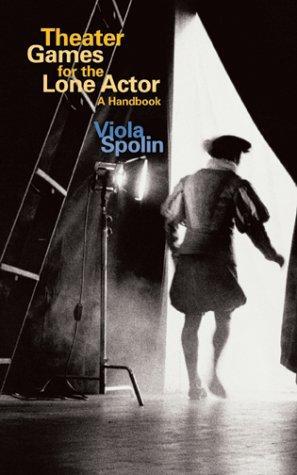
Theater Games for the Lone Actor
Viola Spolin

Mask Improvisation for Actor Training and Performance
the compelling image
Sears A. Eldredge
Theater Games for Rehearsal
Viola Spolin
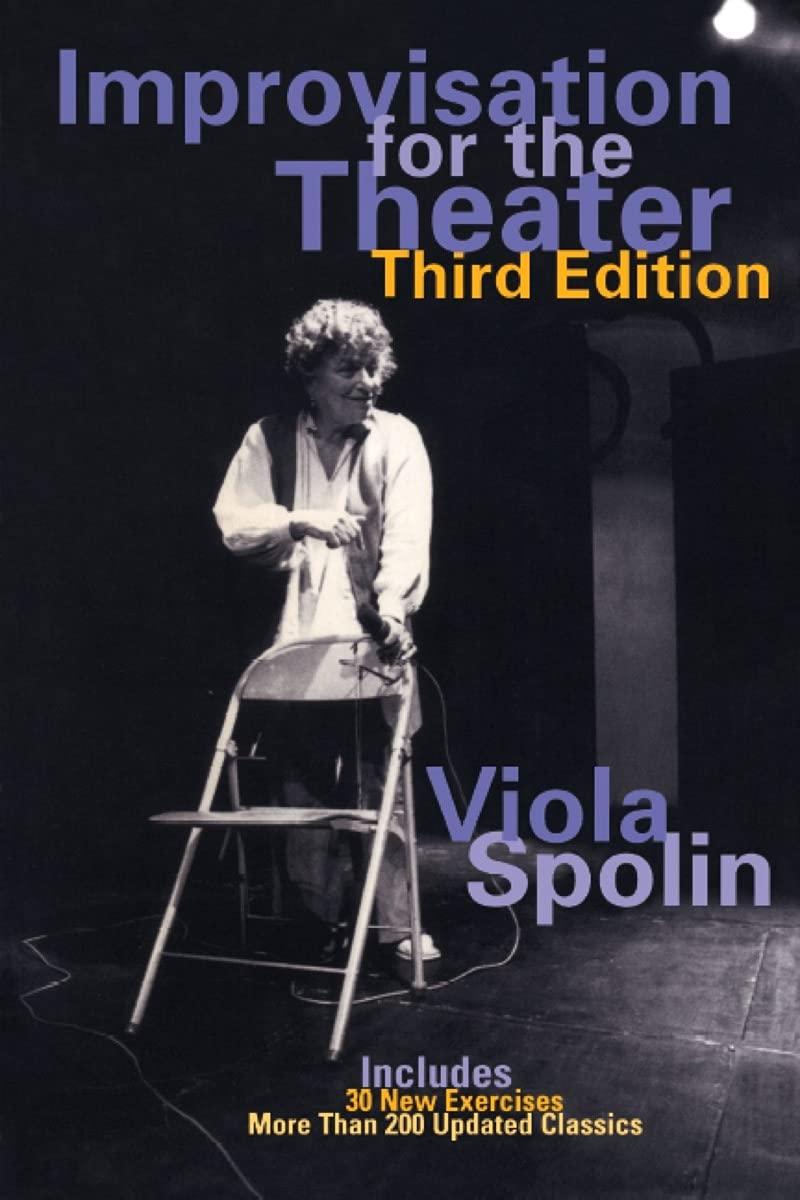
Improvisation for the Theater
A Handbook of Teaching and Directing Techniques
Viola Spolin

Group Improvisation
The Manual of Ensemble Improv Games
Peter Campbell Gwinn; Charna Halpern
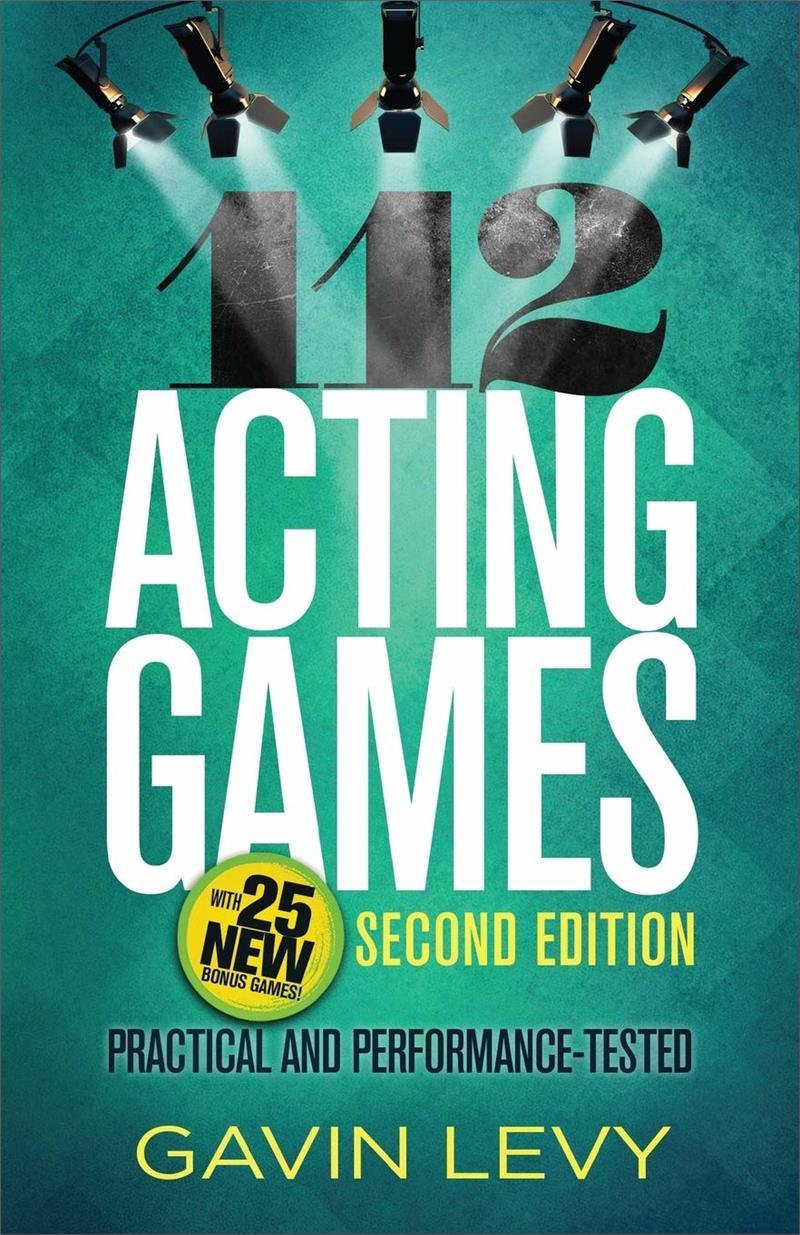
112 Acting Games
Gavin Levy
Related Exercises
Mirror
Mirror is a foundational partner exercise in which one player moves and the other copies with as much precision as possible. The basic challenge is simple to see and simple to feel: both players must stay connected closely enough that the movement reads as one shared action instead of one person chasing the other. Across published training material, Mirror is used to build concentration, body awareness, responsiveness, and nonverbal listening.
Gesture Circle
Gesture Circle is a movement and listening exercise in which each player in a circle creates an abstract, personally meaningful gesture, teaches it to the player beside them, and receives a gesture from the other side. The exercise passes gestures around the circle so that each gesture travels from person to person, being received, held, and handed on. The exercise develops listening through the body, the capacity for genuine repetition rather than imitation, and a quality of full physical attention to another person's movement.
Imitate
Imitate is an observation exercise in which players study and reproduce the specific physical mannerisms, vocal patterns, and behavioral habits of another person in the group. The exercise sharpens observational detail and builds the ability to embody external characteristics with precision. Close observation reveals how much personality is communicated through small, habitual movements: the way someone shifts weight, the rhythm of their speech, the angle of their head when listening. Imitate develops the skill set needed for character work grounded in real-world observation rather than invention.
Making Faces
Making Faces is a warm-up exercise in which players practice exaggerated facial expressions, cycling through emotions, mirroring a partner, or responding to facilitator prompts. The exercise loosens inhibition around physical expressiveness and helps performers discover how facial choices communicate character and emotion instantly. Many performers rely primarily on voice and words; Making Faces redirects attention to the face as a primary communication instrument. The exercise serves as an accessible entry point for physical comedy work and character creation.
Line Mirror
Line Mirror is a physical awareness and synchronization exercise in which participants stand in a line facing a partner line and mirror each other's movements simultaneously, without a designated leader. Unlike circle or pair mirror exercises, the line format creates additional complexity by requiring each participant to maintain synchronization with an immediate partner while also being observable by and influencing the rest of the line.
Mimic
Mimic is an exercise in which one player closely copies the movements, vocal patterns, or behavior of another. The imitating player must observe precisely and reproduce physical details without exaggeration or commentary. The exercise sharpens observation skills and teaches performers how closely physical behavior communicates character.
How to Reference This Page
The Improv Archive. (2026). Character Mirror Circle. Retrieved September 28, 2026, from https://improvarchive.org/exercises/character-mirror-circle
The Improv Archive. "Character Mirror Circle." The Improv Archive, 2026. https://improvarchive.org/exercises/character-mirror-circle.
The Improv Archive. "Character Mirror Circle." The Improv Archive, 2026, https://improvarchive.org/exercises/character-mirror-circle. Accessed September 28, 2026.
The Improv Archive is a systemically maintained repository. The archive itself acts as the corporate author.