Line Mirror
Line Mirror is a physical awareness and synchronization exercise in which participants stand in a line facing a partner line and mirror each other's movements simultaneously, without a designated leader. Unlike circle or pair mirror exercises, the line format creates additional complexity by requiring each participant to maintain synchronization with an immediate partner while also being observable by and influencing the rest of the line.
Structure
Setup
Participants divide into two groups of equal size and form two parallel lines facing each other, close enough for comfortable observation. Each participant faces a specific partner in the opposing line.
Progression
Both lines begin moving simultaneously, with no designated initiator or follower. Movement passes through the exercise as a shared negotiation rather than a directed lead: each pair maintains synchronization while also being influenced by the movement happening down the line.
The facilitator may direct the exercise to specific body levels (floor, seated, standing), specific movement qualities (slow, sharp, continuous), or ask the two lines to shift the entire line sideways while maintaining synchronization.
Conclusion
The exercise ends when the lines have sustained synchronized movement without a designated leader for an extended period, demonstrating a genuinely shared physical conversation.
How to Teach It
Objectives
Line Mirror targets physical listening, the release of individual control, and the experience of moving within a group agreement rather than leading or following a single person. The line format adds the complexity of peripheral awareness and the influence of ensemble movement beyond the immediate partner.
How to Explain It
"There is no leader -- both lines are moving at the same time. You're not following anyone, and you're not asking anyone to follow you. You're in a conversation. Make it easy for your partner to be with you."
Scaffolding
Begin with stationary pairs before introducing the line format. The line adds the dimension of lateral synchronization and peripheral awareness; build to that only after pairs have established the basic mutual listening of the mirror exercise.
Common Pitfalls
Participants frequently default to a hidden leader-follower dynamic even when instructed otherwise, with one partner initiating slightly ahead and the other tracking. Coach the group to move at a speed and with a clarity that makes the leadership question genuinely ambiguous.
Worth Reading
See all books →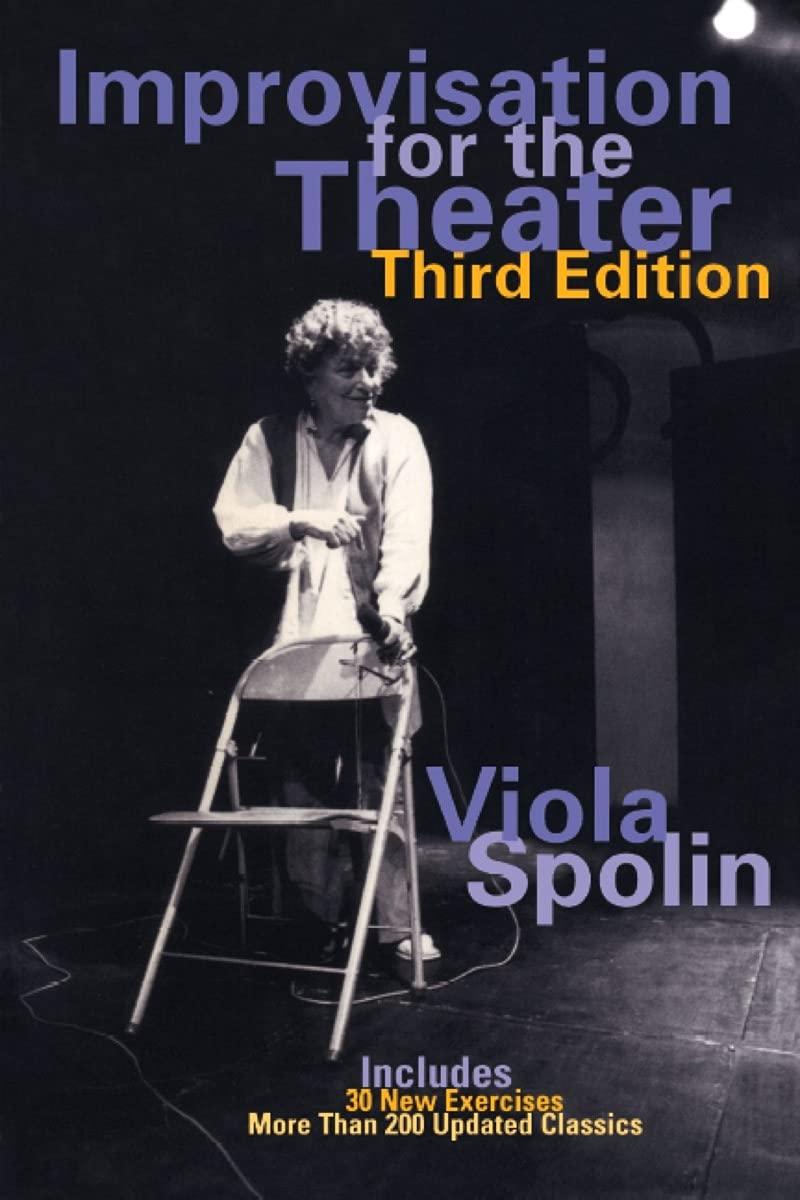
Improvisation for the Theater
A Handbook of Teaching and Directing Techniques
Viola Spolin
Theater Games for the Lone Actor
Viola Spolin
Theater Games for Rehearsal
Viola Spolin

Action Theater
The Improvisation of Presence
Ruth Zaporah

Business Improv
Experiential Learning Exercises to Train Employees
Val Gee

Mask Improvisation for Actor Training and Performance
the compelling image
Sears A. Eldredge
Related Exercises
Mirror
Mirror is a foundational partner exercise in which one player moves and the other copies with as much precision as possible. The basic challenge is simple to see and simple to feel: both players must stay connected closely enough that the movement reads as one shared action instead of one person chasing the other. Across published training material, Mirror is used to build concentration, body awareness, responsiveness, and nonverbal listening.
Mirror/Follow the Follower
Mirror Follow the Follower is an applied improv mirror exercise in which two participants begin by mirroring each other without a designated leader, then allow leadership to shift organically as the mirror deepens. The exercise trains simultaneous attention and response, the release of the need to control group direction, and the experience of shared movement that arises when both participants follow rather than either one leading.
Copy Dance
Copy Dance is a mirroring exercise in which one player dances freely while a partner replicates their movements as precisely as possible. The exercise builds physical attunement, partner listening through the body, and comfort with being both mover and follower. It is used as a physicality warm-up and as a partner connection exercise early in rehearsal.
Synchronised Dance
Synchronised Dance is an exercise in which players attempt to move and dance together without choreography or a designated leader. The group must develop collective movement awareness, finding shared rhythm and motion through mutual observation and response.
Character Mirror Circle
Character Mirror Circle is an exercise in which players stand in a circle and one player steps to the center, adopting a character through physicality and voice. The rest of the circle mirrors the character as precisely as possible. The exercise sharpens observational skills and teaches performers to read and reproduce physical character details.
Drawing the Line
Drawing the Line is an applied improvisation exercise in which participants explore personal and group boundaries through physical and verbal activities. Using the stage space and structured improvisational scenarios, participants develop practical awareness of where their own comfort limits are, how to name and communicate those limits clearly, and how to recognize and respect the limits of others. The exercise is used in ensemble-building, trust work, and applied settings focused on consent and professional boundary-setting.
How to Reference This Page
The Improv Archive. (2026). Line Mirror. Retrieved September 28, 2026, from https://improvarchive.org/exercises/line-mirror
The Improv Archive. "Line Mirror." The Improv Archive, 2026. https://improvarchive.org/exercises/line-mirror.
The Improv Archive. "Line Mirror." The Improv Archive, 2026, https://improvarchive.org/exercises/line-mirror. Accessed September 28, 2026.
The Improv Archive is a systemically maintained repository. The archive itself acts as the corporate author.