Click Bang You're Dead
Click Bang You're Dead is a fast-paced elimination exercise in which players face off in quick-draw style, pointing and calling out at each other. Timing, commitment, and full physical investment determine the outcome of each duel. The game raises energy and sharpens reaction speed in a playful, competitive format commonly used as a pre-show or mid-rehearsal energizer.
Structure
Setup
All players stand in a circle. Two players are called to the center and stand back-to-back.
The Duel
The group or coach counts aloud to three. On three, both players spin to face each other, point with a finger gun, and call out "bang" (or "click-bang-you're dead"). The player whose point and call land first, or with the most committed physical certainty, is declared the winner. The other player is eliminated and steps back into the circle.
Continuation
The winner calls out the name of another player from the circle, who steps forward to duel. This continues until one player remains. In large groups, multiple simultaneous duels can run in parallel to speed the round.
Variations
Some groups allow eliminated players to return via a challenge round, or run team-based elimination where the last player standing wins a point for their side. A designated judge can resolve disputes rather than leaving the call to the group.
How to Teach It
Objectives
Click Bang You're Dead targets commitment, instantaneous physical decision-making, and the ability to bring full energy to a single clear moment. It functions as an energizer rather than a skill-building drill, raising group energy quickly.
How to Explain It
"We're doing a quick-draw duel. Two people stand back-to-back. On three, you spin, point, and call it. First one to commit wins. Hesitation is a loss. Go."
Scaffolding
Demonstrate a full duel with a volunteer before releasing the group into it. The key concept to establish first is that commitment determines the winner, not physical speed. A player who points decisively is always ahead of one who points uncertainly a moment earlier.
Common Sidocoaching
- "Commit completely."
- "Don't think -- react."
- "One sound, one point, all in."
Common Pitfalls
Arguments about who was genuinely faster are the most common source of momentum loss. Establish before beginning that a designated judge (the coach, a neutral observer, or the circle by quick vote) resolves all disputes. Players who try to game the timing by cheating the count should be gently redirected: the exercise rewards commitment, not speed, and the group notices the difference.
Worth Reading
See all books →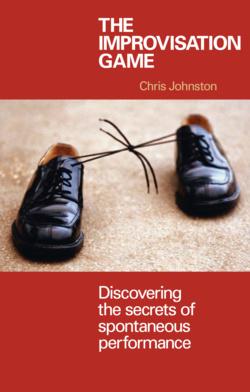
The Improvisation Game
Discovering the Secrets of Spontaneous Performance
Chris Johnston

Acting Through Improv
Improv Through Theatresports
Lynda Belt; Rebecca Stockley

Business Improv
Experiential Learning Exercises to Train Employees
Val Gee
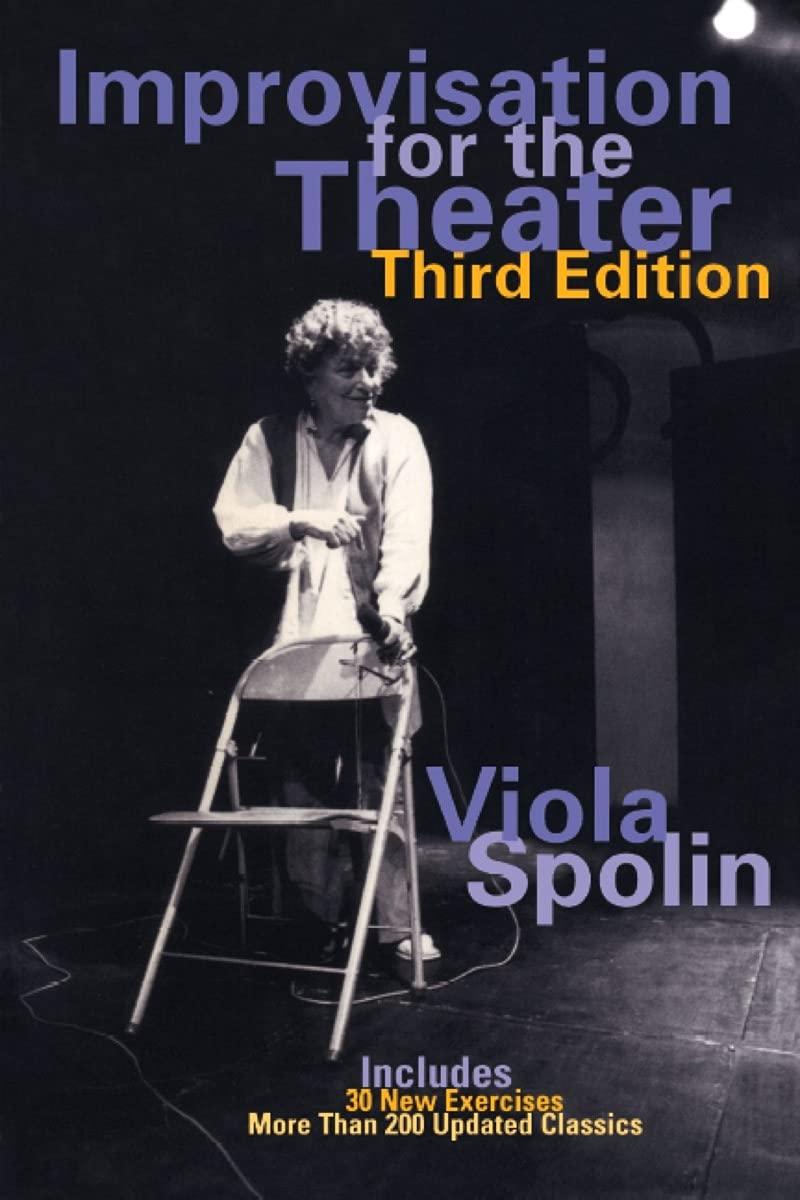
Improvisation for the Theater
A Handbook of Teaching and Directing Techniques
Viola Spolin

Drama Games and Improvs
Games for the Classroom and Beyond
Justine Jones; Mary Ann Kelley
Theater Games for Rehearsal
Viola Spolin
Related Exercises
Rock Paper Scissors
Rock Paper Scissors is a warm-up exercise that uses the familiar hand game as a platform for building ensemble energy, celebrating failure, and practicing commitment. In improv contexts, the game is typically played with escalating stakes, exaggerated reactions, and progressive variations that transform a simple competition into a group bonding experience.
You
You is a circle exercise in which players point at another person and say "you," passing focus around the group with clear eye contact and decisive gestures. The exercise trains the habit of making specific, committed choices about who receives an offer. It builds directness and the ability to give and receive attention cleanly.
Kick the Can Marco
Kick the Can Marco is a physical energy and tag-based warm-up exercise that combines the playground mechanics of Kick the Can and Marco Polo into a group improv warm-up. Participants play a guided chase-and-find game in which one or more players navigate toward others using verbal or auditory cues, building presence, listening, and physical ensemble awareness within a playful competitive frame.
How to Reference This Page
The Improv Archive. (2026). Click Bang You're Dead. Retrieved September 28, 2026, from https://improvarchive.org/exercises/click-bang-youre-dead
The Improv Archive. "Click Bang You're Dead." The Improv Archive, 2026. https://improvarchive.org/exercises/click-bang-youre-dead.
The Improv Archive. "Click Bang You're Dead." The Improv Archive, 2026, https://improvarchive.org/exercises/click-bang-youre-dead. Accessed September 28, 2026.
The Improv Archive is a systemically maintained repository. The archive itself acts as the corporate author.