Do It As If is an applied improvisation exercise in which participants perform a task "as if" they were in a particular emotional state, physical context, or character role. The exercise demonstrates concretely how framing, mindset, and context change behavior, communication, and perception. By performing the same activity in multiple different "as if" frames, participants experience firsthand the degree to which internal state and contextual assumption shape external behavior.
Structure
Setup
Participants are given a neutral task to perform: walking across a room, greeting someone, leading a short discussion, or completing a simple activity. The task itself is ordinary and repeatable.
The As If Frames
The facilitator assigns frames through which the task is performed:
- Emotional states: as if rushing to meet a deadline, as if in a state of deep contentment, as if afraid of being caught.
- Social contexts: as if at a formal ceremony, as if in a casual backyard gathering, as if being observed by a superior.
- Character roles: as if you are the most confident person in the room, as if you are a visitor from a very different culture, as if you have been awake for forty hours.
Participants perform the same task through each frame in sequence.
Observation and Comparison
The group observes each iteration and names what changed: pace, posture, word choice, tone, relationship to other participants, use of space.
How to Teach It
Objectives
Do It As If targets the understanding that behavior is not fixed but contextually shaped, and develops the practical skill of consciously adopting a frame to produce different behavioral outcomes. It is both an awareness exercise and a rehearsal technique.
How to Explain It
"We're going to do [task] several times. Each time, you're doing exactly the same thing -- but you're doing it as if [frame]. Don't perform the frame. Just be in it and do the task."
Common Pitfalls
Participants often perform the frame (exaggerating the emotional state to demonstrate it) rather than inhabiting it and performing the task through it. Redirect: "Don't show us the emotion. Be in it. What does the task look like from inside it?"
In Applied Settings
Learning Objectives
Do It As If makes the relationship between internal framing and external behavior immediately observable. Participants who intellectually understand that mindset affects performance gain direct behavioral evidence of the mechanism. This is relevant to any professional development context that involves leadership presence, communication effectiveness, customer interaction, or performance under pressure.
Workplace Transfer
The exercise transfers to situations where participants need to consciously adopt a productive frame: leading a difficult meeting as if interested rather than defensive, having a feedback conversation as if genuinely curious rather than evaluating, presenting to a skeptical audience as if they are already won over rather than adversarial. The as-if technique is a practical self-management tool that participants can apply independently after the workshop.
Facilitation Context
The exercise is used in leadership development, communication training, customer service development, presentation skills workshops, and any applied program where the connection between mindset and behavior is a development target.
Debrief Framing
Facilitators ask: "What changed when you shifted the frame? What did you notice in your body? In your voice? In how you related to the people around you? What frames do you already bring to specific situations at work? Are those frames serving you?"
Skills Developed
Worth Reading
See all books →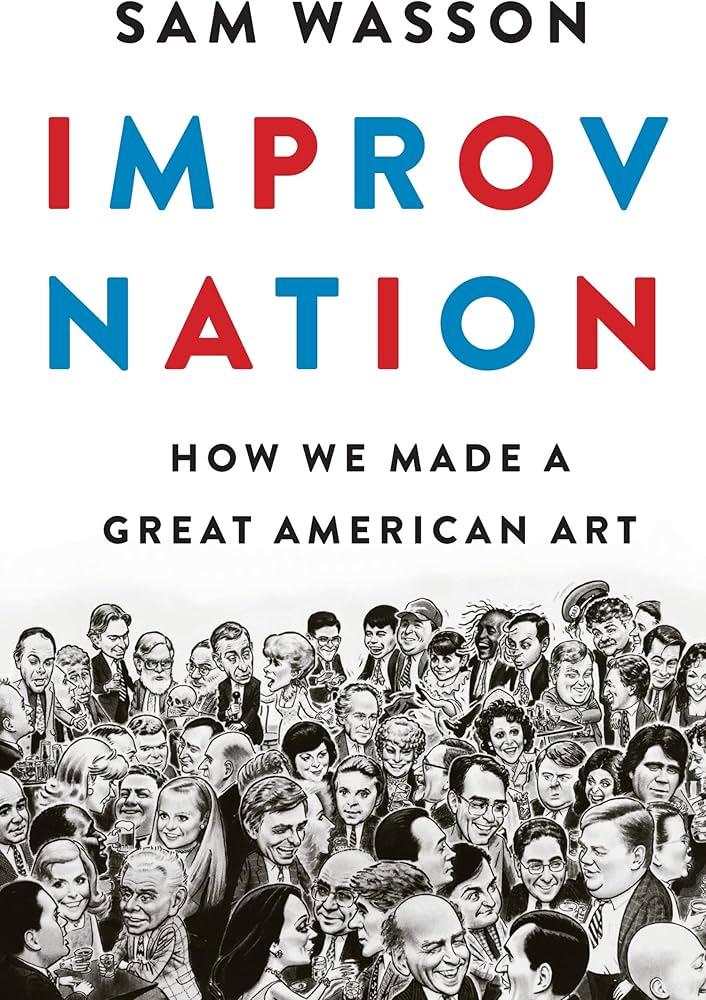
Improv Nation
How We Made a Great American Art
Sam Wasson

The Applied Improvisation Mindset
Tools for Transforming Individuals, Organizations, and Communities
Theresa Robbins Dudeck; Caitlin McClure
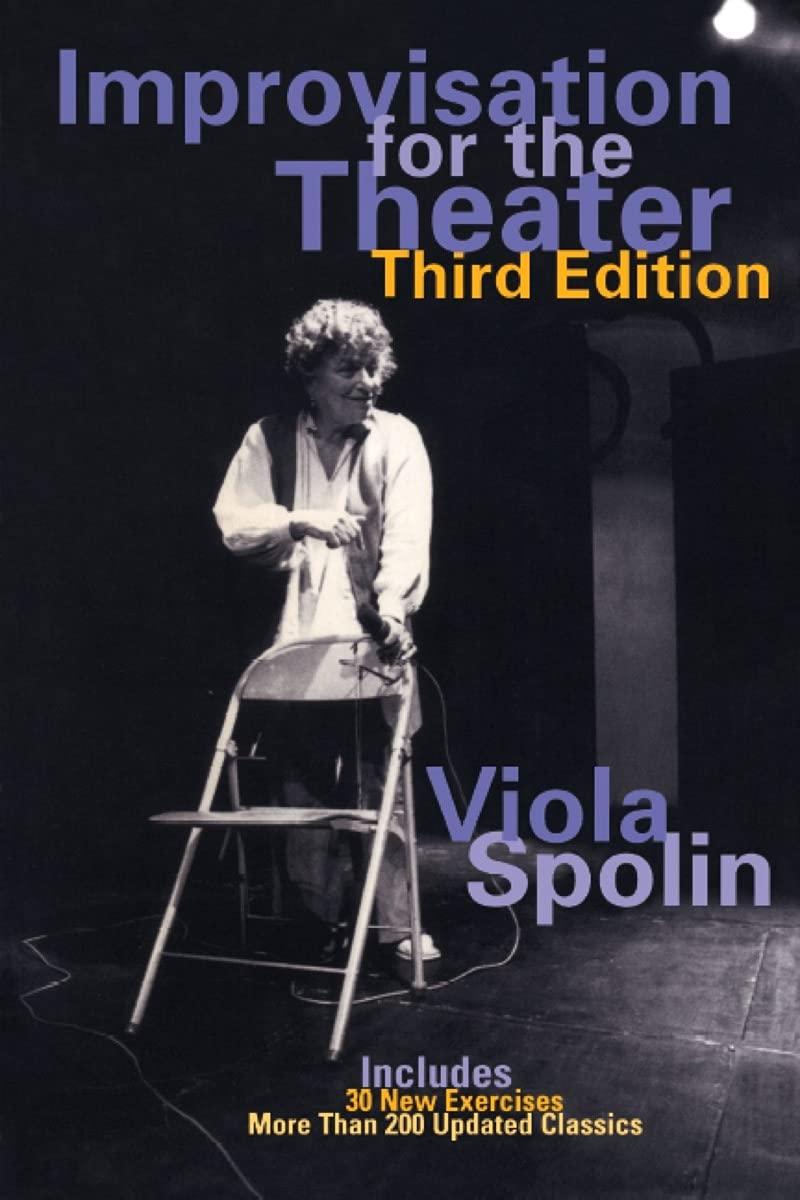
Improvisation for the Theater
A Handbook of Teaching and Directing Techniques
Viola Spolin

Theatrical Improvisation, Consciousness, and Cognition
Clayton D. Drinko
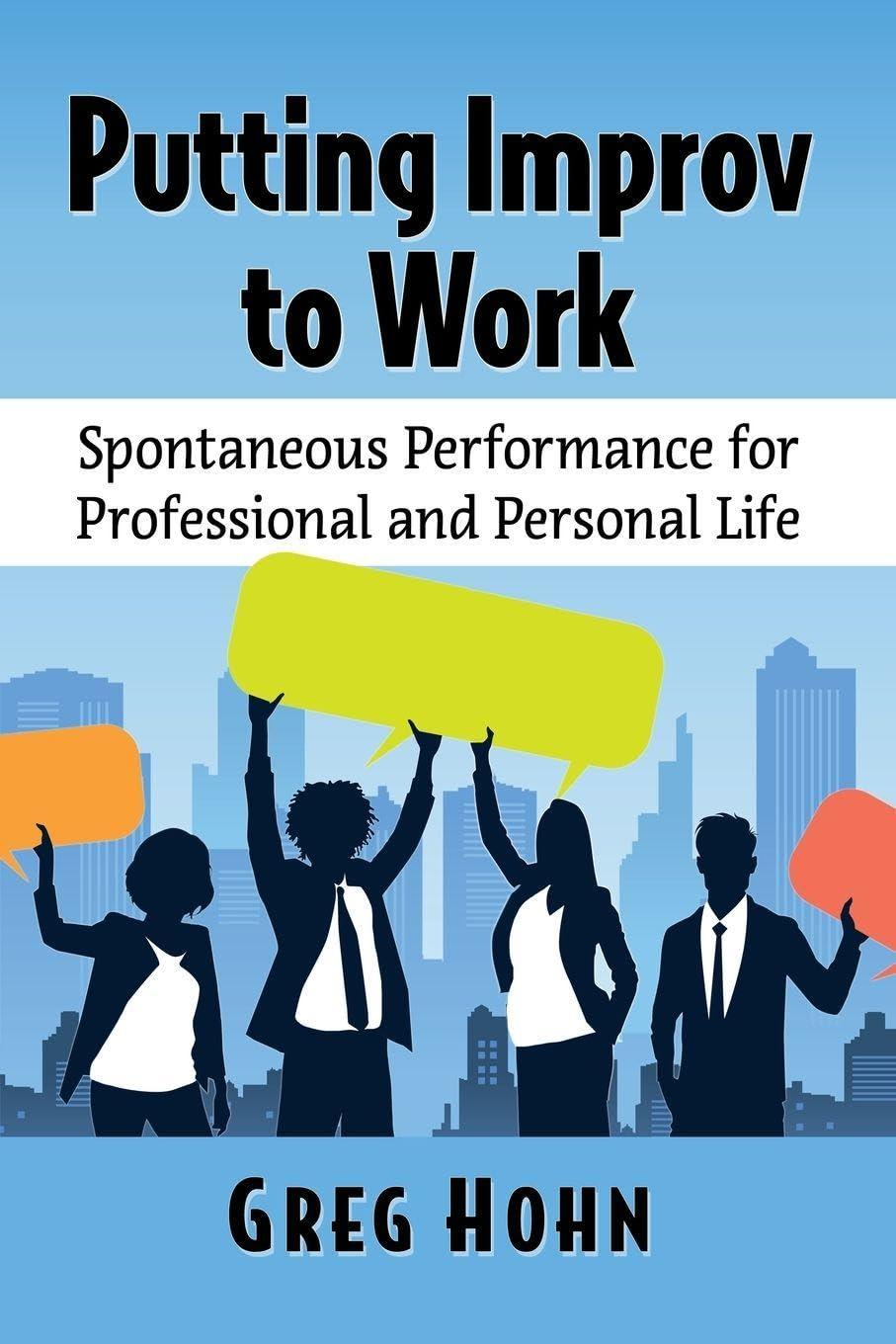
Putting Improv to Work
Spontaneous Performance for Leadership, Learning, and Life
Greg Hohn

The Young Actor's Book of Improvisation
Dramatic Situations
Sandra Caruso; Susan Kosoff
Related Exercises
As You Will
As You Will is a character immersion exercise in which actors spend an extended period inhabiting their characters in an unstructured social environment. As documented by Gavin Levy in 112 Acting Games, players arrive already in character and interact freely with each other for twenty to sixty minutes without any scripted dialogue, predetermined blocking, or audience. The exercise strips away the technical demands of performance (projection, line learning, blocking) and replaces them with pure character exploration and responsive interaction. By removing the pressure of performance, As You Will allows actors to discover new dimensions of their characters through spontaneous encounter. The exercise is primarily used in conjunction with a scripted production, where it serves as a rehearsal tool for deepening character work and ensemble connection.
Emotional Option
Emotional Option is an applied improv exercise in which participants hold a paired conversation while a facilitator calls out different emotions at intervals. The pairs must continue their conversation in the register of the newly assigned emotion without stopping or acknowledging the transition. The exercise trains rapid emotional adaptability, the awareness that emotional state is a choice, and the practical skill of continuing a conversation under shifting emotional pressure.
Motivation
Motivation is an applied improv exercise that explores the distinction between intrinsic and extrinsic motivation by having participants play characters or engage in tasks driven by different types of motivational fuel. The exercise reveals how motivation quality affects group behavior, creative engagement, and collaborative generosity -- making the difference between performed participation and genuine contribution visible and discussable.
Self-Awareness: Identify Emotions
Self-Awareness: Identify Emotions is an applied improvisation exercise in which participants practice recognizing and naming their own emotional states in real time. Drawing on emotional intelligence research, the exercise uses improvisational techniques to develop the foundational skill of emotional self-awareness.
It’s Tuesday
This exercise, attributed to Keith Johnstone, trains the skill of overaccepting: treating any mundane statement as if it carries enormous emotional significance. A simple declaration about the day of the week becomes the catalyst for an entire scene when performers invest it with meaning through their reactions. The exercise demonstrates that the emotional weight of any line depends entirely on how the performers receive it and that ordinary language can generate extraordinary scenes when played with full commitment.
Radical Relationality
Radical Relationality is an applied improvisation exercise from The Applied Improvisation Mindset in which participants explore deep interconnection through physical and verbal practices. The exercise challenges individualistic defaults by making visible the ways in which each person's actions, choices, and presence shape and are shaped by everyone else in the group.
The Lineage
Explore the schools and structures that influenced or evolved from Do It As If.
The Applied Improvisation Mindset (Dudeck & McClure)
How to Reference This Page
The Improv Archive. (2026). Do It As If. Retrieved September 28, 2026, from https://improvarchive.org/exercises/do-it-as-if
The Improv Archive. "Do It As If." The Improv Archive, 2026. https://improvarchive.org/exercises/do-it-as-if.
The Improv Archive. "Do It As If." The Improv Archive, 2026, https://improvarchive.org/exercises/do-it-as-if. Accessed September 28, 2026.
The Improv Archive is a systemically maintained repository. The archive itself acts as the corporate author.