As You Will
As You Will is a character immersion exercise in which actors spend an extended period inhabiting their characters in an unstructured social environment. As documented by Gavin Levy in 112 Acting Games, players arrive already in character and interact freely with each other for twenty to sixty minutes without any scripted dialogue, predetermined blocking, or audience. The exercise strips away the technical demands of performance (projection, line learning, blocking) and replaces them with pure character exploration and responsive interaction. By removing the pressure of performance, As You Will allows actors to discover new dimensions of their characters through spontaneous encounter. The exercise is primarily used in conjunction with a scripted production, where it serves as a rehearsal tool for deepening character work and ensemble connection.
Structure
The facilitator informs the group about the exercise in advance, giving players time to prepare their character choices. On the day of the exercise, each player enters the room already in character. No one breaks character to ask questions or receive instructions.
Players mingle and interact freely in the space. There are no assigned scenes, no designated partners, and no time markers beyond the overall session length. Characters discover each other organically and pursue interactions based on their motivations, relationships, and circumstances.
The interactions should remain relevant to the world of the play or scenario. Characters make choices consistent with their given circumstances rather than introducing anachronistic or irrelevant elements. The exercise is pure improvisation within the established fictional world.
The facilitator observes without intervening, noting discoveries, relationship dynamics, and character behaviors that emerge. The exercise concludes when the facilitator calls time, typically after twenty to sixty minutes depending on the session length and the group's engagement.
How to Teach It
How to Explain It
"For the next [time period], you are your character. Not performing them, not explaining them. Just being them in this space, doing whatever they would do. If they would read, read. If they would wander, wander. If they would talk to someone, talk to someone. There is no scene to play. Just be the person."
As You Will is most effective when used alongside a specific production or character-building unit. The exercise requires characters with enough definition to sustain extended interaction, making it less suitable for completely spontaneous use with new characters.
Give advance notice so players can prepare. The preparation is not about scripting dialogue but about understanding the character well enough to respond authentically to any situation. Coach players to ask themselves: "How does this character move? Where is the center of gravity? How does this character feel right now? Where has this character just come from?"
The lack of audience is a feature, not a limitation. Without the pressure of being watched, actors often access a freedom and authenticity they cannot reach during formal rehearsal or performance. Levy notes that one student experienced a breakthrough when she realized she was "communicating and listening without worrying about remembering lines," discovering that freedom from text opened new dimensions of her performance.
A common failure mode occurs when players break character to check in with the facilitator or negotiate with scene partners. Establish the rule firmly: once the exercise begins, all communication happens in character. Questions, confusion, and uncertainty must be navigated from within the character's perspective.
For younger or less experienced groups, simplify the exercise by having players come in as famous people or fictional characters of their choosing rather than characters from a specific text. This lowers the preparation barrier while still developing the core skills of sustained character commitment and responsive interaction.
After the exercise, facilitate a discussion about discoveries. Ask what players learned about their characters, whether any "eureka moments" occurred, and how the experience of interacting without technical constraints differed from formal rehearsal.
Worth Reading
See all books →
Creating Improvised Theatre
Tools, Techniques, and Theories
Mark Jane

Mask Improvisation for Actor Training and Performance
the compelling image
Sears A. Eldredge

Improv Comedy (20th Anniversary Edition)
Andy Goldberg
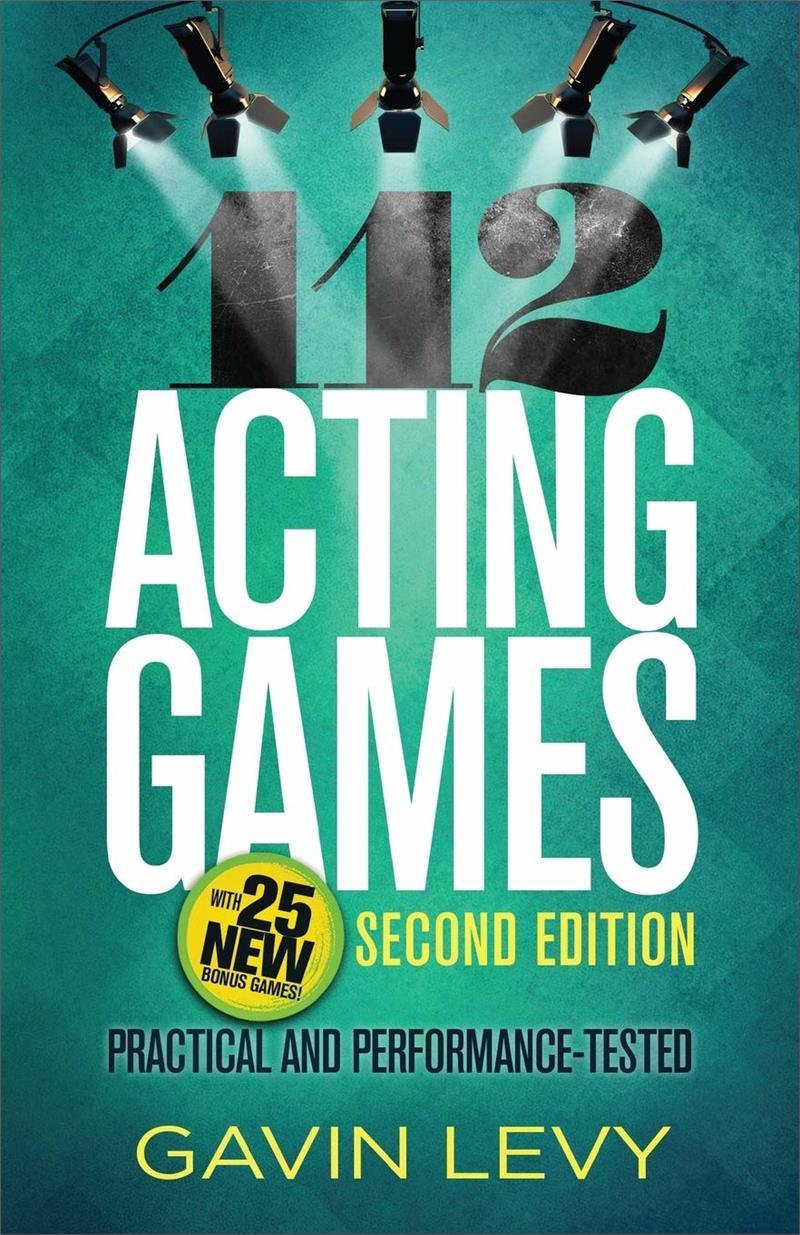
112 Acting Games
Gavin Levy
Improv for Actors
Dan Diggles
Improvisation for the Theater
A Handbook of Teaching and Directing Techniques
Viola Spolin
Related Exercises
Mr so and So
Mr. So-and-So is a hybrid game and exercise in which one performer introduces a character -- "Mr. So-and-So" -- by physicalized description and behavioral endowment, and other performers must immediately embody and play that character according to the introduction. The exercise develops the ability to rapidly translate a described character into full physical and behavioral embodiment, and trains the group's capacity to all play the same character simultaneously with consistency and specificity.
You
You is a circle exercise in which players point at another person and say "you," passing focus around the group with clear eye contact and decisive gestures. The exercise trains the habit of making specific, committed choices about who receives an offer. It builds directness and the ability to give and receive attention cleanly.
Play With
Play With is a scene exercise in which performers are directed to explore and heighten whatever elements have already emerged in a scene rather than driving toward a predetermined outcome. The coaching directive -- "play with it" -- asks players to treat each established detail, character behavior, or game pattern as material to revisit, expand, and discover rather than move past. The exercise trains the improv muscle of finding satisfaction in the present moment of a scene.
Continuing Emotions
Continuing Emotions is a scene game in which performers cycle through a series of emotional states at the direction of a caller. Each emotional shift must be justified within the scene's reality rather than simply displayed, with characters finding a reason to feel the new state given what has just happened. The game trains emotional range, commitment, and the ability to sustain scene logic through rapid change.
Character / Scene Walkabout
Character/Scene Walkabout is an exercise in which performers walk through the space and, on a signal, immediately enter a scene with whoever is nearest. The random pairing and instant commitment prevent over-planning. The exercise builds comfort with initiating scenes with any partner and develops quick character choices.
The Lineage
Explore the schools and structures that influenced or evolved from As You Will.
112 Acting Games (Levy)
How to Reference This Page
The Improv Archive. (2026). As You Will. Retrieved September 28, 2026, from https://improvarchive.org/exercises/as-you-will
The Improv Archive. "As You Will." The Improv Archive, 2026. https://improvarchive.org/exercises/as-you-will.
The Improv Archive. "As You Will." The Improv Archive, 2026, https://improvarchive.org/exercises/as-you-will. Accessed September 28, 2026.
The Improv Archive is a systemically maintained repository. The archive itself acts as the corporate author.