Do You like Your Neighbour?
Do You Like Your Neighbour? is a seat-swapping game in which one player stands in the center and asks a seated player whether they like their neighbor. If the answer is yes, the neighbors swap seats with two other players while the center player tries to take a seat. If the answer is no, the center player asks what type of person they prefer, and everyone matching that description must swap seats simultaneously, again giving the center player a chance to sit down.
Structure
Setup
All players sit in chairs arranged in a circle. One player stands in the center.
The Question
The center player approaches any seated player and asks: "Do you like your neighbour?" The seated player answers yes or no.
Yes Response
If the answer is yes, the seated player's two immediate neighbors must leave their seats and find new seats elsewhere in the circle. During the scramble, the center player attempts to sit down in any vacated seat. Whoever is left without a seat becomes the new center player.
No Response
If the answer is no, the center player asks: "What kind of person would you prefer?" The seated player names a characteristic (e.g., "people who have traveled abroad," "people who like dogs," "people who are wearing glasses"). Everyone who fits that description must immediately leave their seat and find a new one. The center player and the original sitter both try to claim seats in the scramble.
Conclusion
The game runs for ten to fifteen minutes or until energy begins to plateau.
How to Teach It
Objectives
Do You Like Your Neighbour? targets physical energy, spontaneous self-disclosure, and playful community building. It is used as an energizing warm-up and as a light disclosure exercise that surfaces surprising commonalities within a group.
How to Explain It
"One person stands in the center. I'll ask you if you like your neighbours. Say yes and they have to move; say no and tell us what kind of person you'd prefer, and anyone who fits has to move. The person in the middle is trying to steal a seat each time."
Common Pitfalls
Players sometimes answer yes every time to avoid thinking of a category, which makes the game repetitive. Encourage no answers and creative category choices. Players who struggle to find a seat because of mobility considerations can be given priority seating rules or accommodated through a modified version.
Worth Reading
See all books →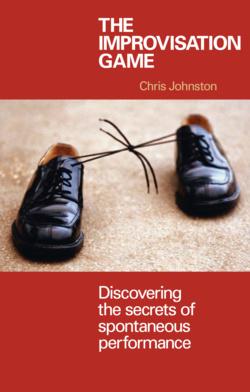
The Improvisation Game
Discovering the Secrets of Spontaneous Performance
Chris Johnston

Acting Through Improv
Improv Through Theatresports
Lynda Belt; Rebecca Stockley
Theater Games for Rehearsal
Viola Spolin

Drama Games and Improvs
Games for the Classroom and Beyond
Justine Jones; Mary Ann Kelley

Impro for Storytellers
Keith Johnstone
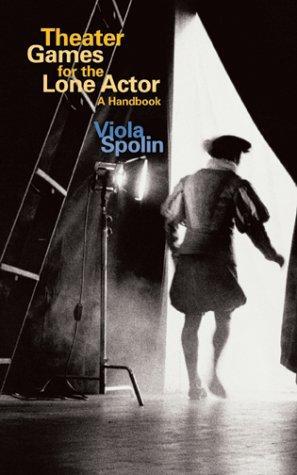
Theater Games for the Lone Actor
Viola Spolin
Related Exercises
Fish Sticks
Fish Sticks is a circle exercise in which players ask simple "Do you ... ?" questions while everyone tracks their own answers by lowering fingers. The round quickly reveals shared experiences, differences inside the group, and how honestly participants are listening to the question being asked.
You
You is a circle exercise in which players point at another person and say "you," passing focus around the group with clear eye contact and decisive gestures. The exercise trains the habit of making specific, committed choices about who receives an offer. It builds directness and the ability to give and receive attention cleanly.
Predator/Defender
Predator Defender is an applied improvisation exercise from Putting Improv to Work in which each player secretly chooses one person as their predator and another as their defender. On the signal to move, everyone must keep their defender between themselves and their predator at all times, creating a dynamic, self-organizing system of constant movement.
Anyone Who
Anyone Who is a high-energy chair-based warm-up exercise in which players sit in a circle with one fewer seat than participants. The person left standing moves to the center and calls out a statement beginning with "Anyone who..." followed by a trait, experience, or preference. Everyone to whom the statement applies must leave their seat and find a new one, while the caller also scrambles for a seat. The last player left standing becomes the new caller. The exercise energizes the room, breaks down social barriers, and reveals shared experiences across the group. It functions as both a physical warm-up and a group-bonding exercise, making it particularly effective at the start of rehearsals, workshops, and applied improv sessions where participants may not know each other well.
How to Reference This Page
The Improv Archive. (2026). Do You like Your Neighbour?. Retrieved September 29, 2026, from https://improvarchive.org/exercises/do-you-like-your-neighbour
The Improv Archive. "Do You like Your Neighbour?." The Improv Archive, 2026. https://improvarchive.org/exercises/do-you-like-your-neighbour.
The Improv Archive. "Do You like Your Neighbour?." The Improv Archive, 2026, https://improvarchive.org/exercises/do-you-like-your-neighbour. Accessed September 29, 2026.
The Improv Archive is a systemically maintained repository. The archive itself acts as the corporate author.