Don't Think of the Color Black!
Don't Think of the Color Black! is a focus exercise that demonstrates the impossibility of suppressing a thought once it has been named. Players attempt to clear their minds of a specified image or concept -- the color black -- and immediately discover that the instruction to avoid thinking of it guarantees they will. The exercise is used to introduce discussions about attention, mental focus, and the paradoxical nature of thought suppression.
Structure
The Instruction
The facilitator asks all participants to close their eyes or soften their gaze and follow a single instruction: for the next thirty seconds, do not think about the color black. Do not let the image of anything black enter your mind.
The Experience
Participants attempt to follow the instruction and immediately discover that it is impossible. The instruction itself generates the thought it prohibits. After thirty seconds the facilitator asks participants to open their eyes and share what happened.
Discussion
The facilitator opens a short discussion: what happened when the instruction was given? Why? What does this tell us about how attention works? What happens in rehearsal or performance when a performer is told not to do something?
Application
The exercise concludes with a redirect: instead of instructing what not to do, the facilitator introduces the alternative principle -- what to focus on rather than what to avoid. Participants practice the positive frame.
How to Teach It
Objectives
Don't Think of the Color Black targets the understanding that attention is drawn toward what is named rather than repelled from it. This principle has direct applications in coaching, scene direction, teaching, and performance: directing attention toward the desired action rather than away from the undesired one produces better results.
How to Explain It
"I have one instruction for you. Close your eyes. Do not think about the color black. Ready? Go."
Pedagogical Purpose
The exercise is used primarily as an introduction to positive instruction in coaching and teaching. The follow-up lesson is: when coaching, say what you want rather than what you don't want. "Focus on your partner's eyes" works; "don't look at the floor" doesn't. This principle applies across teaching, leadership, parenting, and communication.
Common Pitfalls
The exercise is most effective when brief and followed immediately by the positive-frame lesson. Extended discussion of the psychology of suppression loses the practical application. Keep the exercise short and move quickly to the redirect.
Worth Reading
See all books →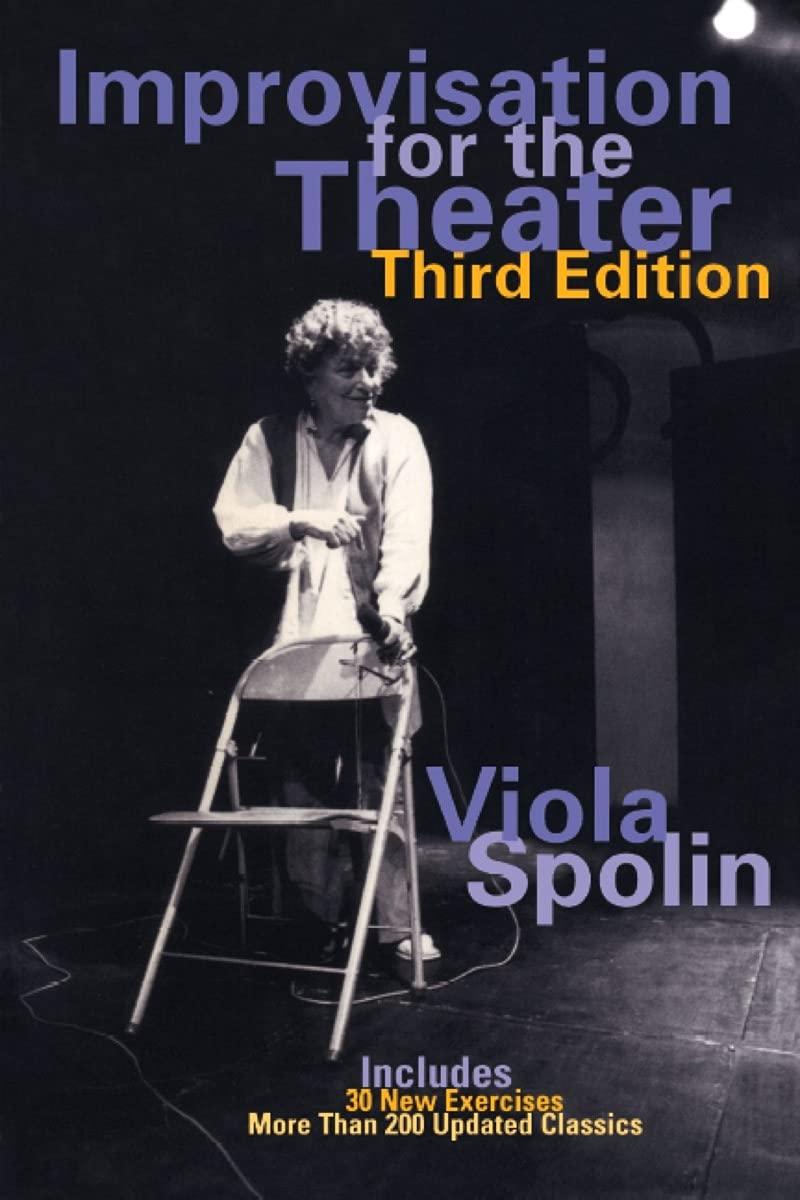
Improvisation for the Theater
A Handbook of Teaching and Directing Techniques
Viola Spolin

Improvisation
Use What You Know, Make Up What You Don't
Brad Newton

Business Improv
Experiential Learning Exercises to Train Employees
Val Gee

The 5 Elements of Improv
How to Take Your Improv to the Next Level
Andrew M. Spragge; Karen L. Eichler

The Improv Mindset
How to Make Improvisation Your Superpower for Success
Keith Saltojanes

Mask Improvisation for Actor Training and Performance
the compelling image
Sears A. Eldredge
Related Exercises
Listening Exercise (Eyes Closed)
Listening Exercise, Eyes Closed is an applied improv exercise in which participants close their eyes and attend to the full auditory environment -- ambient sounds, partner voices, silence -- without the organizing and filtering influence of visual input. By removing vision, the exercise isolates the auditory channel and trains a more complete, unmediated form of listening that can be difficult to access when visual processing is active.
Learn to Be Looked At
Learn to Be Looked At is an applied improv exercise in which participants practice being the subject of others' attention without deflecting, performing, or withdrawing. The exercise addresses the discomfort most people feel when held in a sustained gaze and trains the capacity to remain present, open, and grounded while being observed -- a foundational skill for anyone who presents, leads, or regularly holds attention in professional or public settings.
Lets Not
Let's Not is a scene-work exercise in which performers practice recognizing and resisting the impulsive move -- the immediate next step that seems obvious after an offer is made -- and instead exploring what already exists in the scene before building further. The exercise counters the improv tendency to pile offer onto offer and trains performers to dwell productively in established scene reality.
The Pineapple
The Pineapple is an applied exercise in which a randomly named object becomes the shared focal point for a group brainstorm, with participants using the object as a springboard for generating connections, analogies, and ideas across any domain. The exercise trains lateral thinking and the habit of finding unexpected value in arbitrary starting points.
Critical Thinking
Critical Thinking is a category of applied improvisation exercises that practice the suspension of assumptions and the discipline of questioning answers rather than answering questions. The exercises use improvisational scenarios to develop analytical thinking within a live, unscripted context: participants must evaluate information, identify hidden assumptions, consider alternative interpretations, and resist the impulse to accept the first plausible explanation that presents itself.
Name the Monster
Name the Monster is a reflective exercise in which participants identify and name the internal critic, fear, or resistance that arises for them in improvisation or creative work. By giving the inner critic a distinct name and persona, the exercise creates psychological distance from self-limiting thought patterns, making them easier to recognize and set aside during performance or rehearsal.
The Lineage
Explore the schools and structures that influenced or evolved from Don't Think of the Color Black!.
112 Acting Games (Levy)
How to Reference This Page
The Improv Archive. (2026). Don't Think of the Color Black!. Retrieved September 28, 2026, from https://improvarchive.org/exercises/dont-think-of-the-color-black
The Improv Archive. "Don't Think of the Color Black!." The Improv Archive, 2026. https://improvarchive.org/exercises/dont-think-of-the-color-black.
The Improv Archive. "Don't Think of the Color Black!." The Improv Archive, 2026, https://improvarchive.org/exercises/dont-think-of-the-color-black. Accessed September 28, 2026.
The Improv Archive is a systemically maintained repository. The archive itself acts as the corporate author.