Donut is a scene exercise in which performers arrange themselves in two concentric circles, inner and outer rings facing each other to form pairs. Each pair engages in a brief scene or exchange before one circle rotates, creating new partnerships. The structure generates rapid variety, exposes every player to every other player in the group, and builds the ensemble's collective comfort level. Donut is particularly effective for new groups or workshop settings where performers need to establish working relationships quickly.
Structure
Players divide into two equal groups and form two concentric circles: the inner ring faces outward, the outer ring faces inward. Each player in the outer circle faces a partner in the inner circle.
The facilitator provides a prompt for the first round: a relationship, a location, an emotion, or an open-ended suggestion. Each pair simultaneously performs a brief scene or exercise based on the prompt, typically lasting thirty seconds to two minutes.
When the facilitator calls "rotate," one circle (typically the outer ring) shifts one position clockwise. Each player now faces a new partner. The facilitator provides a new prompt or allows pairs to continue with the same prompt, and a new round of scenes begins.
Rotation continues until every player has worked with every other player, or until the facilitator ends the exercise. The simultaneous performance format means that every player is active at all times; there is no waiting or watching.
Variations include adjusting the scene length (fifteen-second scenes for speed and spontaneity, three-minute scenes for depth), changing the type of prompt between rounds, or having the inner circle provide the prompt to the outer circle player.
How to Teach It
How to Explain It
"Form two circles: an inner circle facing out, an outer circle facing in. When I call switch, the inner circle rotates one person clockwise. In the moment before the switch, make eye contact with the person across from you and have a complete moment."
Donut is an excellent warm-up for new groups because it forces every player to interact with every other player in a low-pressure, high-repetition format. The simultaneous performance eliminates the anxiety of being watched by the full group.
The facilitator should calibrate the prompts to the group's experience level. For beginners, specific prompts ("parent and child at a bus stop") reduce the burden of invention. For experienced groups, open prompts ("find a relationship") encourage creative risk.
A common pitfall is pairs defaulting to conversation rather than scene work. Coach for physical engagement: characters should be doing something, not just talking about something. The brevity of each round rewards performers who establish a physical activity immediately.
Another pitfall is players treating the rotation as a break rather than a transition. Coach for immediate engagement: the scene should begin the instant the new partnership forms. Hesitation wastes the format's compressed timeline.
Donut works well as a bridge between individual warm-ups and full-group scene work. The rapid partner changes build the adaptive skill of adjusting to different performance styles, energies, and instincts, which transfers directly to ensemble performance.
Worth Reading
See all books →
The Improv Handbook
The Ultimate Guide to Improvising in Comedy, Theatre, and Beyond
Tom Salinsky; Deborah Frances-White

Acting Through Improv
Improv Through Theatresports
Lynda Belt; Rebecca Stockley

Improv to Improve Your Leadership Team
Tear down Walls and Build Bridges
Candy Campbell
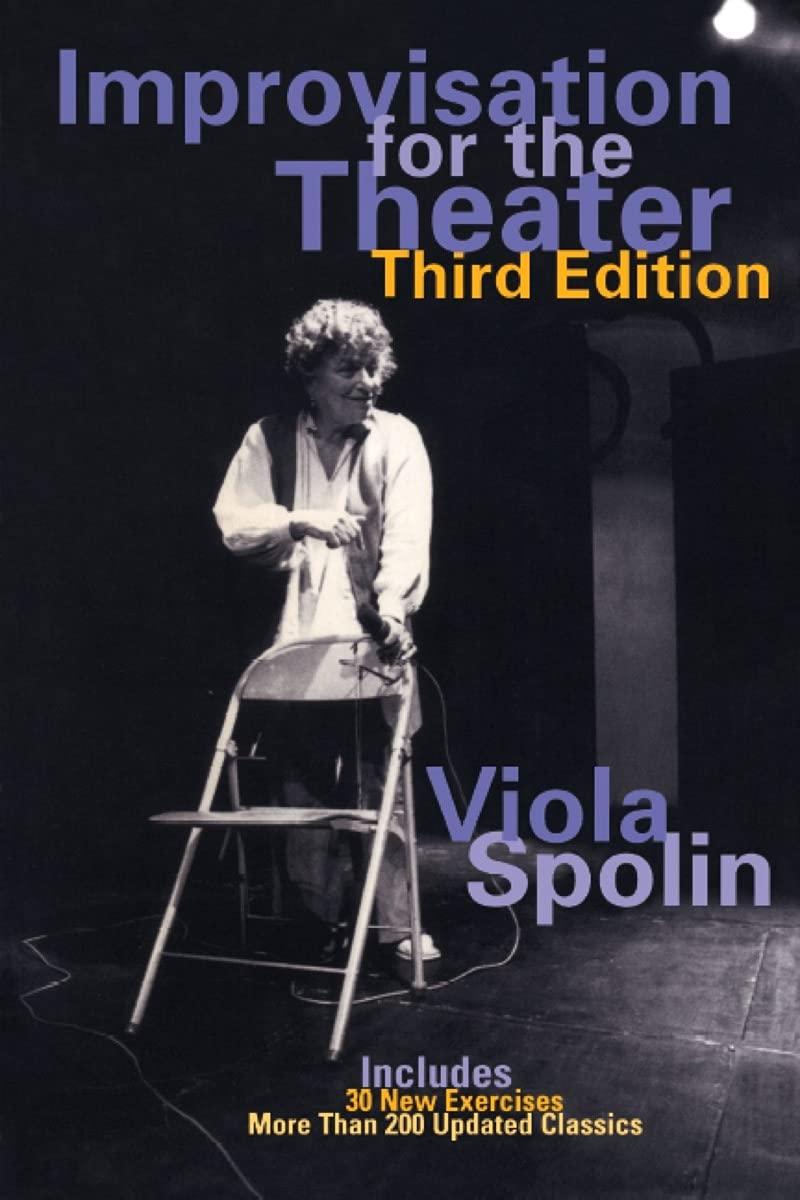
Improvisation for the Theater
A Handbook of Teaching and Directing Techniques
Viola Spolin
Theater Games for Rehearsal
Viola Spolin
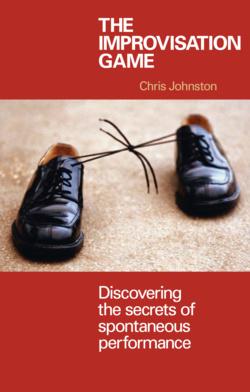
The Improvisation Game
Discovering the Secrets of Spontaneous Performance
Chris Johnston
Related Exercises
Bunny
Bunny is a high-energy circle exercise in which players pass a rhythmic pattern around the group through a combination of chanted sounds and synchronized gestures. The player designated as the bunny performs a central action, typically holding both hands beside the head like ears while chanting "bunny bunny," while the two players on either side perform complementary supporting gestures. The bunny then passes to another player across the circle, and the pattern repeats with increasing speed. The exercise builds group rhythm, peripheral awareness, and comfort with looking foolish. It is widely used as a warm-up in both theatrical and corporate training contexts, valued for its ability to lower inhibitions, demand focus, and generate collective energy through structured silliness.
Scene Carousel
Scene Carousel is an exercise in which multiple pairs or small groups perform short scenes simultaneously across the rehearsal space, with the facilitator periodically calling focus to one scene at a time for the entire group to watch. The exercise builds comfort with performing, provides high-volume scene repetitions, and teaches performers to maintain a scene even when not being watched.
Pivot
Pivot is a scene exercise in which performers identify the moment when a scene needs to shift direction and make a deliberate choice to change it. The facilitator may call "Pivot" to signal the moment, or players practice identifying pivot points themselves. The exercise develops editorial awareness and trains the skill of knowing when a scene needs to evolve rather than repeat.
Blind Association Circle
Blind Association Circle is a variation on word association played with eyes closed. The removal of visual cues forces players to rely entirely on auditory focus and eliminates the temptation to pre-plan based on watching others. The exercise deepens listening skills and trains purely verbal spontaneity.
Count Off
Count Off is a group focus exercise in which players attempt to count to a target number, one person speaking at a time, without any predetermined order or pattern. If two or more players speak simultaneously, the count restarts from one. No gestures, signals, or eye contact are permitted to coordinate turns. The exercise trains group sensitivity, the ability to read collective impulse, and the patience to find the right moment to contribute. Count Off reveals the ensemble's current level of attunement: a group that can consistently reach high numbers has developed a shared awareness that transfers directly to scene work.
How to Reference This Page
The Improv Archive. (2026). Donut. Retrieved September 28, 2026, from https://improvarchive.org/exercises/donut
The Improv Archive. "Donut." The Improv Archive, 2026. https://improvarchive.org/exercises/donut.
The Improv Archive. "Donut." The Improv Archive, 2026, https://improvarchive.org/exercises/donut. Accessed September 28, 2026.
The Improv Archive is a systemically maintained repository. The archive itself acts as the corporate author.