Drawing the Line
Drawing the Line is an applied improvisation exercise in which participants explore personal and group boundaries through physical and verbal activities. Using the stage space and structured improvisational scenarios, participants develop practical awareness of where their own comfort limits are, how to name and communicate those limits clearly, and how to recognize and respect the limits of others. The exercise is used in ensemble-building, trust work, and applied settings focused on consent and professional boundary-setting.
Structure
Physical Boundary Mapping
Participants move through the space and, in response to facilitated prompts, take physical positions that represent their comfort zone in various scenarios: how close they are comfortable standing to someone they don't know, at what distance they prefer to work collaboratively, how physically open or closed their body language is by default. These positions are not performed but genuinely found.
Boundary Naming
In pairs, participants practice naming a boundary clearly and receiving that naming without negotiation: "I'd prefer we work at this distance," "I'm not comfortable with that scenario," "That crossed a line for me." The partner practices acknowledgment without apology or justification: "Thank you, I hear you."
Scenario Practice
Small groups enact brief improvised scenarios where a boundary is crossed, named, and respected -- or where it is not, with debrief exploring what happened and what would have been needed.
Conclusion
The facilitator opens discussion on what the exercise revealed about the group's actual boundary norms and communication.
How to Teach It
Objectives
Drawing the Line targets the practical skill of identifying, naming, and communicating personal boundaries, and the equally practical skill of receiving and respecting others' stated limits. It develops vocabulary for boundary communication and normalizes the act of naming limits in a collaborative group context.
How to Explain It
"We're going to practice two things: knowing where your line is, and being able to say so clearly. And on the other side: hearing where someone else's line is and simply accepting it. Both take practice. That's what we're doing."
Common Pitfalls
Participants sometimes treat the boundary-naming exercise as performance rather than genuine practice, producing lines that sound confident while the body language contradicts them. Encourage genuine identification of actual limits rather than performed confidence.
In Applied Settings
Learning Objectives
Drawing the Line addresses boundary awareness and communication as professional competencies rather than purely personal ones. In organizational contexts, unclear boundaries around role, responsibility, availability, and professional conduct create confusion, resentment, and breakdown. The exercise develops the practical vocabulary and interpersonal confidence needed to maintain functional professional boundaries.
Workplace Transfer
The skills developed transfer to situations where professional limits need to be named: declining inappropriate requests, communicating availability constraints, addressing overstepped role boundaries, managing workload expectations, and creating the conditions for respectful professional relationships. The exercise is particularly relevant in contexts where hierarchy or power difference makes boundary-naming feel risky.
Facilitation Context
The exercise is used in ensemble-building programs, professional development workshops, leadership training, team culture work, and any applied setting where group trust and respectful professional conduct are development targets. It requires careful facilitation and clear psychological safety framing before beginning.
Debrief Framing
Facilitators ask: "What made it difficult to name your limit clearly? What made it easier? How did it feel to have your limit acknowledged without negotiation? What would change in your work environment if naming limits felt this uncomplicated?"
Skills Developed
Worth Reading
See all books →
The Applied Improvisation Mindset
Tools for Transforming Individuals, Organizations, and Communities
Theresa Robbins Dudeck; Caitlin McClure
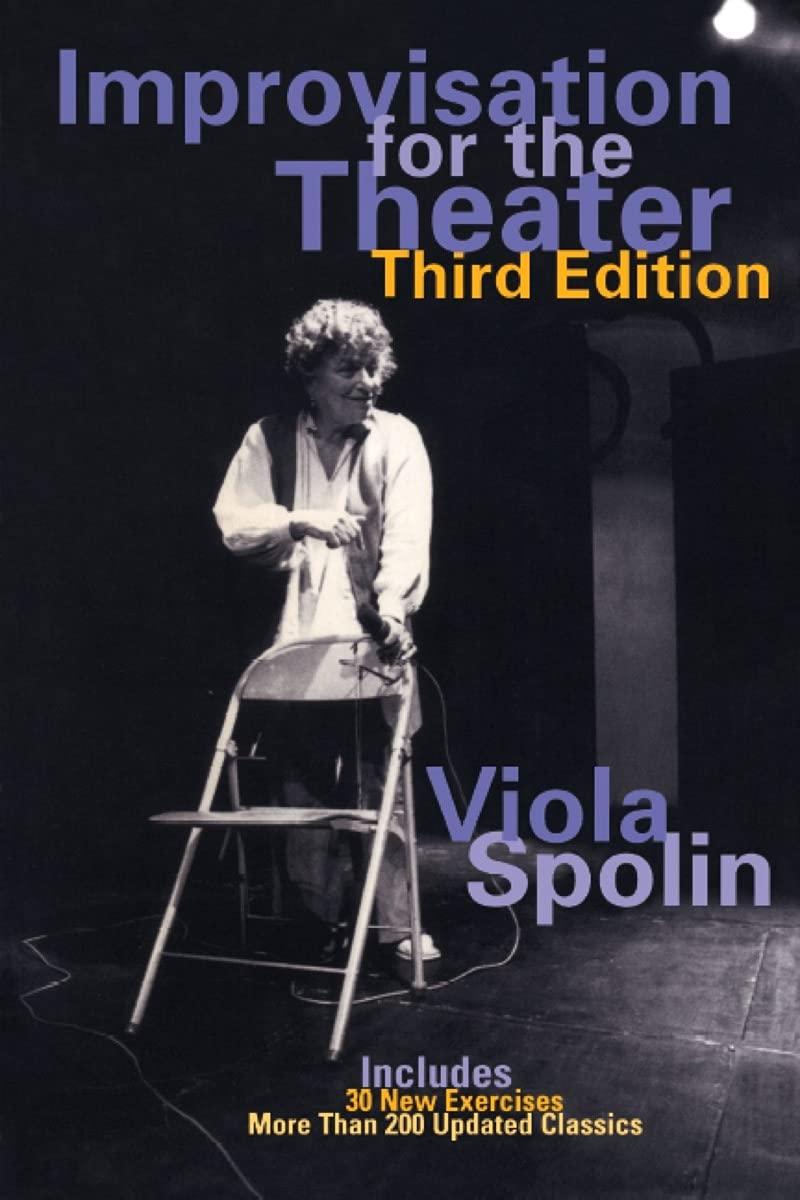
Improvisation for the Theater
A Handbook of Teaching and Directing Techniques
Viola Spolin

The Improvisation Edge
Secrets to Building Trust and Radical Collaboration at Work
Karen Hough

Business Improv
Experiential Learning Exercises to Train Employees
Val Gee

Playing Along
37 Group Learning Activities Borrowed from Improvisational Theater
Izzy Gesell
The Improvisation Game
Discovering the Secrets of Spontaneous Performance
Chris Johnston
Related Exercises
Standing on the Line
Standing on the Line is a scene exercise in which performers stand on a literal or imagined line on the stage floor, using their position on the line to establish spatial relationships, status dynamics, and physical constraints that shape the scene's development.
Nonverbal Communication
Nonverbal Communication is an applied improvisation exercise in which participants interact, negotiate, and collaborate without spoken language, relying entirely on gesture, facial expression, body positioning, and physical presence. The exercise reveals how much information is transmitted nonverbally and trains participants to read and use body language with greater awareness and precision.
Line Mirror
Line Mirror is a physical awareness and synchronization exercise in which participants stand in a line facing a partner line and mirror each other's movements simultaneously, without a designated leader. Unlike circle or pair mirror exercises, the line format creates additional complexity by requiring each participant to maintain synchronization with an immediate partner while also being observable by and influencing the rest of the line.
Leadership
Leadership is an applied improv exercise that uses structured group movement and voluntary leader emergence to explore how leadership authority is claimed, transferred, and recognized within a group. Participants move through the space or perform actions in which any member of the group may step into a leadership role at any moment, and the group must recognize and follow the shift without verbal announcement. The exercise surfaces the dynamics of organizational leadership through an embodied, real-time demonstration.
Let Go
Let Go is an applied improv exercise in which participants practice releasing attachment to a fixed idea, plan, or direction and accepting a changed course offered by the group or a partner. Drawn from applied improv practice, the exercise trains adaptability and the psychological skill of redirecting investment from a discarded option toward a new one without resistance, resentment, or prolonged negotiation.
Coaching and Conflict Management
Coaching and Conflict Management is an applied improvisation exercise in which participants practice the conversational moves of coaching and constructive conflict navigation. Using improvisational scenarios, players develop active listening, open questioning, and the ability to hold space for another person's experience before problem-solving. The exercise is used in leadership development and management training programs.
The Lineage
Explore the schools and structures that influenced or evolved from Drawing the Line.
The Applied Improvisation Mindset (Dudeck & McClure)
How to Reference This Page
The Improv Archive. (2026). Drawing the Line. Retrieved September 28, 2026, from https://improvarchive.org/exercises/drawing-the-line
The Improv Archive. "Drawing the Line." The Improv Archive, 2026. https://improvarchive.org/exercises/drawing-the-line.
The Improv Archive. "Drawing the Line." The Improv Archive, 2026, https://improvarchive.org/exercises/drawing-the-line. Accessed September 28, 2026.
The Improv Archive is a systemically maintained repository. The archive itself acts as the corporate author.