Elephant It
Elephant It is a scene exercise in which performers practice naming the obvious but unspoken element present in a scene -- the thing everyone in the scene is aware of but no one is saying. Named after the phrase "elephant in the room," the exercise trains directness, honest emotional acknowledgment, and the ability to generate scene momentum by surfacing what is already true rather than avoiding it.
Structure
Setup
Two or more performers begin a scene. The facilitator may assign a premise or allow the scene to start from scratch.
Progression
As the scene develops, the facilitator watches for the elephant: the undeniable tension, fact, or emotional reality that the characters are working around rather than addressing. This might be an unspoken conflict between characters, an obvious environmental fact being ignored, or an emotional truth that both characters clearly feel but neither names.
When the facilitator spots the elephant, they call out: "Elephant it!" At that signal, the performing player must immediately name the thing directly -- in character, in the scene, to the other player. The named thing must be the actual elephant, not a deflection.
The scene then continues with the named reality present.
Conclusion
The exercise can cycle through multiple elephants in a single scene, or run a series of short scenes each designed to reveal a different kind of unspoken truth. The coach stops the scene once the naming habit has been practiced sufficiently.
How to Teach It
Objectives
Elephant It develops the ability to generate scenes from honesty rather than avoidance. Many early improvisers build scenes around what is comfortable and easy to say, while the more interesting material lives in what is being held back. The exercise directly trains the naming habit.
How to Explain It
"If there's something in the scene that everyone knows but nobody's saying -- name it. Out loud. In character. That's the scene."
Scaffolding
Begin by running scenes with deliberately obvious elephants -- two characters who clearly like each other but aren't saying so, or a character who has clearly made a mistake that no one is addressing. As the group develops the naming habit, the elephants can be subtler.
Common Pitfalls
Performers often name something adjacent to the elephant rather than the elephant itself. They say the polite version of the uncomfortable truth rather than the truth. The coaching note is to push for the specific, direct thing: not "I think there's some tension between us" but "I'm angry with you and I don't know what to do about it."
Worth Reading
See all books →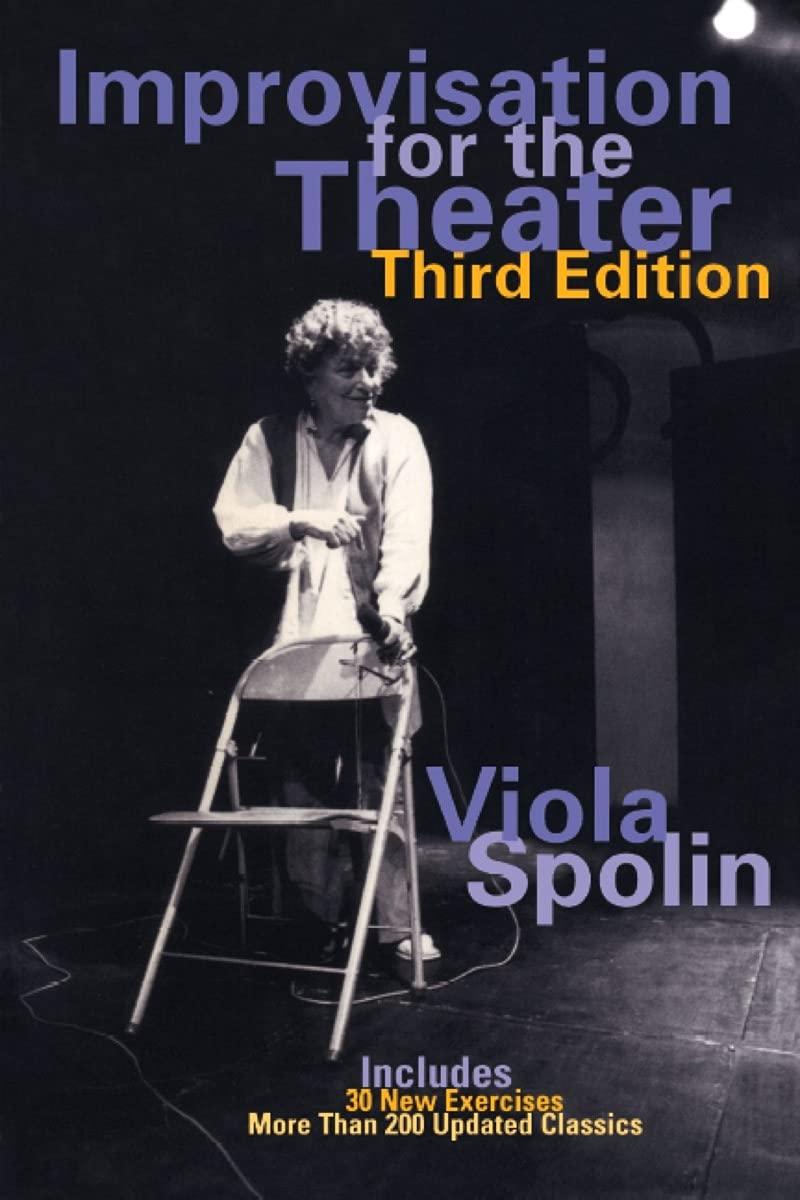
Improvisation for the Theater
A Handbook of Teaching and Directing Techniques
Viola Spolin

The Young Actor's Book of Improvisation
Dramatic Situations
Sandra Caruso; Susan Kosoff
Theater Games for Rehearsal
Viola Spolin

Mask Improvisation for Actor Training and Performance
the compelling image
Sears A. Eldredge
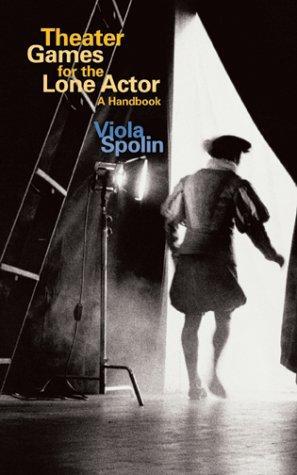
Theater Games for the Lone Actor
Viola Spolin
The Actor's Book of Improvisation
Sandra Caruso; Paul Clemens
Related Exercises
Name the Monster
Name the Monster is a reflective exercise in which participants identify and name the internal critic, fear, or resistance that arises for them in improvisation or creative work. By giving the inner critic a distinct name and persona, the exercise creates psychological distance from self-limiting thought patterns, making them easier to recognize and set aside during performance or rehearsal.
Elephant
Elephant is a high-energy circle exercise in which a center player points to someone in the circle and calls out an animal name. The targeted player and their two immediate neighbors must quickly form a three-person physical representation of that animal before the center player finishes a count. Different animals require different configurations: the center player forms the trunk for an elephant while the neighbors create the ears, or the center player mimes holding a fishing rod while the neighbors become the fish. Incorrect or slow responses send a player to the center. The exercise builds reaction speed, peripheral awareness, physical commitment, and comfort with looking foolish.
Personalize It!
Personalize It is a scene exercise in which one player delivers a neutral, factual statement and the other responds as if the fact were deeply personal to their character. The exercise trains improvisers to create emotional stakes from nothing, treating every piece of information as personally meaningful rather than letting it pass as background detail.
Flatmates Just Do Nothing
Flatmates Just Do Nothing is a scene exercise in which performers play roommates engaged in completely mundane, low-stakes activity -- watching television, eating cereal, folding laundry -- with no dramatic agenda imposed from outside. The exercise trains the ability to be fully present in an ordinary moment, to find authentic relationship texture in ordinary behavior, and to trust that genuine connection and specificity are sufficient engines for scene without the need for conflict or event.
Play With
Play With is a scene exercise in which performers are directed to explore and heighten whatever elements have already emerged in a scene rather than driving toward a predetermined outcome. The coaching directive -- "play with it" -- asks players to treat each established detail, character behavior, or game pattern as material to revisit, expand, and discover rather than move past. The exercise trains the improv muscle of finding satisfaction in the present moment of a scene.
Point of View Post-It Notes
Point of View Post-It Notes is a scene exercise in which performers receive sticky notes with written character perspectives, attitudes, or emotional stances that they must embody throughout an improvised scene. The exercise separates point of view from plot, training performers to let a strong perspective drive their choices rather than relying on narrative invention.
How to Reference This Page
The Improv Archive. (2026). Elephant It. Retrieved September 28, 2026, from https://improvarchive.org/exercises/elephant-it
The Improv Archive. "Elephant It." The Improv Archive, 2026. https://improvarchive.org/exercises/elephant-it.
The Improv Archive. "Elephant It." The Improv Archive, 2026, https://improvarchive.org/exercises/elephant-it. Accessed September 28, 2026.
The Improv Archive is a systemically maintained repository. The archive itself acts as the corporate author.