Emotional Manipulation
Emotional Manipulation is an exercise in which a caller or scene partner deliberately attempts to shift a performer's emotional state through verbal and physical tactics. The exercise builds awareness of how emotions are triggered and managed in performance. It trains the ability to be emotionally affected while maintaining scenic control.
Worth Reading
See all books →
Whose Improv Is It Anyway?
Beyond Second City
Amy E. Seham

The Young Actor's Book of Improvisation
Dramatic Situations
Sandra Caruso; Susan Kosoff
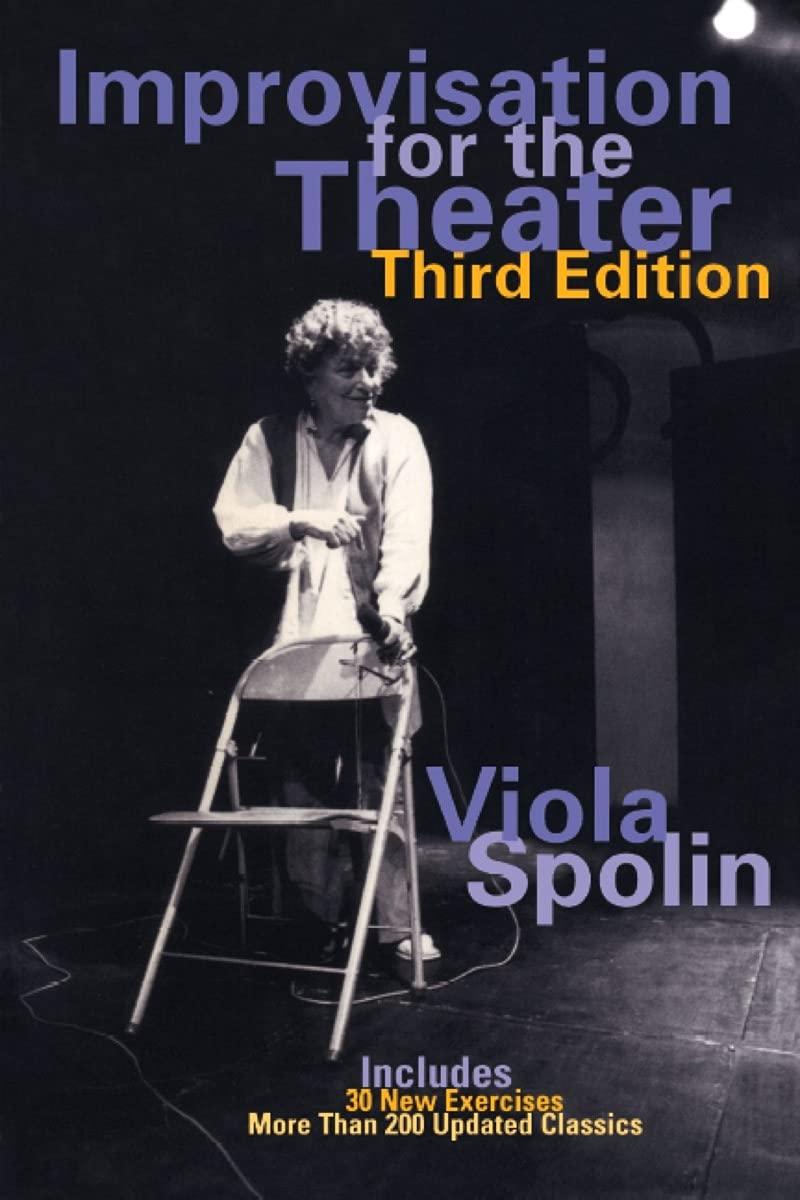
Improvisation for the Theater
A Handbook of Teaching and Directing Techniques
Viola Spolin

Embodied Playwriting
Improv and Acting Exercises for Writing
Hillary Haft Bucs; Charissa Menefee

Mask Improvisation for Actor Training and Performance
the compelling image
Sears A. Eldredge

Improv for Actors
Dan Diggles
Related Exercises
Emotional Mirror
Emotional Mirror is a mirroring exercise focused on emotional states rather than physical movement. One player establishes an emotion through face, body, and vocal tone; the partner mirrors not the specific gestures but the underlying feeling. The exercise trains emotional empathy and the ability to read and reflect a partner's inner state.
Emotional Option
Emotional Option is an applied improv exercise in which participants hold a paired conversation while a facilitator calls out different emotions at intervals. The pairs must continue their conversation in the register of the newly assigned emotion without stopping or acknowledging the transition. The exercise trains rapid emotional adaptability, the awareness that emotional state is a choice, and the practical skill of continuing a conversation under shifting emotional pressure.
Continuing Emotions
Continuing Emotions is a scene game in which performers cycle through a series of emotional states at the direction of a caller. Each emotional shift must be justified within the scene's reality rather than simply displayed, with characters finding a reason to feel the new state given what has just happened. The game trains emotional range, commitment, and the ability to sustain scene logic through rapid change.
Emotional Self-Control
Emotional Self-Control is a category of applied improv exercises that develop the ability to manage emotional responses in high-stress, provocative, or emotionally charged situations. The exercises use improv techniques to create low-stakes environments in which participants practice recognizing their own emotional triggers, interrupting automatic reactions, and choosing intentional responses. The goal is to expand the gap between stimulus and response in situations where emotional reactivity typically causes professional and interpersonal harm.
I Love You
This exercise takes its name from the three-word declaration at the heart of every scene it generates. Performers say the title phrase to each other in as many contexts, relationships, and emotional registers as possible, discovering the vast range of meaning the words carry depending on delivery, history, and circumstance. The same phrase spoken between parent and child, between rivals, between strangers, or between lifelong partners produces entirely different scenes. The exercise builds emotional range, comfort with vulnerability onstage, and the ability to invest familiar words with specific, truthful feeling.
Emotional Endowment
Emotional Endowment is an applied improv exercise in which partners endow each other with an emotional state or characteristic that the other must accept and embody. One player assigns an emotional reality to their partner -- "You are devastated," "You are secretly thrilled" -- and the partner must accept that endowment fully without negotiating, correcting, or breaking the offer. The exercise develops awareness of emotional offers, the practice of acceptance, and the difference between explaining an emotion and inhabiting it.
How to Reference This Page
The Improv Archive. (2026). Emotional Manipulation. Retrieved September 28, 2026, from https://improvarchive.org/exercises/emotional-manipulation
The Improv Archive. "Emotional Manipulation." The Improv Archive, 2026. https://improvarchive.org/exercises/emotional-manipulation.
The Improv Archive. "Emotional Manipulation." The Improv Archive, 2026, https://improvarchive.org/exercises/emotional-manipulation. Accessed September 28, 2026.
The Improv Archive is a systemically maintained repository. The archive itself acts as the corporate author.