Faces is an exercise in which players explore extreme facial expressions and the emotions they generate. By exaggerating the muscles of the face, performers discover how external expression triggers internal feeling. The exercise loosens facial tension and builds expressive range.
Structure
Setup
- Players stand in the playing space with enough room to move freely.
- The facilitator introduces a series of facial expression instructions or emotion prompts.
- Players engage with each instruction independently, exploring what the expression generates in their body and impulse.
The Exploration Process
- Begin with a simple activation: raise the eyebrows fully. Hold. Let it release.
- Move through different muscle groups: squeeze the eyes, drop the jaw, compress the lips.
- Then begin with emotions: find fear in the face before anywhere else in the body. Find disgust. Find genuine delight.
- Observe how the facial activation generates physical response in the rest of the body.
What the Exercise Demonstrates
- The face is not decoration. Facial expression activates physical and emotional states.
- Performers who engage their faces fully access emotional range they could not access through intellectual decision.
- Extreme faces are not inherently exaggerated. A face fully committed to an emotion is specific, not caricatured.
Variations
- Players pair up and mirror each other's facial expressions without speaking.
- Players take an extreme expression into movement: the face establishes the quality of the walk.
- Players transition between extreme opposite expressions rapidly: ecstasy to disgust to grief to joy.
How to Teach It
How to Explain It
"Start with your face. Before you decide what the emotion is, let the face do it. Raise your eyebrows as high as they will go. Hold it. What do you feel? Now drop into the opposite. Pull everything down. What arrives? The face knows things before your brain does."
Common Notes
- Performers often underuse their faces in scenes. The exercise addresses this by making the face the primary subject rather than the secondary effect.
- The connection between facial expression and inner state is bilateral: activating the face activates the feeling. This is worth naming explicitly for performers who believe they must feel the emotion before expressing it.
- Extreme expression should not be self-conscious. Coach performers to commit to the extreme and notice what it generates rather than evaluating their own expression.
Common Pitfalls
- Players make faces without connecting to the internal response they generate. The exercise should be reflective, not performative.
- Players laugh at each other during the exercise, breaking the internal work. The facilitator should establish that the exercise requires internal attention.
- Expressions are held too briefly to generate a real physical or emotional response. Each expression should be held long enough to settle.
Worth Reading
See all books →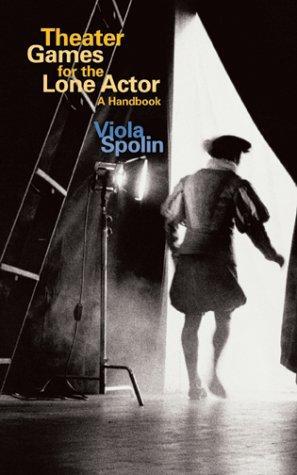
Theater Games for the Lone Actor
Viola Spolin

Mask Improvisation for Actor Training and Performance
the compelling image
Sears A. Eldredge

Drama Games and Improvs
Games for the Classroom and Beyond
Justine Jones; Mary Ann Kelley
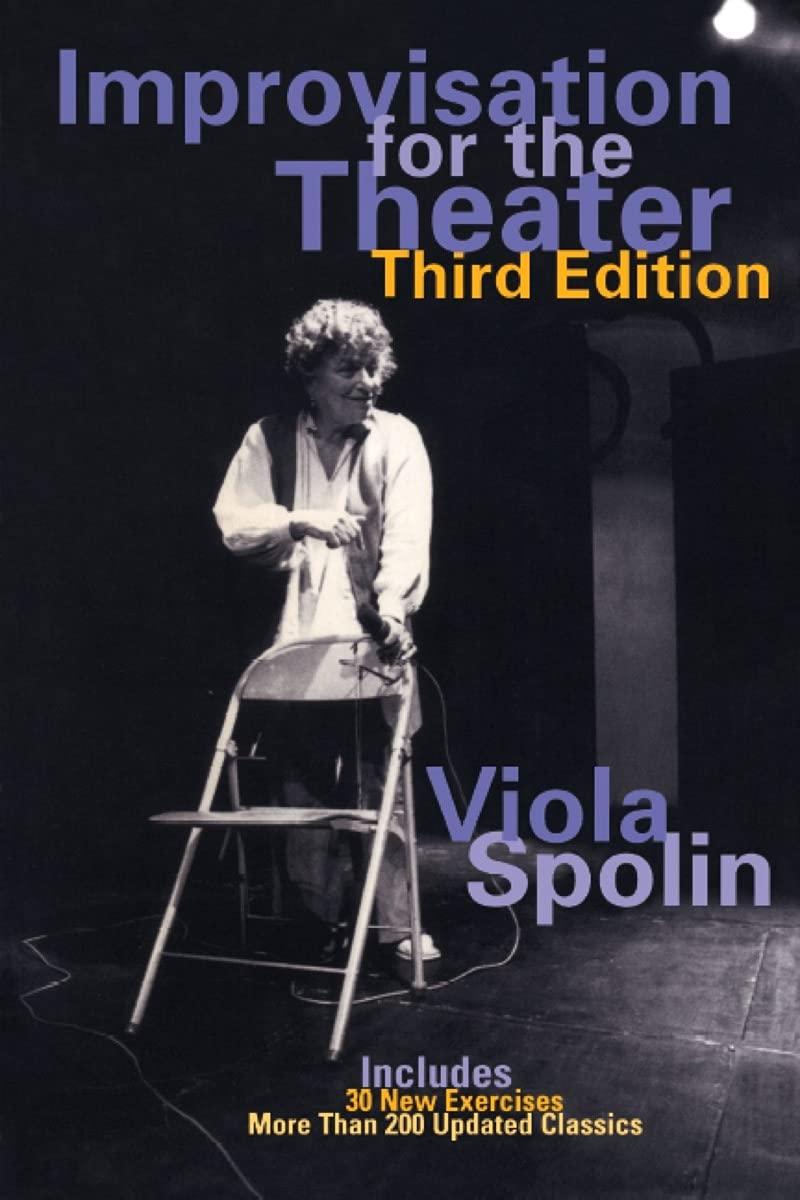
Improvisation for the Theater
A Handbook of Teaching and Directing Techniques
Viola Spolin

Embodied Playwriting
Improv and Acting Exercises for Writing
Hillary Haft Bucs; Charissa Menefee
Theater Games for Rehearsal
Viola Spolin
Related Exercises
Making Faces
Making Faces is a warm-up exercise in which players practice exaggerated facial expressions, cycling through emotions, mirroring a partner, or responding to facilitator prompts. The exercise loosens inhibition around physical expressiveness and helps performers discover how facial choices communicate character and emotion instantly. Many performers rely primarily on voice and words; Making Faces redirects attention to the face as a primary communication instrument. The exercise serves as an accessible entry point for physical comedy work and character creation.
Emotions Characters
Emotions Characters is a character-building exercise in which performers construct a character whose entire identity is defined by a single dominant emotion. Rather than playing a character who experiences an emotion, the performer plays a human being for whom that emotion is the organizing principle of their existence: a person constituted entirely by joy, or anger, or longing, or fear. The exercise develops the skill of using emotion as a generative foundation for character rather than as a surface-level behavioral quality.
Complete Bodies
Complete Bodies is a physicality exercise in which players practice using their entire body to communicate rather than relying primarily on face and hands. The exercise challenges performers to express emotional states, status, and character through the spine, torso, hips, and legs as well as through their more habitual expressive channels. It builds physical range and presence for scene work and performance.
Slappy Face
Slappy Face is a physical warm-up exercise in which players gently tap their own faces and bodies to wake up their physical awareness and increase blood flow, preparing the body and voice for performance through self-administered percussive stimulation.
Continuing Emotions
Continuing Emotions is a scene game in which performers cycle through a series of emotional states at the direction of a caller. Each emotional shift must be justified within the scene's reality rather than simply displayed, with characters finding a reason to feel the new state given what has just happened. The game trains emotional range, commitment, and the ability to sustain scene logic through rapid change.
Clown 12345
Clown 12345 is a clowning exercise that progresses through five numbered stages of physical and emotional exposure, developing performers' comfort with presence, visibility, and playful self-expression. Each stage increases the degree to which the performer is fully available to be seen, culminating in full clown engagement with no protective distance between the performer and the audience.
How to Reference This Page
The Improv Archive. (2026). Faces. Retrieved September 28, 2026, from https://improvarchive.org/exercises/faces
The Improv Archive. "Faces." The Improv Archive, 2026. https://improvarchive.org/exercises/faces.
The Improv Archive. "Faces." The Improv Archive, 2026, https://improvarchive.org/exercises/faces. Accessed September 28, 2026.
The Improv Archive is a systemically maintained repository. The archive itself acts as the corporate author.