Fingertips
Fingertips is a trust and sensitivity exercise in which two performers connect through their fingertips and move together through the space. The minimal point of contact demands heightened physical listening and mutual care. Each partner must simultaneously lead and follow, responding to subtle shifts in pressure and direction without verbal communication. The exercise builds the kind of delicate partner awareness that transfers directly to subtle, responsive scene work.
Structure
Two performers stand facing each other and raise their hands to shoulder height. They press their fingertips together lightly, maintaining gentle contact without gripping or interlocking fingers. The point of contact is the only connection between the two performers.
One partner begins to move slowly, and the other follows, maintaining fingertip contact throughout. The leading role shifts organically as both performers become attuned to each other's impulses. Neither performer should dominate the movement; the goal is shared navigation in which leading and following become indistinguishable.
The facilitator coaches for increasing complexity: moving through levels (high, medium, low), changing speed, incorporating turns and direction changes. As the partnership develops sensitivity, the facilitator may ask performers to close their eyes, relying entirely on the pressure and movement of their partner's fingertips.
Advanced variations reduce the contact point further: a single fingertip, or the backs of hands touching without finger contact. Some versions expand the exercise to groups, creating chains of connected performers who must transmit movement impulses through the entire line.
The exercise concludes with a gradual slowing of movement and a moment of stillness before partners separate.
How to Teach It
How to Explain It
"Find a partner. Touch fingertips only. Eyes closed. Your job is to follow your partner through the space using only that point of contact. Do not pull or push: just stay connected. Let the fingertips lead."
Begin with eyes open and slow movement. The exercise requires trust, and rushing past the trust-building phase produces performers who grip rather than listen. The lighter the touch, the more information passes between partners. Coach for the lightest possible contact that still maintains connection.
The most common failure is one performer dominating the movement while the other passively follows. Coach both partners to initiate small movements and to yield when they feel their partner's impulse. The ideal dynamic is a continuous, wordless negotiation in which neither performer controls the exchange.
Some performers find the intimacy of sustained physical contact uncomfortable. Respect boundaries and offer alternatives (back-of-hand contact or elbow-to-elbow contact) for performers who need more distance. The exercise's value comes from sensitivity, not from forced intimacy.
The exercise connects directly to scene work principles. Performers who can read and respond to subtle physical cues from their partners develop the same responsiveness in verbal scene work: listening for the small offers, adjusting to shifts in energy, and sharing control of the scene rather than forcing it.
Worth Reading
See all books →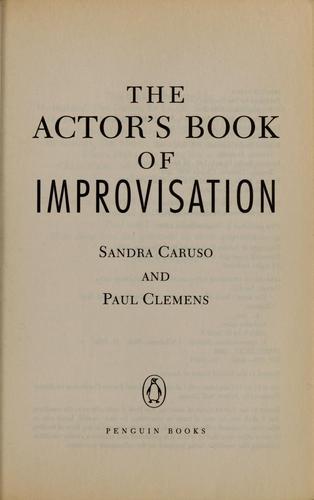
The Actor's Book of Improvisation
Sandra Caruso; Paul Clemens

Theatrical Improvisation
Short Form, Long Form, and Sketch-Based Improv
Jeanne Leep
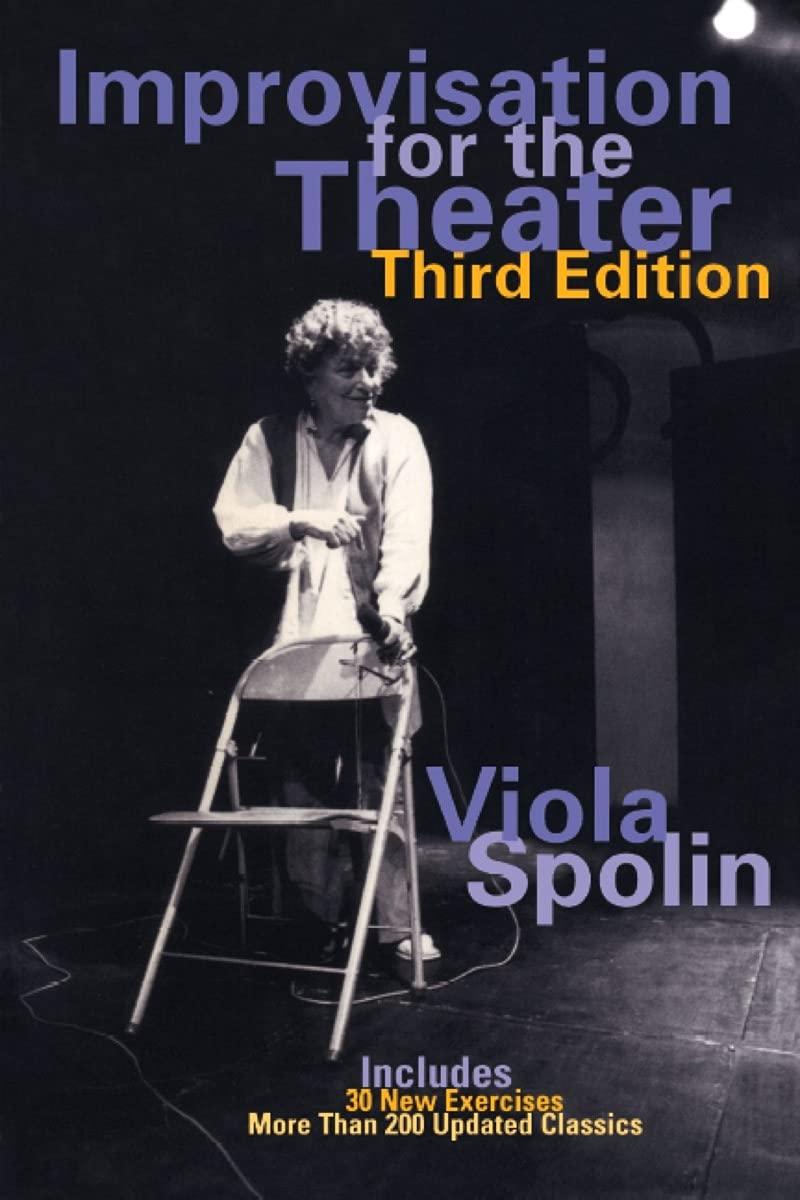
Improvisation for the Theater
A Handbook of Teaching and Directing Techniques
Viola Spolin

Mask Improvisation for Actor Training and Performance
the compelling image
Sears A. Eldredge
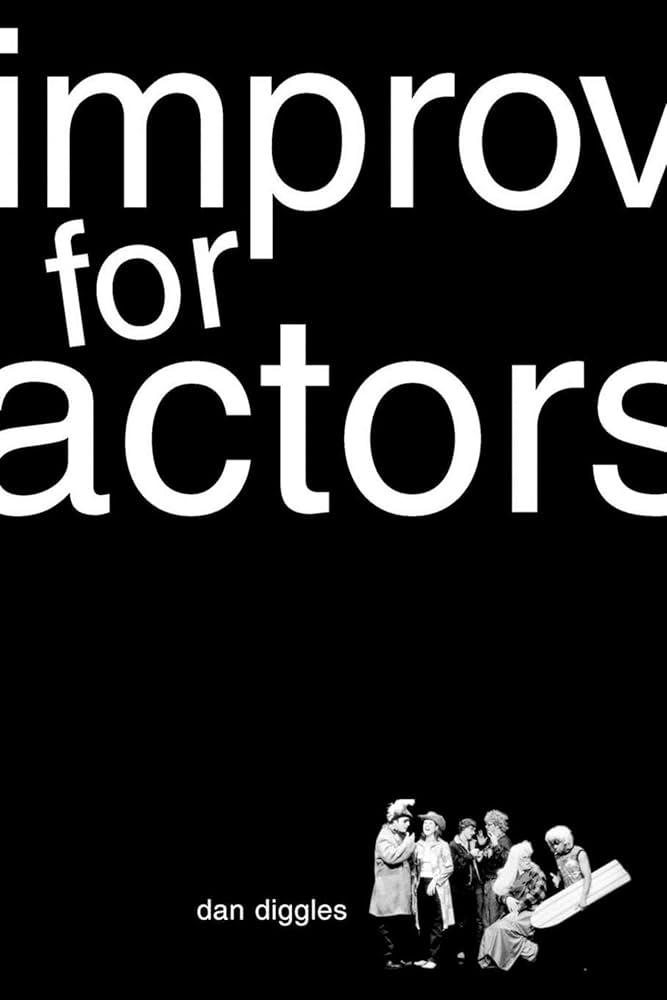
Improv for Actors
Dan Diggles

The Improvisation Edge
Secrets to Building Trust and Radical Collaboration at Work
Karen Hough
Related Exercises
Everybody Touch Someone Who...
Everybody Touch Someone Who... is a physical warm-up exercise in which a caller names a characteristic or experience and all participants who match it must immediately move to touch at least one other person who also matches. The resulting movement creates visible social maps of the group -- who shares which experiences -- while generating physical energy and a sense of collective discovery through quick, full-body engagement.
Hands in Circles
Hands in Circles is an applied group exercise in which participants stand in a circle and connect hands palm-to-palm with their neighbors. One person initiates a tap on a neighbor's palm, and the tap travels around the circle from person to person. The exercise builds basic group rhythm, shared attention, and the experience of something collectively maintained that would collapse if any one person dropped focus.
Hand Hypnotist
Hand Hypnotist is a partner exercise drawn from Augusto Boal's Theatre of the Oppressed in which one player holds their hand in front of a partner's face and leads them through the space, with the partner following the hand as though hypnotized by it. The leader is responsible for the partner's safety and for creating interesting movement; the follower surrenders physical autonomy to the relationship. The exercise develops trust, physical sensitivity, and the experience of leading and following through the body.
Gesture Circle
Gesture Circle is a movement and listening exercise in which each player in a circle creates an abstract, personally meaningful gesture, teaches it to the player beside them, and receives a gesture from the other side. The exercise passes gestures around the circle so that each gesture travels from person to person, being received, held, and handed on. The exercise develops listening through the body, the capacity for genuine repetition rather than imitation, and a quality of full physical attention to another person's movement.
Touch to Talk and Eye Contact to Speak
Touch to Talk and Eye Contact to Speak is an applied exercise in which participants practice two distinct modes of initiating communication: physical touch as an invitation to speak, and sustained eye contact as a signal of direct address. The exercise builds precision in nonverbal communication and awareness of how physical cues shape conversational turns.
Radical Relationality
Radical Relationality is an applied improvisation exercise from The Applied Improvisation Mindset in which participants explore deep interconnection through physical and verbal practices. The exercise challenges individualistic defaults by making visible the ways in which each person's actions, choices, and presence shape and are shaped by everyone else in the group.
How to Reference This Page
The Improv Archive. (2026). Fingertips. Retrieved September 28, 2026, from https://improvarchive.org/exercises/fingertips
The Improv Archive. "Fingertips." The Improv Archive, 2026. https://improvarchive.org/exercises/fingertips.
The Improv Archive. "Fingertips." The Improv Archive, 2026, https://improvarchive.org/exercises/fingertips. Accessed September 28, 2026.
The Improv Archive is a systemically maintained repository. The archive itself acts as the corporate author.