Jump
Jump is a focus and commitment exercise in which one player initiates an action and the rest of the group simultaneously joins in. The exercise trains the ability to recognize and support a group choice instantly without waiting for confirmation. It builds the reflex of jumping in that drives ensemble improv.
Structure
Setup
- The full group stands in the playing space or a circle.
- One player initiates a specific action, movement, or behavior.
- Everyone else must join in simultaneously, matching the initiation as quickly and completely as possible.
Core Practice
- The initiating player does something clear and repeatable: a gesture, a word, a movement, a sound.
- The group's task is to recognize the initiation and join it without waiting for confirmation, explanation, or consensus.
- There is no verbal cue to jump in. The initiation itself is the signal.
What the Exercise Trains
- Group mind: the ability to recognize and commit to a shared choice simultaneously.
- Speed of agreement: the reflex of saying yes to a group impulse before analysis interrupts it.
- Trust in the group: understanding that jumping in without certainty is what makes the group choice real.
Variations
- Run multiple rounds with different initiating players to train the full group's responsiveness.
- Introduce a constraint: the group can only join when the initiation has been going for exactly three seconds, training precise attention rather than eagerness.
- Use the exercise as a warm-up before longer ensemble work, building the reflex of group agreement before the stakes increase.
Progression
- Begin with simple physical gestures. Build toward more complex or ambiguous initiations that require deeper attention to recognize.
How to Teach It
How to Explain It
"Someone is going to start something. Your job is to recognize it and join it immediately : not after they explain it, not after you've decided whether you like it, not after you've seen what everyone else is doing. The moment you see it, you're in. Jump."
Common Notes
- Watch for players who observe the initiation and then join once they've processed it. The exercise targets the gap between perception and action. Observing is not jumping in.
- Watch for players who jump before seeing anything specific, matching nothing. Joining requires recognizing what is actually happening, not just matching energy.
- The exercise rewards genuine group attention. If the group is not watching each other, they will miss initiations or join chaotic approximations of them.
Common Pitfalls
- The initiating player performs something too subtle for the group to recognize. Initiations should be clear without being exaggerated.
- Players join only when they see the majority already moving, which defeats the purpose. The exercise targets the first mover, not the follower.
- Players overthink the "correct" way to join and pause at the threshold. There is no correct way. There is only in or out.
Worth Reading
See all books →
Group Improvisation
The Manual of Ensemble Improv Games
Peter Campbell Gwinn; Charna Halpern

The 5 Elements of Improv
How to Take Your Improv to the Next Level
Andrew M. Spragge; Karen L. Eichler
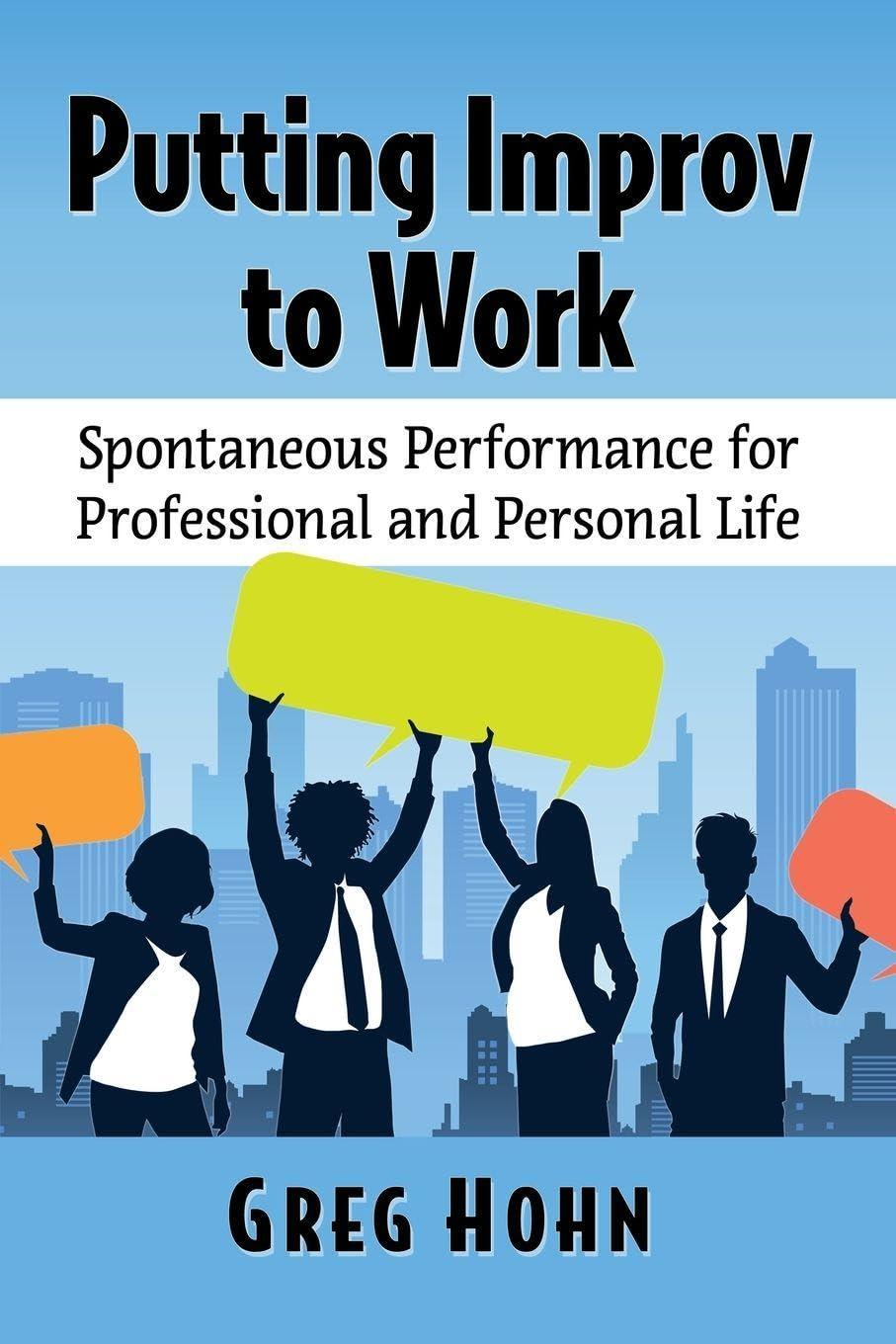
Putting Improv to Work
Spontaneous Performance for Leadership, Learning, and Life
Greg Hohn
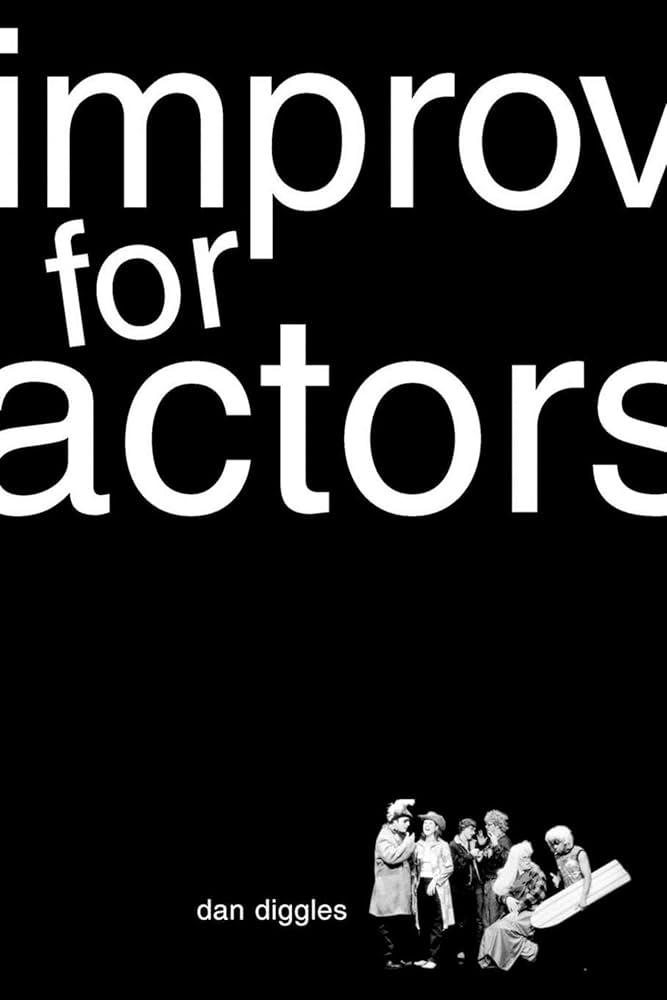
Improv for Actors
Dan Diggles

Business Improv
Experiential Learning Exercises to Train Employees
Val Gee
The Improvisation Game
Discovering the Secrets of Spontaneous Performance
Chris Johnston
Related Exercises
Association Jump
Association Jump is a variation on word association in which players physically move or jump to a new position in the space each time they offer a new word. The physical action reinforces the mental leap between ideas and keeps energy high. The exercise connects verbal spontaneity with full-body commitment.
Popcorn
Popcorn is an ensemble energy exercise in which players crouch on the ground and pop up one at a time to shout a word, sound, or short phrase before dropping back down. The group must self-regulate so that pops do not overlap and the rhythm stays dynamic. The exercise builds group awareness, spontaneity, and the instinct to fill empty space without stepping on others.
Activity Starter
Activity Starter is a group exercise in which one player begins a physical activity and other players gradually enter to mirror or extend it. The exercise builds ensemble attunement and physical awareness by requiring players to read and respond to a shared movement rather than a verbal cue.
Give and Take
Give and Take is a foundational scene technique and exercise in which performers practice transferring and sharing focus within a scene. Only one action, conversation, or event holds the audience's attention at a time, and performers must silently negotiate who has focus and who yields it. The exercise trains the essential ensemble skill of knowing when to step forward and when to step back, making it one of the most important exercises for developing group awareness. Give and Take is used in both theatrical improv and applied improvisation settings, where it teaches collaborative turn-taking and active listening.
Jump Rope
Jump Rope is a physical warm-up exercise that uses real or imagined jump ropes to build rhythm, coordination, and group timing. Players jump to a steady beat while adding verbal challenges: reciting rhymes, telling stories, answering questions, or improvising dialogue without breaking the physical rhythm. The exercise combines physical exertion with verbal dexterity, training performers to maintain multiple channels of output simultaneously. Jump Rope works as an energizing warm-up that gets bodies moving and voices activated at the same time.
Synchro Clap
Synchro Clap is a group focus exercise in which players attempt to clap simultaneously without any verbal coordination or designated leader. The exercise develops ensemble awareness and the ability to read and respond to the group's collective energy.
How to Reference This Page
The Improv Archive. (2026). Jump. Retrieved September 28, 2026, from https://improvarchive.org/exercises/jump
The Improv Archive. "Jump." The Improv Archive, 2026. https://improvarchive.org/exercises/jump.
The Improv Archive. "Jump." The Improv Archive, 2026, https://improvarchive.org/exercises/jump. Accessed September 28, 2026.
The Improv Archive is a systemically maintained repository. The archive itself acts as the corporate author.