Leading with Body Parts
Leading with Body Parts is a physical character and presence exercise in which participants walk through the space leading with a designated body part -- the nose, the chin, the chest, the knee, the pelvis -- and observe how leading with each part generates a distinct physical character, quality of movement, and emotional tone. The exercise demonstrates that character lives in the body, and that specific physical choices produce specific psychological and emotional realities.
Structure
Setup
Participants spread out through the space and begin walking at a neutral pace. The facilitator explains the exercise: as they walk, they will be directed to lead with a specific body part, meaning that body part moves through the space slightly ahead of the rest of them, drawing them forward.
Progression
The facilitator calls a body part: "Lead with your nose." Participants adjust their walk so the named part moves first, with the rest of the body following. The facilitator allows the group to inhabit each lead before calling the next one: the chin, the chest, the pelvis, the forehead, the knees, the lower back.
After several body parts, the facilitator may ask participants to take their current lead into a brief scene with a partner, exploring how two differently-led characters interact.
Conclusion
The exercise ends after participants have explored a range of body part leads and have experienced the connection between physical lead and character psychology.
How to Teach It
Objectives
Leading with Body Parts targets physical specificity and the recognition that character is made from physical choices rather than from vocal or intellectual decisions. It builds the muscle memory of choosing and committing to a physical starting point before building a character's psychology or speech.
How to Explain It
"Let the body part you're leading with pull you through the space. Don't just lean that way -- let it be genuinely ahead of the rest of you. As you do that, notice who shows up. What's their attitude? What do they want? Where are they going? You didn't invent them -- the body did."
Scaffolding
Begin with highly distinctive body part leads (nose, chest, pelvis) that produce strong, immediately recognizable character signatures before introducing subtler leads (right shoulder, back of the head). Allow extended time in each lead before transitioning.
Common Pitfalls
Participants often approach the exercise as a physical mime challenge -- exaggerating the lean or forward position -- without allowing the physicality to generate genuine character. Coach participants to stay with a lead long enough for the character's inner life to emerge rather than settling for the physical impression alone.
Worth Reading
See all books →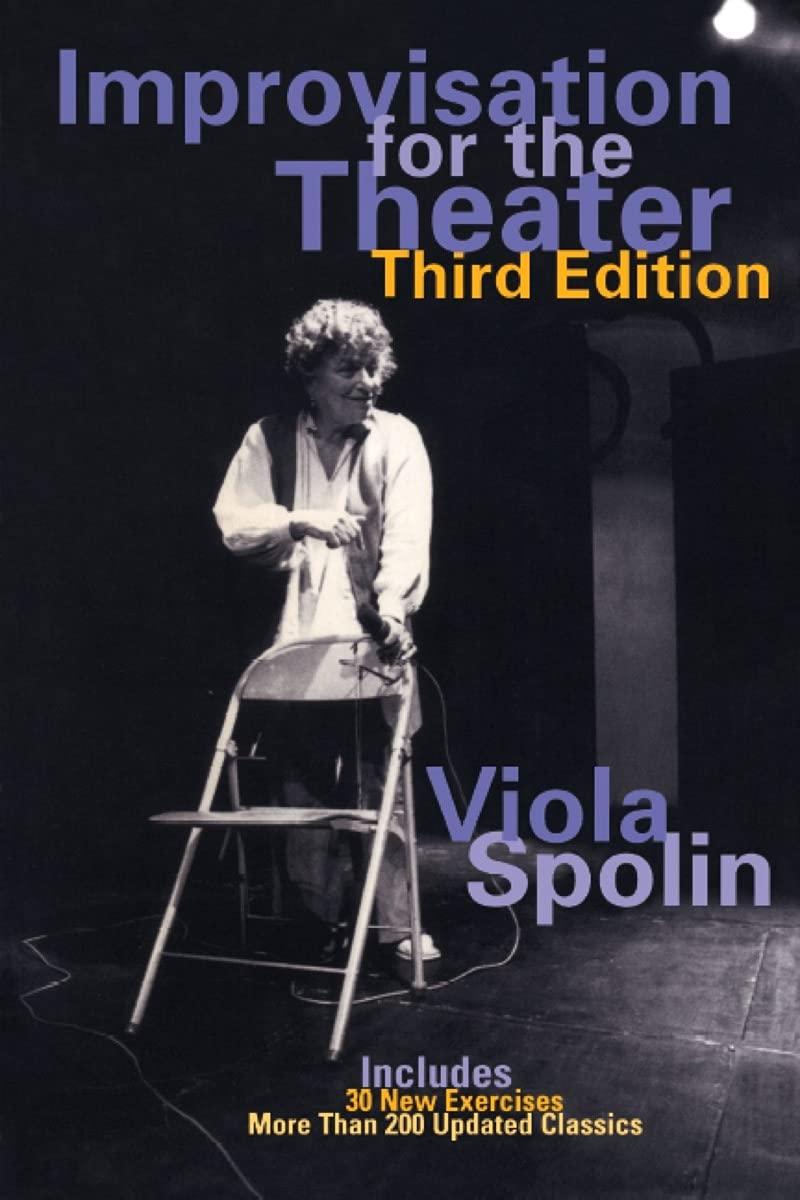
Improvisation for the Theater
A Handbook of Teaching and Directing Techniques
Viola Spolin
Theater Games for the Lone Actor
Viola Spolin

Embodied Playwriting
Improv and Acting Exercises for Writing
Hillary Haft Bucs; Charissa Menefee

Improv Leadership
How to Lead Well in Every Moment
Stan Endicott; David A. Miller; Cory Hartman
Theater Games for Rehearsal
Viola Spolin

Improv to Improve Your Leadership Team
Tear down Walls and Build Bridges
Candy Campbell
Related Exercises
Leadership
Leadership is an applied improv exercise that uses structured group movement and voluntary leader emergence to explore how leadership authority is claimed, transferred, and recognized within a group. Participants move through the space or perform actions in which any member of the group may step into a leadership role at any moment, and the group must recognize and follow the shift without verbal announcement. The exercise surfaces the dynamics of organizational leadership through an embodied, real-time demonstration.
Follow Your Nose
Follow Your Nose is a physical exploration exercise in which players literally lead with their nose as the point of initiation for all movement through the space. By designating a single body part as the physical driver, the exercise disrupts habitual movement patterns and develops kinesthetic awareness, physical specificity, and the discovery of how a small physical choice can alter an entire physical identity.
Complete Bodies
Complete Bodies is a physicality exercise in which players practice using their entire body to communicate rather than relying primarily on face and hands. The exercise challenges performers to express emotional states, status, and character through the spine, torso, hips, and legs as well as through their more habitual expressive channels. It builds physical range and presence for scene work and performance.
Bobsledding Bodies
Bobsledding Bodies is a physical warm-up exercise in which players form a tight line and navigate the space together, shifting direction and speed as a unit. The exercise builds group awareness, physical coordination, and the ability to respond as an ensemble to subtle changes in momentum.
John Cremer Characters and Scenes
John Cremer Characters and Scenes is a character-building and scene initiation exercise developed by UK improviser and educator John Cremer, in which participants develop distinct physicalized characters and then bring those characters into spontaneous scenes with one another. The exercise trains the connection between physical specificity and character logic, building confidence in initiating scenes from a grounded physical starting point rather than from dialogue or concept.
Center of Gravity
Center of Gravity is a physical awareness exercise in which performers explore how shifting their center of gravity changes their movement, posture, and character presence. By leading movement from different body parts, such as the chest, pelvis, forehead, or chin, performers discover distinct physical vocabularies that translate directly into character work. The exercise trains performers to connect internal character choices to external physical expression, revealing how small postural adjustments produce dramatically different stage presences. Center of Gravity is used across acting and improvisation training traditions as a tool for generating characters from the body outward rather than from intellectual decisions alone.
How to Reference This Page
The Improv Archive. (2026). Leading with Body Parts. Retrieved October 14, 2026, from https://improvarchive.org/exercises/leading-with-body-parts
The Improv Archive. "Leading with Body Parts." The Improv Archive, 2026. https://improvarchive.org/exercises/leading-with-body-parts.
The Improv Archive. "Leading with Body Parts." The Improv Archive, 2026, https://improvarchive.org/exercises/leading-with-body-parts. Accessed October 14, 2026.
The Improv Archive is a systemically maintained repository. The archive itself acts as the corporate author.