Monologue Thief
Monologue Thief is a hybrid game and exercise in which one performer delivers a monologue and a second performer -- the thief -- intercepts lines, phrases, or images from the monologue and builds them into their own parallel or transforming monologue. The exercise trains active listening at the level of specific language rather than general meaning, and develops the ability to receive and immediately transform material offered by a scene partner into new creative output.
Structure
Setup
Two performers take the stage. One is designated the monologue speaker; the other is the thief. The speaker begins a monologue on a given topic or suggestion.
Progression
As the speaker delivers their monologue, the thief listens for specific lines, phrases, images, or words that resonate, surprise, or land with some charge. At a chosen moment, the thief "steals" a phrase -- picks it up exactly and uses it to begin their own monologue, building a parallel or transforming narrative from the stolen material.
The original speaker continues, and the thief may steal again from the new material. The two monologues develop simultaneously or in alternation, with the thief's language drawn from and transformed out of the speaker's.
Ending
The game ends when both monologues reach a natural conclusion or the facilitator determines the mutual transformation of material has been fully demonstrated.
How to Teach It
Objectives
Monologue Thief trains word-level listening -- attending to the specific language a partner uses, not only the general meaning -- and the ability to transform received material immediately into new creative output. It develops the improv skill of building from what a partner offers rather than from one's own pre-formed material.
How to Explain It
"Listen to every word. The good stuff is in the specifics -- a surprising image, an odd phrasing, a word that doesn't quite fit but lands anyway. When you find it, take it. Build from it. Make it yours."
Scaffolding
Begin with a full listening pass -- the thief simply listens and identifies what they would steal without interrupting -- before running the full game. This builds the listening quality before the transformation skill is added.
Common Pitfalls
The thief sometimes steals general themes or summaries rather than specific language, producing a monologue that is parallel in topic but not genuinely built from the stolen material. Coach the thief toward very specific lifts -- an exact phrase or image -- and genuine transformation of that specific material into new content.
How to Perform It
Audience Intro
"One performer is going to give a monologue. The other is going to steal from it -- take lines, images, words -- and build their own story from what they steal. Let's see what happens when good material gets lifted."
Cast Size
2 performers.
Staging
Both performers visible to the audience simultaneously, in distinct stage positions to differentiate their separate monologue tracks.
Wrap-Up Logic
End when both monologues have reached a point of genuine development from the stolen material -- when the thief's material is clearly transformed from the original rather than merely quoted.
Worth Reading
See all books →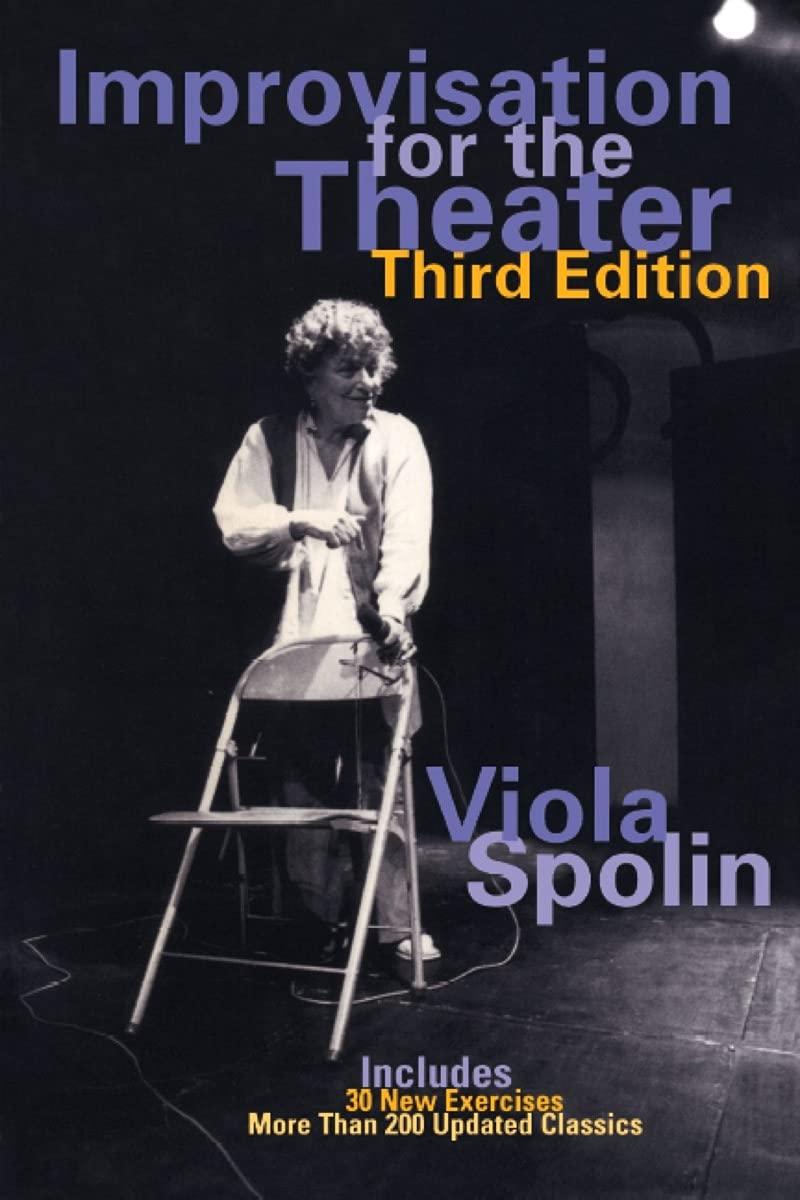
Improvisation for the Theater
A Handbook of Teaching and Directing Techniques
Viola Spolin

Group Improvisation
The Manual of Ensemble Improv Games
Peter Campbell Gwinn; Charna Halpern
The Improvisation Game
Discovering the Secrets of Spontaneous Performance
Chris Johnston

Something from Nothing
The Technique of Improvisation
Richard Goteri
Theater Games for Rehearsal
Viola Spolin

Mask Improvisation for Actor Training and Performance
the compelling image
Sears A. Eldredge
Related Exercises
Character Monologue
Character Monologue is an exercise in which a performer delivers an extended solo speech in character, speaking directly to the audience or to the ensemble. The sustained solo performance builds stamina, character depth, and the ability to hold attention without scene support from other players. Character Monologue develops the skill of generating detailed, specific character voices and perspectives under the pressure of uninterrupted stage time. The exercise serves as a core training tool for monologue-based long-form formats such as The Armando, where monologues function as the engine that generates scene material for the rest of the ensemble.
Communal Monologue
Communal Monologue is an exercise in which multiple performers deliver a single monologue together, trading off mid-sentence or mid-thought without any performer beginning a new idea. Each speaker must continue seamlessly from where the last one stopped, maintaining the same voice, tone, and thought. The exercise trains verbal listening, agreement, and the construction of a collective voice.
One Voice
One Voice is a game and exercise in which two or more performers speak simultaneously, attempting to produce the same words at the same time without prior coordination. The group must listen intently and follow collective impulses rather than individual intention, producing coherent shared speech as a single entity. The game develops group mind, deep listening, and the capacity to surrender individual control to collective will.
Non Sequitor
Non Sequitur is a hybrid game and exercise in which performers deliberately break logical connections between lines of dialogue, forcing each new statement to have no apparent relationship to the one before it. The exercise trains performers to let go of the need to make sense, builds comfort with absurdity, and paradoxically reveals how audiences will construct meaning even from disconnected material.
Take That Back
Take That Back is an exercise in which players improvise a scene and when the leader rings a bell, the speaking actor must replace their last line with something different. The exercise trains performers to generate multiple possibilities for any moment and demonstrates that the first idea is rarely the best.
How to Reference This Page
The Improv Archive. (2026). Monologue Thief. Retrieved September 28, 2026, from https://improvarchive.org/exercises/monologue-thief
The Improv Archive. "Monologue Thief." The Improv Archive, 2026. https://improvarchive.org/exercises/monologue-thief.
The Improv Archive. "Monologue Thief." The Improv Archive, 2026, https://improvarchive.org/exercises/monologue-thief. Accessed September 28, 2026.
The Improv Archive is a systemically maintained repository. The archive itself acts as the corporate author.