More or Less
More or Less is a short-form game in which the audience or a director calls out "more" or "less" during a scene, instructing performers to intensify or diminish a specific element of their performance. Players must adjust their energy, emotion, physicality, or character choice on command, calibrating their performance in real time. The game trains responsiveness to external direction and teaches performers that every choice exists on a spectrum that can be dialed up or down. It also demonstrates to audiences the mechanics of performance calibration, making the invisible craft visible.
Structure
Two or more performers begin a scene based on an audience suggestion. The performers make natural choices about character, emotion, and physicality.
During the scene, the host, facilitator, or audience calls out "more" or "less" in response to a specific element: the accent, the physicality, the emotional intensity, the conflict level, or the pacing. The performers adjust immediately, amplifying or reducing the targeted element while maintaining the scene's continuity.
The adjustments stack. A performer told "more" on an accent and then "more" again must push the accent further. A performer told "less" on emotion and then "less" again must find an even more restrained version. The stacking creates a dynamic range that builds comedy through extremes.
The game escalates as the audience learns the format and becomes more specific in their requests. Early calls tend to be general ("more energy"); later calls become targeted ("more of the limp," "less of the friendliness"). The audience's increasing specificity drives the performers into increasingly unusual performance territory.
Variations include split more/less (different elements are pushed in opposite directions simultaneously: more accent, less emotion), performer-directed more/less (one performer directs another), and competitive more/less (performers compete to adjust more quickly and precisely).
How to Teach It
How to Explain It
"Play this scene at ten percent of your full energy. Now at fifty percent. Now at one hundred and fifty percent. The scene does not change. Your energy level changes. Notice what each level reveals."
More or Less is an effective game for teaching the concept of performance range. Students discover that every choice exists on a spectrum and that the ability to calibrate that spectrum is a core performance skill. Many performers default to a single level of energy or emotion; this game forces them to explore the full range.
Coach performers to identify what specifically they are adjusting. A vague response to "more" (just getting louder or bigger) is less useful than a specific one (increasing the physical tic, deepening the accent, escalating the emotional stakes). Specificity in adjustment produces specificity in performance.
The game also teaches the skill of taking direction without breaking flow. Performers must process external input, adjust their performance, and maintain the scene's continuity simultaneously. This multitasking skill transfers to all performance contexts where direction, adjustment, and spontaneity coexist.
Use the game to demonstrate the relationship between subtlety and exaggeration. Students who experience both extremes of a performance choice develop the judgment to find the right level for any given scene.
How to Perform It
The game rewards performers who can make precise adjustments rather than binary switches. "More" does not mean maximum; it means one notch higher than the current level. Performers who jump to the extreme on the first call leave themselves nowhere to go on subsequent calls. Calibrated, incremental adjustments create a longer and more satisfying arc.
Maintaining the scene's emotional reality through the adjustments is the game's central challenge. A performer who increases physicality while maintaining genuine character motivation produces a scene that is both funny and grounded. A performer who increases physicality at the expense of character motivation produces a performance exercise but not a scene.
The game works best when performers commit to the adjusted level as the new normal. After being told "more" on nervousness, the performer should play the heightened nervousness as the character's genuine state, not as an exaggerated performance. This commitment to the adjusted reality is what makes subsequent adjustments land.
The audience's power to direct the scene creates an interactive dynamic that increases engagement. The audience discovers that they can shape the performance, which produces investment in the outcome.
Worth Reading
See all books →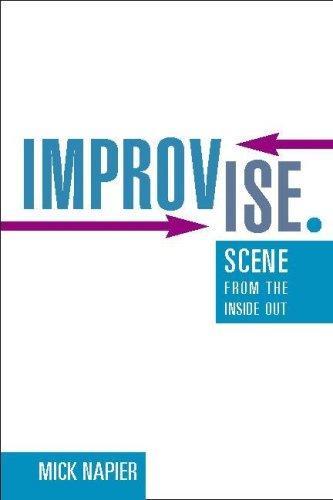
Improvise
Scene from the Inside Out
Mick Napier
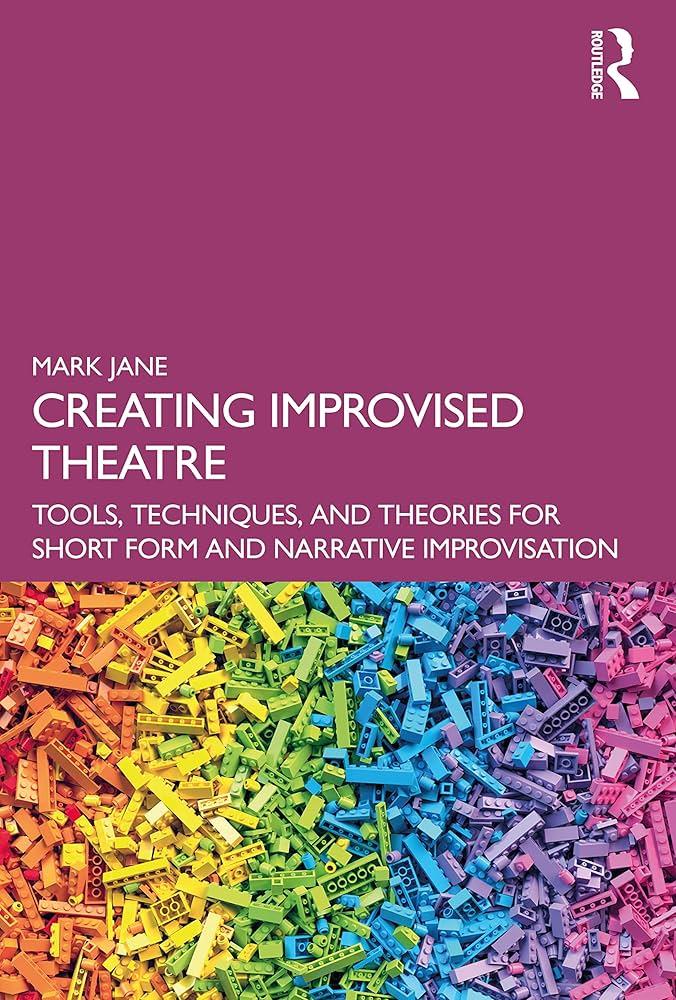
Creating Improvised Theatre
Tools, Techniques, and Theories
Mark Jane
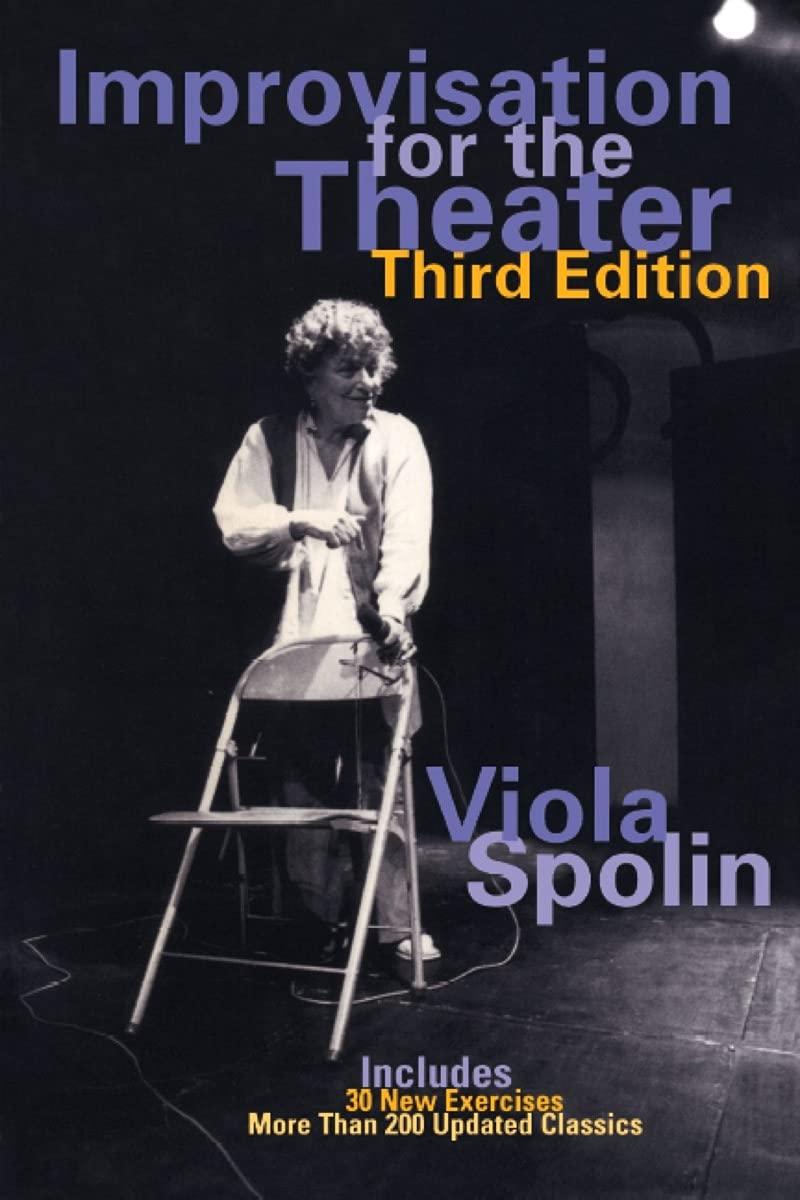
Improvisation for the Theater
A Handbook of Teaching and Directing Techniques
Viola Spolin

Mask Improvisation for Actor Training and Performance
the compelling image
Sears A. Eldredge

Improvisation for the Spirit
Live a More Creative, Spontaneous, and Courageous Life
Katie Goodman

Improvisation Starters
A Collection of 900 Improvisation Situations for the Theater
Philip Bernardi
Related Exercises
Low
Low is a status exercise in which performers practice playing the lowest-status character in a scene. The exercise trains the physicality of submission, deference, and self-deprecation. It builds awareness of how low status communicates through body language and vocal patterns, complementing high-status exercises.
Countdown
Countdown is a short-form game and exercise in which performers replay a scene in progressively shorter time limits, compressing the action from several minutes down to seconds. Each repetition demands sharper editing, bolder physical choices, and more efficient storytelling as the available time shrinks. The game reveals the essential beats of a scene by forcing performers to strip away everything nonessential, leaving only the core moments that drive the narrative. Countdown demonstrates that the emotional truth of a scene can survive extreme compression, and that clarity improves when performers are forced to prioritize.
Asides
Asides is a scene technique game in which performers periodically break from the action to address the audience directly with their character's private thoughts. Borrowed from theatrical convention dating back to Shakespeare and the Restoration comedy tradition, the aside allows a character to reveal inner monologue, secret motives, or contradictory feelings while other characters on stage cannot hear what is said. In improv, the technique layers subtext over surface dialogue, creating dramatic irony and comedy through the gap between what characters say to each other and what they confide to the audience. The game trains performers to maintain dual awareness of both the scene and the audience, and to develop rich inner lives for their characters that extend beyond spoken dialogue.
Continuing Emotions
Continuing Emotions is a scene game in which performers cycle through a series of emotional states at the direction of a caller. Each emotional shift must be justified within the scene's reality rather than simply displayed, with characters finding a reason to feel the new state given what has just happened. The game trains emotional range, commitment, and the ability to sustain scene logic through rapid change.
How to Reference This Page
The Improv Archive. (2026). More or Less. Retrieved September 28, 2026, from https://improvarchive.org/exercises/more-or-less
The Improv Archive. "More or Less." The Improv Archive, 2026. https://improvarchive.org/exercises/more-or-less.
The Improv Archive. "More or Less." The Improv Archive, 2026, https://improvarchive.org/exercises/more-or-less. Accessed September 28, 2026.
The Improv Archive is a systemically maintained repository. The archive itself acts as the corporate author.