Move a Player
Move a Player is an applied improv directing and scene-work exercise in which performers practice physically repositioning a scene partner -- with clear intention and the partner's full agreement -- to alter the scene's staging, visual composition, or relational dynamic. The exercise trains the awareness that physical position in space communicates meaning, and develops the confidence to actively shape a scene's spatial reality rather than accepting the first staging that emerges.
Structure
Setup
Performers are in the middle of a scene or beginning one. The exercise introduces the directive: at any point, a performer may gently and intentionally move their scene partner to a different position in the space, and the scene continues from the new staging.
Progression
As the scene plays, a performer decides that the scene's spatial reality would be improved or changed by repositioning their partner. They do so with physical intention -- moving the partner to a specific position in the space that serves the scene's dynamic -- and both performers commit to the new staging.
The facilitator may pause to discuss what changed when the position shifted: what did the new staging say about the relationship? What opportunities opened up? What did the scene lose?
Conclusion
The exercise ends after multiple staging changes across a scene or series of scenes, with a debrief on what spatial positioning communicates.
How to Teach It
Objectives
Move a Player trains spatial awareness and the understanding that staging is an active, meaningful element of the scene rather than a passive default. It develops the confidence to intervene in a scene's visual composition and the skill to do so in a way that serves the scene's relational and narrative content.
How to Explain It
"Where you are in space matters. The scene means something different when you're above your partner, or behind them, or at a distance. When you move them, you're making a choice about what the scene is about. Make that choice deliberately."
Scaffolding
Begin with a discussion of what specific staging choices communicate before performers attempt the exercise in scene. Review examples of staging choices and their meanings before introducing the real-time repositioning.
Common Pitfalls
Performers often move their partner arbitrarily or for logistical reasons (getting out of each other's way) rather than for dramatic or relational effect. Coach performers to move with clear intention -- knowing before the move what the new staging will communicate -- rather than moving and discovering what it meant after.
In Applied Settings
Learning Objectives
Move a Player develops the awareness that physical space communicates meaning in collaborative settings and trains the skill of intentionally shaping the spatial reality of a group interaction to support a desired dynamic or outcome. The exercise develops spatial communication awareness and the confidence to intervene in a group's physical arrangement when the current arrangement is not serving the interaction.
Workplace Transfer
In meetings, workshops, and group settings, the physical arrangement of participants communicates authority, openness, accessibility, and relational dynamic before anyone has spoken. A facilitator or leader who understands spatial communication can shape these dynamics intentionally -- by moving to stand beside a participant rather than in front of them, by reconfiguring seating from rows to a circle, or by adjusting proximity in a one-on-one conversation to change its register. Move a Player trains this spatial awareness and the confidence to act on it rather than accepting the default arrangement.
Facilitation Context
The exercise is used in facilitation training, leadership development programs, presentation skills workshops, and applied improv contexts focused on spatial communication and group dynamics. It works particularly well with facilitators and leaders who are developing their non-verbal communication toolkit. Groups of any size can participate in pairs or small groups.
Debrief Framing
After the exercise, ask: What changed when the staging changed? What did the new position communicate that the old one did not? Where in your professional contexts -- meetings, presentations, one-on-ones -- do you notice that the physical arrangement of people is communicating something, and how deliberately do you shape that arrangement to serve the interaction you want to have?
Skills Developed
Worth Reading
See all books →
Improv Yourself
Business Spontaneity at the Speed of Thought
Joseph A. Keefe
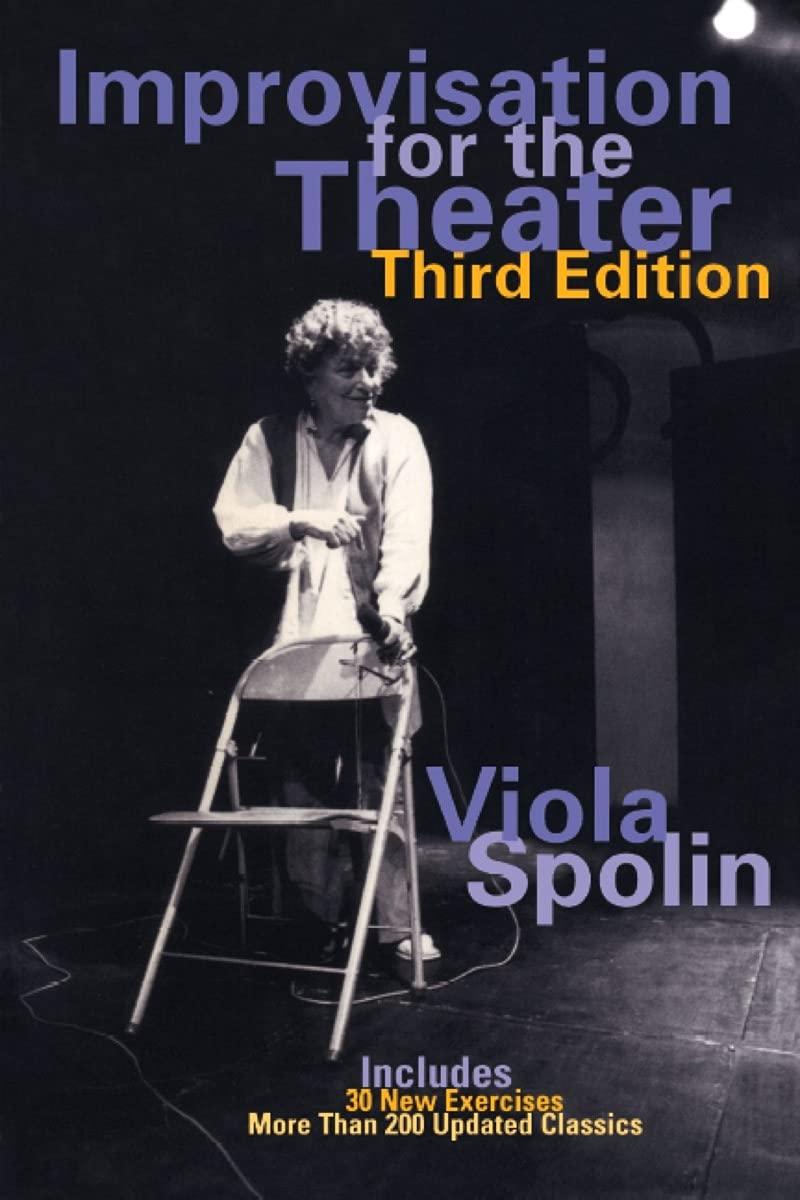
Improvisation for the Theater
A Handbook of Teaching and Directing Techniques
Viola Spolin

Acting Through Improv
Improv Through Theatresports
Lynda Belt; Rebecca Stockley
Theater Games for Rehearsal
Viola Spolin

Embodied Playwriting
Improv and Acting Exercises for Writing
Hillary Haft Bucs; Charissa Menefee
The Improvisation Game
Discovering the Secrets of Spontaneous Performance
Chris Johnston
Related Exercises
Moving Picture
Moving Picture is an applied improv tableau and group image exercise in which participants collaborate to create a shared physical image that then comes to life -- begins to move -- in response to a prompt or facilitator direction. The exercise trains collective physical coordination, the ability to create meaning through non-verbal group composition, and the experience of a shared imaginative reality that is built and inhabited together without verbal negotiation.
Location
Location is the archive label for foundational exercises that train players to establish where a scene takes place through physical behavior, object work, and spatial detail. Across the confirmed source base, the core demand stays consistent: the audience should understand the setting from what the players do in the space, not from a quick verbal label. The exercise develops environmental clarity, specificity, and the habit of treating the setting as an active part of the scene.
Pivot
Pivot is a scene exercise in which performers identify the moment when a scene needs to shift direction and make a deliberate choice to change it. The facilitator may call "Pivot" to signal the moment, or players practice identifying pivot points themselves. The exercise develops editorial awareness and trains the skill of knowing when a scene needs to evolve rather than repeat.
Move On
Move On is a scene exercise in which a facilitator calls out the directive to prompt performers to abandon their current scene beat and transition immediately to a new choice. The call forces performers to leave comfortable territory and advance the scene rather than circling the same material. The exercise builds editorial instincts about when a moment has been fully explored and trains the habit of moving forward rather than sideways. It develops the internal sense of pacing that distinguishes dynamic scene work from repetitive scene work.
Location, Relationship, Escalate, End
Location, Relationship, Escalate, End is a scene construction exercise in which performers build a scene through four discrete, progressive stages: first establishing a specific physical location, then establishing the specific relationship between the characters, then escalating the scene through increasing stakes or emotional intensity, and finally bringing it to a definitive end. The exercise provides a structured scaffold for scene construction and trains performers to execute each element with commitment and specificity before moving to the next.
The Lineage
Explore the schools and structures that influenced or evolved from Move a Player.
Improv Yourself (Joseph A. Keefe)
How to Reference This Page
The Improv Archive. (2026). Move a Player. Retrieved September 28, 2026, from https://improvarchive.org/exercises/move-a-player
The Improv Archive. "Move a Player." The Improv Archive, 2026. https://improvarchive.org/exercises/move-a-player.
The Improv Archive. "Move a Player." The Improv Archive, 2026, https://improvarchive.org/exercises/move-a-player. Accessed September 28, 2026.
The Improv Archive is a systemically maintained repository. The archive itself acts as the corporate author.