Rip Van Winkle is a paired exercise in which one participant plays someone who has been asleep for 200 years and the other must explain modern technology, customs, or concepts without using any contemporary jargon. The exercise develops clear communication, the ability to explain complex ideas simply, and awareness of how much assumed knowledge shapes everyday language.
Structure
Setup
Participants pair up. One person plays Rip Van Winkle, who fell asleep 200 years ago and has just woken up with no knowledge of modern life. The other plays a friend who must help Rip understand the contemporary world.
Progression
Rip asks questions about modern life: "What is that glowing rectangle everyone is staring at?" or "Why are those metal boxes moving so fast on the road?" The friend must explain smartphones, cars, the internet, or other modern phenomena using only language and concepts that someone from the early 1800s would understand.
The friend cannot use modern terminology. Saying "It is a phone" means nothing to Rip. Instead, the friend must describe function, purpose, and mechanism in fundamental terms: "It is a small machine that lets you send messages to anyone in the world instantly, and it also shows you pictures and lets you speak to people who are far away."
The exercise reveals how much of daily communication relies on shared context and specialized vocabulary. The friend discovers which concepts they truly understand (and can explain from first principles) versus which they use without deep comprehension.
Variations
A reverse version has the modern person ask about 1800s concepts while Rip explains them. A group version assigns different technologies to different pairs, then has each pair present their explanation to the whole group. A competitive version judges explanations on clarity, accuracy, and creativity.
How to Teach It
Objectives
Rip Van Winkle develops the ability to communicate complex ideas clearly, strip away jargon, and adapt explanations to the listener's frame of reference. These skills are essential in any context where technical specialists must communicate with non-experts.
How to Explain It
"One of you has been asleep for 200 years. You know nothing about modern life. The other person must explain how things work today without using any modern words. If Rip would not understand the word, you cannot use it."
Scaffolding
Begin with concrete, physical technologies (cars, light bulbs, televisions) before progressing to abstract concepts (the internet, social media, cryptocurrency). Concrete objects can be described through function and form. Abstract concepts require metaphor and analogy.
Common Pitfalls
The most common error is the friend slipping into modern jargon without realizing it. Words like "electricity," "digital," and "online" are so embedded in everyday speech that speakers use them unconsciously. Rip should actively challenge any word they would not understand. A second pitfall is explanations that are technically accurate but incomprehensible. Encourage the friend to use analogies to things Rip would know: horses, letters, candles, town squares.
In Applied Settings
Rip Van Winkle is used in corporate communication training, particularly for technical teams who must present to non-technical stakeholders. The exercise demonstrates the curse of knowledge: the more you understand a subject, the harder it becomes to explain it simply. The debrief explores how jargon creates barriers, how analogies bridge understanding, and how the best communicators translate complexity into clarity without losing accuracy. Facilitators also use it in onboarding contexts, where new team members play Rip to help existing staff recognize their own assumed knowledge.
Worth Reading
See all books →
Long Form Improvisation and American Comedy
The Harold
Matt Fotis
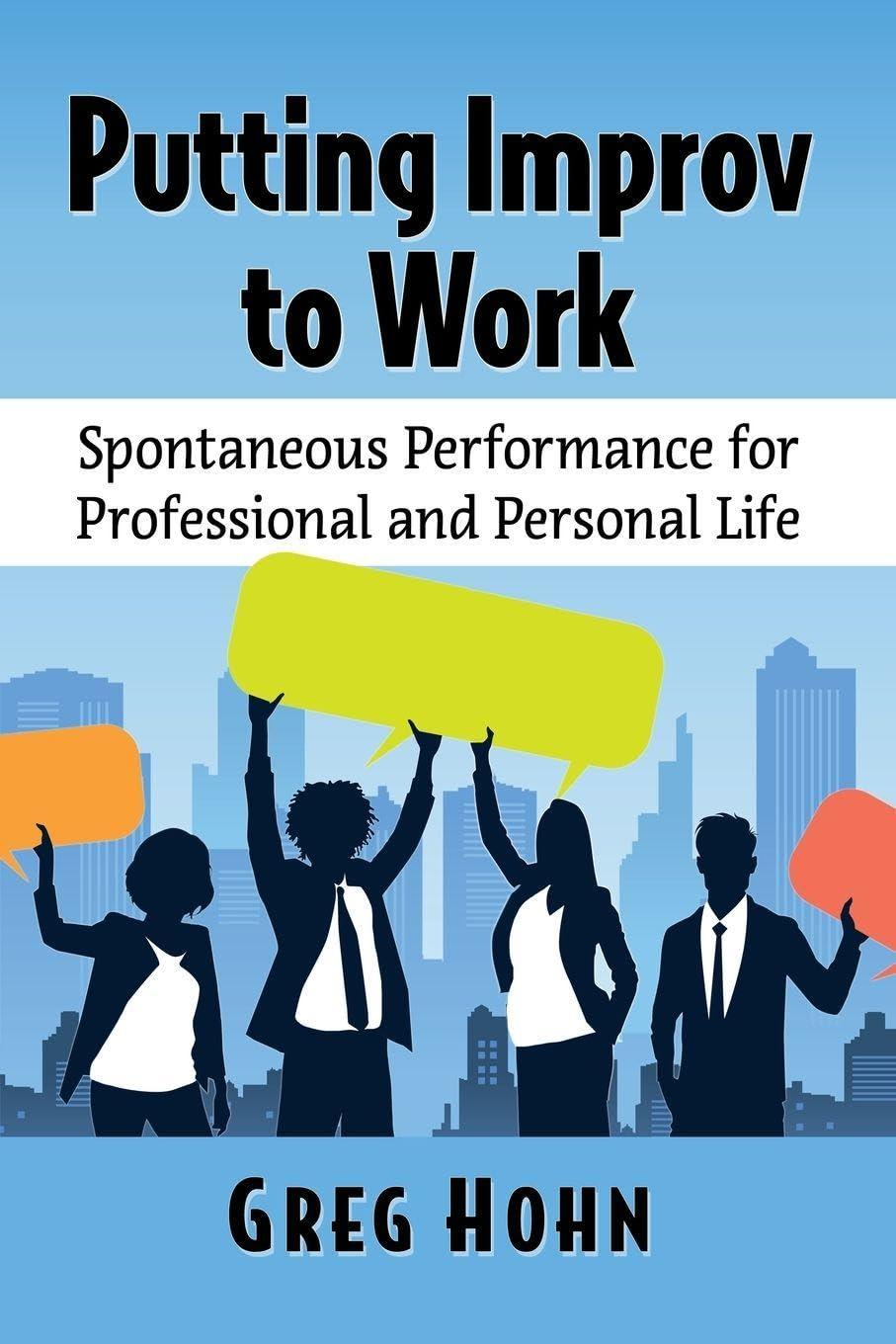
Putting Improv to Work
Spontaneous Performance for Leadership, Learning, and Life
Greg Hohn

Chicago Comedy
A Fairly Serious History
Margaret Hicks; Mick Napier

Business Improv
Experiential Learning Exercises to Train Employees
Val Gee

Group Improvisation
The Manual of Ensemble Improv Games
Peter Campbell Gwinn; Charna Halpern
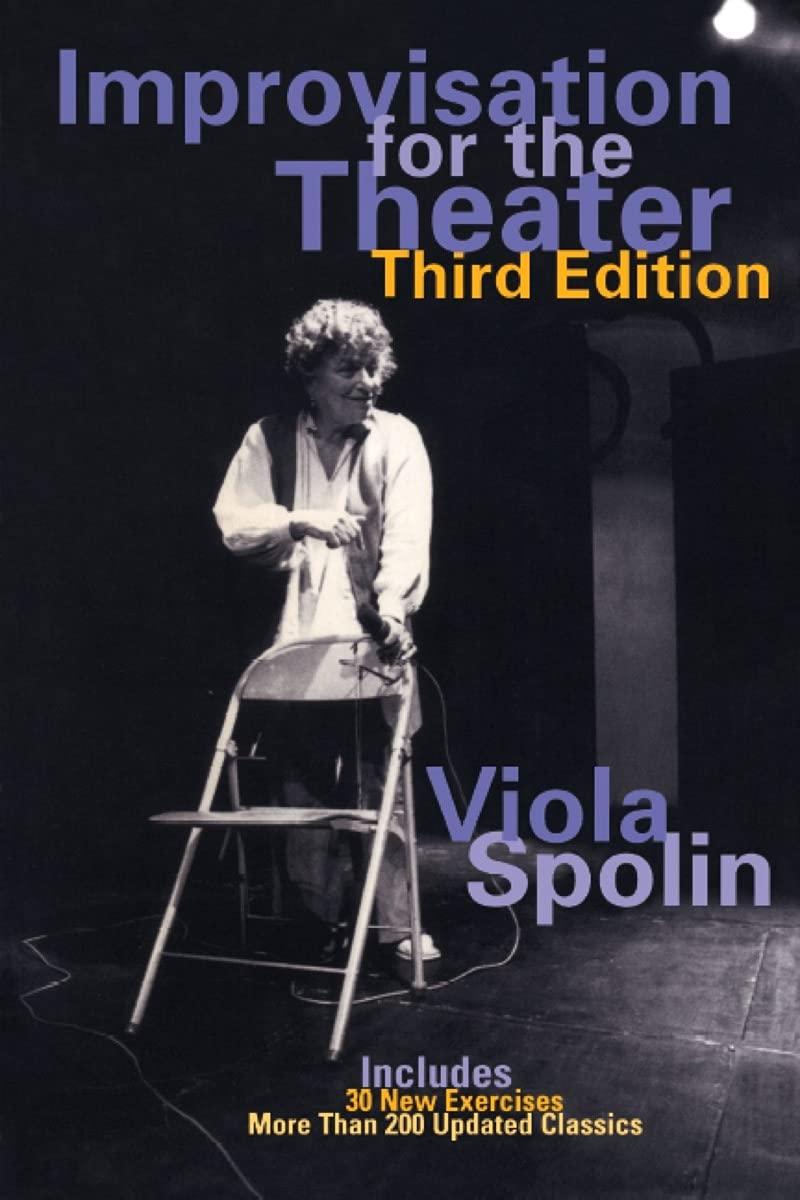
Improvisation for the Theater
A Handbook of Teaching and Directing Techniques
Viola Spolin
Related Exercises
Gibberish Games
Gibberish Games is an applied exercise in which two participants hold a conversation entirely in made-up, invented language -- gibberish -- while a third person translates for the rest of the group. The exercise trains attention to nonverbal cues: tone, rhythm, gesture, facial expression, and physical presence carry the meaning that words normally would. Participants learn to read and respond to a speaker's full communicative body rather than filtering attention through vocabulary alone.
Be Specific
Participants silently exchange imaginary objects in a circle, then trace how objects transformed, illustrating the importance of specific communication.
Remember the Time
Remember the Time is a paired exercise in which partners co-create a shared fictional memory, each contributing details as if recalling a real event they experienced together. The exercise develops collaborative storytelling, active listening, and the ability to build on a partner's offers without contradiction.
New Object to Talk
New Object to Talk is a warm-up exercise in which participants pick up a random object and use it as a conversation starter, speaking to or about the object as if it has significance, purpose, or a story attached to it. The exercise trains spontaneous verbal commitment and the ability to generate content from minimal external stimulus.
Dr. Know-It-All
Dr. Know-It-All is an exercise in which three or four participants sit side by side and answer audience questions one word at a time as if they were a single expert. Each person in the panel says one word, then the next person continues with one word, creating a collectively improvised answer that emerges word by word across the panel. The exercise requires intense listening, agreement, and the ability to accept any word offered and continue from exactly there.
Hello
Hello is a simple greeting exercise in which players practice making contact through the single word "hello," varying their delivery to express different emotions, characters, and relationships. The exercise demonstrates the range of meaning a single word can carry. It builds vocal variety and the ability to communicate intention through tone.
The Lineage
Explore the schools and structures that influenced or evolved from Rip Van Winkle.
Putting Improv to Work (Hohn)
How to Reference This Page
The Improv Archive. (2026). Rip Van Winkle. Retrieved September 28, 2026, from https://improvarchive.org/exercises/rip-van-winkle
The Improv Archive. "Rip Van Winkle." The Improv Archive, 2026. https://improvarchive.org/exercises/rip-van-winkle.
The Improv Archive. "Rip Van Winkle." The Improv Archive, 2026, https://improvarchive.org/exercises/rip-van-winkle. Accessed September 28, 2026.
The Improv Archive is a systemically maintained repository. The archive itself acts as the corporate author.