Synchronised Clapping
Synchronised Clapping is a group focus exercise in which players clap together in rhythm, gradually increasing complexity by adding variations, syncopations, or polyrhythms. The exercise develops listening, rhythmic awareness, and the ability to maintain individual precision within a collective pattern.
Structure
Basic Rhythm
The facilitator establishes a simple, steady clapping rhythm. Everyone joins and maintains the beat together. The goal is a clean, unified sound rather than scattered individual clapping.
Adding Complexity
Once the basic rhythm is solid, the facilitator introduces variations. Some participants continue the base rhythm while others clap a counter-rhythm or syncopated pattern. The group must maintain both patterns simultaneously without losing the beat.
Layering
Additional layers are introduced progressively. The exercise may incorporate stomping, body percussion, or vocalizations alongside the clapping patterns. Each new element must integrate cleanly with what already exists.
Group Listening
The exercise requires participants to listen to the whole group sound rather than focusing only on their own contribution. Individual precision matters, but ensemble coherence matters more.
Completion
The exercise resolves by gradually stripping layers back to the basic rhythm and then to silence. The transition from complex polyrhythm to clean silence requires as much collective awareness as the building phase.
How to Teach It
Objectives
Synchronised Clapping develops rhythmic sensitivity, the ability to maintain a consistent pattern under the pressure of competing rhythms, and the group's capacity to produce a unified sound through collective listening.
How to Explain It
"We are going to build a clapping rhythm together. Start with the basic beat. Listen to the whole group. When we add complexity, keep your part clean and listen for how it fits with everything else."
Scaffolding
Begin with unison clapping before introducing any complexity. Groups that cannot maintain a simple unison beat are not ready for syncopation. Build slowly and consolidate each layer before adding the next.
Common Pitfalls
The most common issue is participants who increase their volume when they lose the beat, trying to cover their error. Encourage everyone to reduce volume when uncertain and re-enter cleanly rather than soldiering through.
Worth Reading
See all books →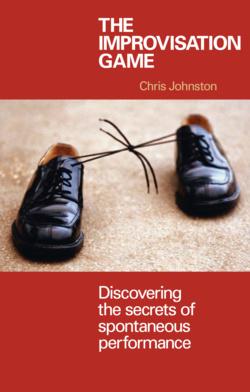
The Improvisation Game
Discovering the Secrets of Spontaneous Performance
Chris Johnston

The 5 Elements of Improv
How to Take Your Improv to the Next Level
Andrew M. Spragge; Karen L. Eichler

Group Improvisation
The Manual of Ensemble Improv Games
Peter Campbell Gwinn; Charna Halpern

Action Theater
The Improvisation of Presence
Ruth Zaporah

Improvising Now
A Practical Guide to Modern Improv
Rob Norman

Semiotics and Pragmatics of Stage Improvisation
Domenico Pietropaolo; Paul Bouissac
Related Exercises
Synchro Clap
Synchro Clap is a group focus exercise in which players attempt to clap simultaneously without any verbal coordination or designated leader. The exercise develops ensemble awareness and the ability to read and respond to the group's collective energy.
Synchronised Dance
Synchronised Dance is an exercise in which players attempt to move and dance together without choreography or a designated leader. The group must develop collective movement awareness, finding shared rhythm and motion through mutual observation and response.
Snap Clap Stomp Cheer
Snap Clap Stomp Cheer is a rhythmic circle game using snapping, clapping, stomping, and cheering in sequences. The exercise develops focus, physical coordination, and ensemble awareness through progressively complex rhythmic patterns.
Pass the Clap
Pass the Clap is a focus exercise in which players pass a synchronized clap around a circle through eye contact alone. Two players coordinate to clap at precisely the same moment, producing a single unified sound that travels from person to person. The exercise trains nonverbal communication, attentiveness, and the ability to match a partner's timing without verbal cues.
SNAP!
Snap is a high-energy ensemble exercise using snapping to create patterns and rhythms, developing group coordination, focus, and the ability to maintain individual contributions within a collective effort. The exercise builds from simple unison snapping to complex polyrhythmic structures.
Danish Clapping
Danish Clapping is a rhythm and coordination exercise in which players pass claps around a circle using a specific pattern of alternating hands. One player initiates a clap that is passed to a neighbor, who receives it with one hand and passes it on with the other, creating a continuous flowing clap sequence around the circle. As players build confidence with the pattern, speed increases and complexity is added. The exercise develops group rhythm, physical coordination, and collective timing.
How to Reference This Page
The Improv Archive. (2026). Synchronised Clapping. Retrieved September 28, 2026, from https://improvarchive.org/exercises/synchronised-clapping
The Improv Archive. "Synchronised Clapping." The Improv Archive, 2026. https://improvarchive.org/exercises/synchronised-clapping.
The Improv Archive. "Synchronised Clapping." The Improv Archive, 2026, https://improvarchive.org/exercises/synchronised-clapping. Accessed September 28, 2026.
The Improv Archive is a systemically maintained repository. The archive itself acts as the corporate author.