Three in the Middle
Three in the Middle is an applied exercise in which three participants stand at the center of a circle of observers and practice simultaneous conversation, physical awareness, and group mind. The three must speak, move, and make decisions together without a leader, building the capacity for lateral collaboration and distributed leadership.
Structure
The Circle
The full group forms a wide circle. Three participants step to the center.
The Task
The three receive a scenario or topic and must navigate it together without any one person taking over. The task may be a shared problem to solve, a conversation to have, or an activity to complete.
The Observation
The outer circle watches for patterns: who initiates, who defers, how decisions get made, when one person dominates or disappears.
The Rotation
After each round, the three return to the outer circle and three new participants step in. Observers share what they noticed before the next group begins.
The Debrief
After all participants have cycled through, the group discusses what conditions produced the most effective three-way collaboration.
How to Teach It
Objectives
Three in the Middle makes lateral collaboration visible. With only two people, one tends to lead. With four or more, roles naturally distribute. Three is the number where the question of who leads and who follows is most explicit and most productive.
Facilitation Notes
Coach the outer circle to observe rather than evaluate. They are looking for patterns, not judging performance. The observations should be descriptive rather than prescriptive.
Common Pitfalls
One participant often emerges as a de facto leader and the other two defer. When this happens, pause the round and ask the group what they notice. Return to the task and ask the natural followers to initiate.
In Applied Settings
Distributed Leadership Programs
Three in the Middle is used to develop the capacity for shared decision-making and mutual accountability, building the behavior patterns that distributed leadership requires.
Team Dynamics Workshops
Facilitators use the observable patterns from the exercise to open conversations about how the team's habitual collaboration structures serve or limit their effectiveness.
Meeting Facilitation Training
Participants experience firsthand what makes three-way collaboration work, developing the awareness they need to facilitate group decision-making in professional contexts.
Skills Developed
Worth Reading
See all books →
Applied Improvisation
Leading, Collaborating, and Creating Beyond the Theatre
Theresa Robbins Dudeck; Caitlin McClure

Playing Along
37 Group Learning Activities Borrowed from Improvisational Theater
Izzy Gesell

Directing Improv
Asaf Ronen
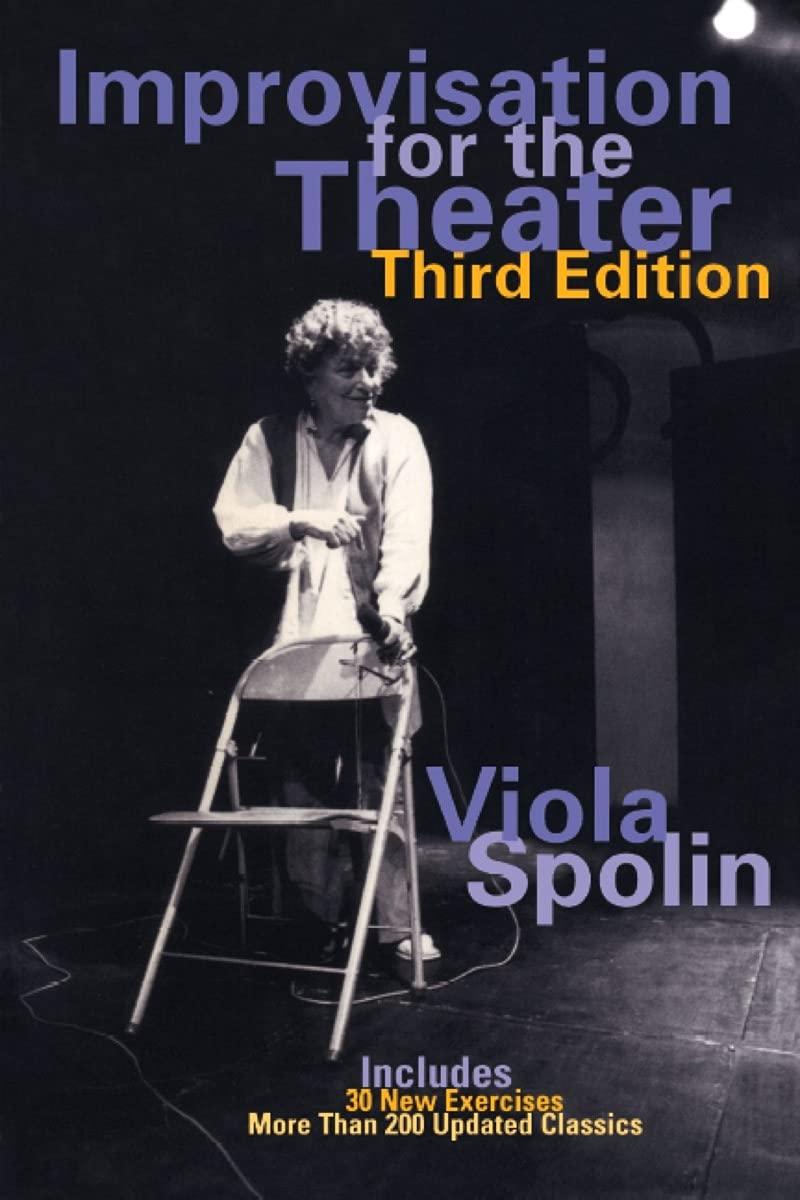
Improvisation for the Theater
A Handbook of Teaching and Directing Techniques
Viola Spolin

The Improvisation Edge
Secrets to Building Trust and Radical Collaboration at Work
Karen Hough

Business Improv
Experiential Learning Exercises to Train Employees
Val Gee
Related Exercises
Three-Second Pauses
Three Second Pauses is an applied exercise in which participants practice inserting a deliberate three-second pause before responding to any question or statement, building the habit of active listening over reactive reply. The pause allows full processing of what was said before generating a response.
One Two Three Four
One Two Three Four is a rhythmic counting exercise in which pairs of participants count to four between them in an alternating pattern, then progressively replace numbers with physical actions. The exercise layers increasing cognitive complexity onto a simple rhythm, training split attention, physical commitment, and the ability to maintain a pattern while simultaneously transforming it.
Arguments
Three players: one in center, two on sides taking opposite positions. The center player must maintain logical and emotional agreement with both simultaneously.
Three in a Circle
Three in a Circle is a focus exercise in which three players stand in a circle and must simultaneously track multiple tasks such as counting, passing gestures, and maintaining eye contact patterns. The overlapping demands train split attention and the ability to process multiple inputs, skills essential to ensemble performance.
Leadership
Leadership is an applied improv exercise that uses structured group movement and voluntary leader emergence to explore how leadership authority is claimed, transferred, and recognized within a group. Participants move through the space or perform actions in which any member of the group may step into a leadership role at any moment, and the group must recognize and follow the shift without verbal announcement. The exercise surfaces the dynamics of organizational leadership through an embodied, real-time demonstration.
Night Watch
Night Watch is an applied improvisation exercise in which participants practice sustained, deliberate observation of a space, a group, or a situation over an extended period, developing the capacity to notice subtle changes, emerging patterns, and details that others overlook. The exercise cultivates the quiet, steady attentiveness that underpins effective leadership, facilitation, and situational awareness.
The Lineage
Explore the schools and structures that influenced or evolved from Three in the Middle.
Applied Improvisation (Dudeck & McClure)
How to Reference This Page
The Improv Archive. (2026). Three in the Middle. Retrieved September 28, 2026, from https://improvarchive.org/exercises/three-in-the-middle
The Improv Archive. "Three in the Middle." The Improv Archive, 2026. https://improvarchive.org/exercises/three-in-the-middle.
The Improv Archive. "Three in the Middle." The Improv Archive, 2026, https://improvarchive.org/exercises/three-in-the-middle. Accessed September 28, 2026.
The Improv Archive is a systemically maintained repository. The archive itself acts as the corporate author.