Six Episodes
Six Episodes is a long-form format in which an improvised story is told across six distinct episodes, each covering a different time period or perspective within the same narrative. The structure provides a built-in arc while allowing the ensemble to explore the world from multiple angles. The format demands strong narrative tracking and the ability to manage serialized storytelling.
Worth Reading
See all books →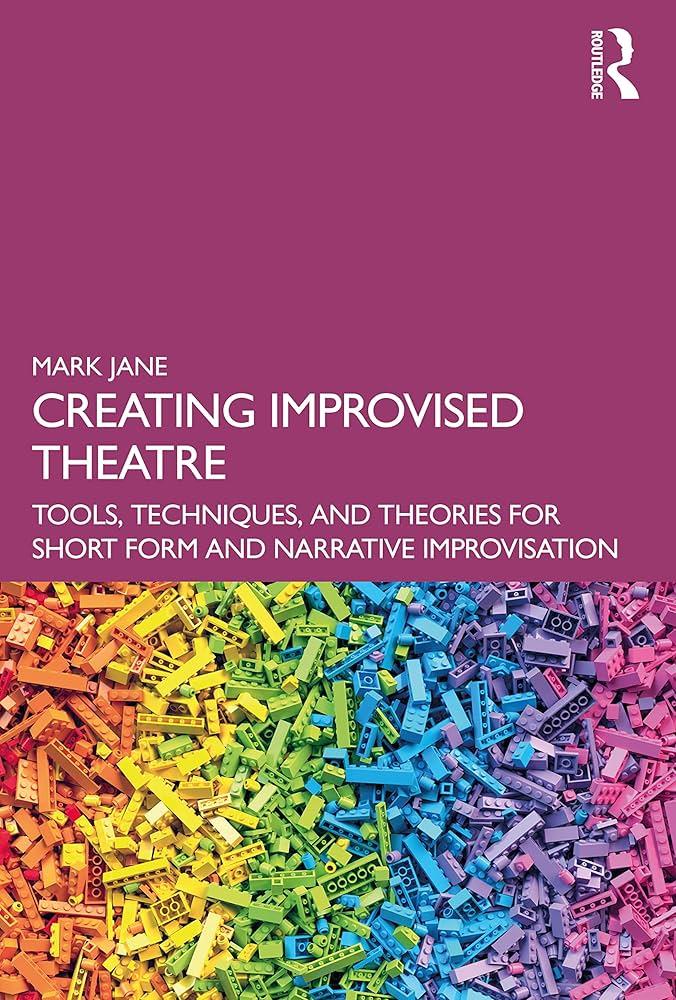
Creating Improvised Theatre
Tools, Techniques, and Theories
Mark Jane

Theatrical Improvisation
Short Form, Long Form, and Sketch-Based Improv
Jeanne Leep

How to Improvise a Full-Length Play
The Art of Spontaneous Theater
Kenn Adams

Long Form Improvisation and American Comedy
The Harold
Matt Fotis

Behind the Scenes
Improvising Long Form
Mick Napier

Long-Form Improv
The Complete Guide to Creating Characters, Sustaining Scenes, and Performing Extraordinary Harolds
Ben Hauck
Related Formats
The Mosaic
The Mosaic is a long-form improvisational format in which multiple unconnected scenes and characters are introduced in rapid succession during an opening sequence, then developed and woven together as the show progresses. Like a visual mosaic, meaning emerges from the relationship of fragments rather than from any single continuous narrative.
French Braid
French Braid is a long-form format in which three or more separate storylines are introduced independently and then gradually woven together as characters, themes, and events from different threads begin to intersect. Like braided strands of hair that remain distinct but become inseparable, the format's separate storylines maintain their own identities while crossing, influencing, and eventually converging with each other. The format demands strong ensemble coordination, the patience to develop threads slowly before connecting them, and the narrative awareness to recognize when a braid point is ready to be made.
Soap Series
Soap Series is a long-form format in which the ensemble improvises an ongoing soap opera narrative across multiple episodes or segments, featuring melodramatic characters, tangled relationships, shocking revelations, and cliffhanger endings drawn from the conventions of daytime television.
String of Pearls
String of Pearls is a long-form format in which a series of standalone scenes are connected by a recurring structural element such as a character, location, or theme that threads through the show like a string through pearls. Each scene is self-contained but gains meaning through its relationship to the others. The format rewards thematic awareness and the ability to find subtle connections.
Montage
Montage is a long-form improvised format in which performers present a series of thematically connected scenes inspired by a single audience suggestion. Scenes are linked by shared ideas, recurring motifs, emotional resonances, or occasional character callbacks rather than a continuous plot. The format's strength is its flexibility: any scene can follow any scene as long as the thematic connection holds. Montage is one of the foundational structures in Chicago-tradition long-form improvisation and is among the most widely performed long-form formats worldwide.
Tapestry
Tapestry is a long-form format in which multiple seemingly unrelated scenes are played across a full show, gradually revealing thematic, character, and narrative connections between them. The full picture emerges only as the show progresses, requiring ensemble patience, callback discipline, and trust that the disparate threads will cohere. The format rewards thematic awareness and is named for the way its elements, invisible in isolation, reveal their pattern once complete.
How to Reference This Page
The Improv Archive. (2026). Six Episodes. Retrieved September 29, 2026, from https://improvarchive.org/formats/six-episodes
The Improv Archive. "Six Episodes." The Improv Archive, 2026. https://improvarchive.org/formats/six-episodes.
The Improv Archive. "Six Episodes." The Improv Archive, 2026, https://improvarchive.org/formats/six-episodes. Accessed September 29, 2026.
The Improv Archive is a systemically maintained repository. The archive itself acts as the corporate author.