The Movie
The Movie is a long-form improvisational format structured to mirror the narrative architecture of a film, including title sequence, genre conventions, recurring locations, character arcs, and a climactic resolution. The format invites performers to use cinematic language, including jump cuts, montage, and point-of-view shifts, as structural tools.
Structure
The Title and Genre
The show begins with a title, either drawn from audience suggestion or announced by an emcee. The genre is established in the first scene through tone, language, and physical style.
Act One
Introduces the protagonist, the world, and the central problem or desire. Ends with an inciting event that commits the protagonist to a course of action.
Act Two
The protagonist pursues their goal, encountering obstacles and complications. Supporting characters develop. The world expands. A midpoint raises the stakes and a crisis in the final scenes of act two forces the protagonist to their lowest point.
Act Three
The protagonist faces the central conflict directly. The resolution reflects everything that was established in acts one and two. The format closes with a button that functions as a final image or credit sequence.
How to Perform It
Format Notes
The Movie works best when performers understand that cinematic editing conventions, the cut to a different location, the time jump, the reaction shot, are available as structural tools. These allow the show to maintain narrative momentum without being bound to real time.
Genre Commitment
Genre is not decoration. When performers commit to the conventions of the chosen genre, the format's structure becomes automatic. Genre tells performers where they are in the story, what the stakes are, and what the audience expects.
Worth Reading
See all books →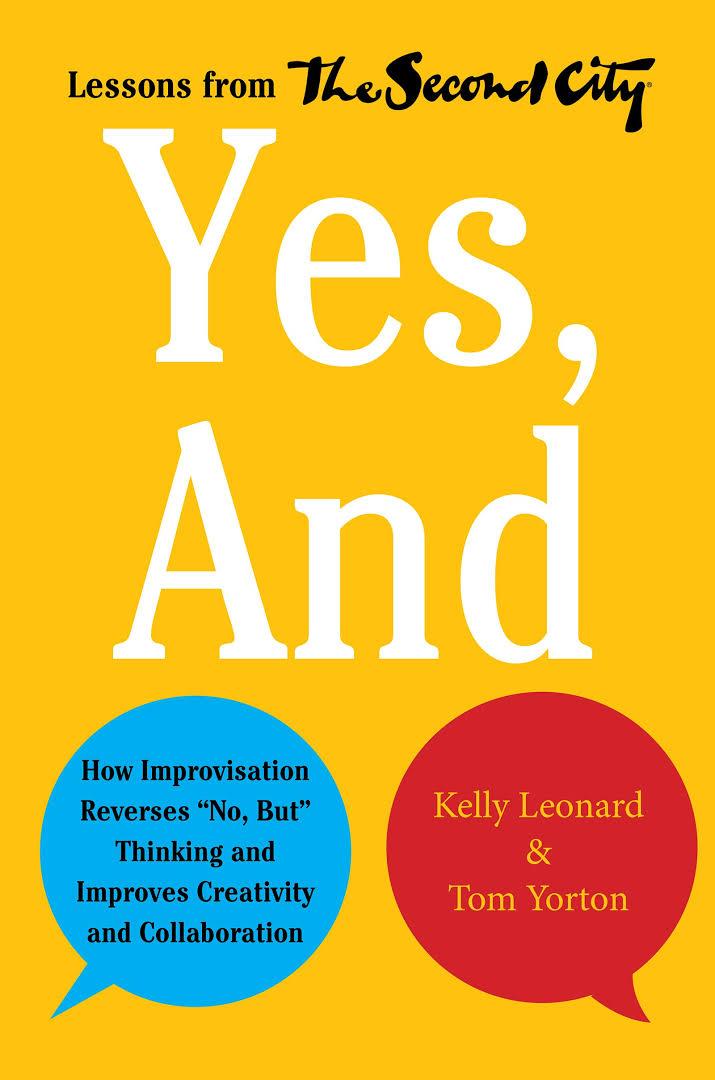
Yes, And
How Improvisation Reverses No, But Thinking and Improves Creativity and Collaboration
Kelly Leonard; Tom Yorton

Business Improv
Experiential Learning Exercises to Train Employees
Val Gee

Theatrical Improvisation
Short Form, Long Form, and Sketch-Based Improv
Jeanne Leep

The Young Actor's Book of Improvisation
Dramatic Situations
Sandra Caruso; Susan Kosoff

The Art of Chicago Improv
Short Cuts to Long-Form Improvisation
Rob Kozlowski
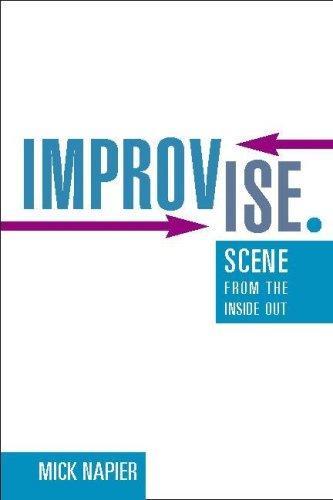
Improvise
Scene from the Inside Out
Mick Napier
Related Formats
Feature Film
Feature Film is a long-form improvised format in which the ensemble creates a complete movie onstage, including opening credits, multiple acts, subplot development, and a climactic resolution. The format demands sustained narrative commitment, genre awareness, and ensemble coordination over an extended performance, often running sixty to ninety minutes. Performers draw on cinematic conventions (establishing shots, montages, flashbacks, score changes) translated into theatrical terms. Feature Film rewards structural thinking, the ability to track multiple storylines simultaneously, and the discipline to build toward a satisfying ending.
Diamond
The Diamond is a long-form improv format in which scenes expand outward from a single opening scene like the widening shape of a diamond, then contract back by revisiting those scenes in reverse order. The symmetrical structure creates a satisfying narrative arc in which themes introduced early are resolved, deepened, or recontextualized as the show returns to each scene. The Diamond rewards careful listening, thematic tracking, and the ability to make callbacks that add meaning rather than simply repeating earlier material. The format offers audiences a clear structural logic that makes the connections between scenes easy to follow while still allowing for improvisational surprise.
The Mosaic
The Mosaic is a long-form improvisational format in which multiple unconnected scenes and characters are introduced in rapid succession during an opening sequence, then developed and woven together as the show progresses. Like a visual mosaic, meaning emerges from the relationship of fragments rather than from any single continuous narrative.
How to Reference This Page
The Improv Archive. (2026). The Movie. Retrieved September 29, 2026, from https://improvarchive.org/formats/the-movie
The Improv Archive. "The Movie." The Improv Archive, 2026. https://improvarchive.org/formats/the-movie.
The Improv Archive. "The Movie." The Improv Archive, 2026, https://improvarchive.org/formats/the-movie. Accessed September 29, 2026.
The Improv Archive is a systemically maintained repository. The archive itself acts as the corporate author.