Evil Stick of Gum
Evil Stick of Gum is a scene game in which a cursed or mischievous piece of gum passes between characters, and whichever character is chewing it at any given moment becomes the focus of comic misfortune, transformation, or unusual behavior. The object drives the scene's engine: whoever holds the gum becomes the one things happen to. The game rewards physical specificity, commitment to absurd cause-and-effect, and ensemble play around a shared, escalating object.
Structure
Setup
The host establishes the premise: a piece of gum with unusual properties is being passed around. Players should know that whoever is chewing it will experience something noteworthy. A suggestion can establish what kind of misfortune or effect the gum produces, or the effect can emerge organically.
Progression
One player begins chewing the gum and immediately encounters its effect -- unusual behavior, comic misfortune, or transformation. The gum is passed to another player (chewed out, handed over, spat, stolen) and the effect transfers. The new chewer now becomes the focal point while the previous player returns to relative normalcy.
Each transfer should escalate slightly from the previous. The gum's effects may grow stranger with each new bearer. The ensemble supports whichever player holds the gum by giving them space and reacting to the consequences.
Conclusion
The scene ends when the gum reaches a clear comedic peak -- when the effects have escalated to an appropriate absurdist conclusion or when a satisfying physical or narrative resolution presents itself.
How to Teach It
Objectives
Evil Stick of Gum trains object tracking, support for the focal player, and ensemble responsiveness to a shared physical device. The game's engine is the object, not the story -- performers who understand this play with clarity and generosity.
How to Explain It
"The gum is the star. Whoever has it, we're all watching and supporting. If you've got the gum, go big. If you don't, set up the next person to receive it."
Scaffolding
In early rehearsal, establish a clear, simple effect before allowing it to evolve. A gum that makes the bearer speak in rhyme is easier to track than one with ambiguous consequences. Once the group masters the object-tracking discipline, more open-ended effects become playable.
Common Pitfalls
The game loses coherence when the gum is not clearly tracked. The coaching note is that the physical continuity of the object -- visible chewing, deliberate passing, clear receipt -- is the responsibility of every performer, not just the one holding it.
How to Perform It
Audience Intro
"This isn't just any piece of gum. Whoever's chewing it right now... things are going to get interesting for them."
Cast Size
Minimum 3. Ideal 4 to 6. The gum needs enough hands to pass through to generate genuine escalation.
Staging
The gum should be physically tracked -- the audience must always know who has it. Clear mimed chewing gestures, exaggerated reactions, and deliberate passing moments keep the physical logic legible. The player with the gum should occupy center stage or be given spatial priority by the ensemble.
Wrap-Up Logic
The game ends when the effects have reached a natural peak. A strong ending often involves the gum returning to its original holder in a changed state, or being definitively dispatched in a physically committed conclusion.
Worth Reading
See all books →
Pirate Robot Ninja
An Improv Fable
Billy Merritt; Will Hines

Drama Games and Improvs
Games for the Classroom and Beyond
Justine Jones; Mary Ann Kelley

Mask Improvisation for Actor Training and Performance
the compelling image
Sears A. Eldredge
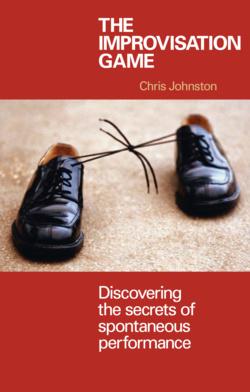
The Improvisation Game
Discovering the Secrets of Spontaneous Performance
Chris Johnston
Theater Games for Rehearsal
Viola Spolin

Group Improvisation
The Manual of Ensemble Improv Games
Peter Campbell Gwinn; Charna Halpern
Related Games
Evil Twin
Evil Twin is a scene game in which one performer plays two roles simultaneously: a character in a scene and that character's villainous, morally inverted double. The evil twin appears at unexpected moments, contradicting the character's stated values, undermining their relationships, or pursuing secretly sinister goals. The game creates comedy through the performer's physical and vocal differentiation between the two versions and the tension between the character the world sees and the one underneath.
Id
Id is a scene game in which a performer's unfiltered subconscious desires are voiced by a second player, creating a running commentary of primal wants beneath the surface dialogue. The tension between polite conversation and raw impulse generates comedy and dramatic irony. The game highlights the gap between social behavior and inner life.
Marshmallow Mania
Marshmallow Mania is a short-form physical game in which performers incorporate an agreed imaginary or real marshmallow into a scene or sequence of physical challenges, building a comedic experience around the material properties and behavioral associations of marshmallows -- their softness, stickiness, resistance, and capacity for transformation. The game rewards physical specificity, commitment to the imaginary object's reality, and the ensemble's willingness to play with food-based physical comedy.
Cards
Cards is a short-form game in which performers draw playing cards that assign them secret emotions, character traits, or scene constraints they must incorporate into the scene. The random assignment prevents pre-planning and forces genuine in-the-moment adaptation. The game rewards the ability to make any given constraint appear natural.
How to Reference This Page
The Improv Archive. (2026). Evil Stick of Gum. Retrieved September 28, 2026, from https://improvarchive.org/games/evil-stick-of-gum
The Improv Archive. "Evil Stick of Gum." The Improv Archive, 2026. https://improvarchive.org/games/evil-stick-of-gum.
The Improv Archive. "Evil Stick of Gum." The Improv Archive, 2026, https://improvarchive.org/games/evil-stick-of-gum. Accessed September 28, 2026.
The Improv Archive is a systemically maintained repository. The archive itself acts as the corporate author.