Evil Twin
Evil Twin is a scene game in which one performer plays two roles simultaneously: a character in a scene and that character's villainous, morally inverted double. The evil twin appears at unexpected moments, contradicting the character's stated values, undermining their relationships, or pursuing secretly sinister goals. The game creates comedy through the performer's physical and vocal differentiation between the two versions and the tension between the character the world sees and the one underneath.
Structure
Setup
One performer is designated as the Evil Twin player. A scene is established with other performers. The Evil Twin player begins as their primary character.
Progression
At any point, the Evil Twin player may physicalize a shift into their evil twin -- a posture change, a voice shift, a repositioning -- and speak or act as the hidden double. The other performers in the scene do not see or react to the evil twin; from their perspective, only the primary character exists.
The evil twin comments on the scene from an inverted or sinister perspective, pursues their own agenda, or undercuts what the primary character just said. The performer then snaps back to the primary character, who continues as though nothing happened.
The evil twin's appearances should escalate over the course of the scene -- more frequent, more pointed, or increasingly difficult for the primary character to contain.
Conclusion
The game ends when the evil twin's presence reaches a comic or narrative peak, or when the performer chooses a final dramatic collision between the two versions of the character.
How to Teach It
Objectives
Evil Twin trains physical differentiation, dual-track character management, and the comedic use of dramatic irony. It develops the performer's ability to create two distinct physical and vocal identities that exist in the same body.
How to Explain It
"You're playing two people who live in the same body. The world sees one of them. We see both. Make them unmistakably different."
Scaffolding
Practice the two physical states separately before putting them in a scene context. Perform five lines as the primary character, then five as the evil twin, alternating, until the distinction is reliable and physical.
Common Pitfalls
The transition between versions is often insufficiently clear, leaving the audience confused about which character is speaking. The coaching note is to over-differentiate at first -- the contrast can always be refined once the distinction is legible.
How to Perform It
Audience Intro
"[Performer] is going to be playing their character -- and their character's secret evil twin. The rest of the scene doesn't know. But we do."
Cast Size
Minimum 2 (one Evil Twin player, one scene partner). Ideal 3 to 4. More scene partners give the evil twin more to subvert.
Staging
The physical transition between primary character and evil twin must be unmistakably clear to the audience. A step to one side, a specific posture, a voice change -- whatever the signal, it should be consistent and legible. The audience's pleasure in the game depends entirely on clearly tracking which version of the performer they are seeing.
Wrap-Up Logic
The game peaks when the evil twin's presence threatens to overwhelm the primary character entirely. A strong ending might involve the evil twin taking over, or the primary character finally confronting and defeating their double.
Worth Reading
See all books →
Pirate Robot Ninja
An Improv Fable
Billy Merritt; Will Hines

Mask Improvisation for Actor Training and Performance
the compelling image
Sears A. Eldredge
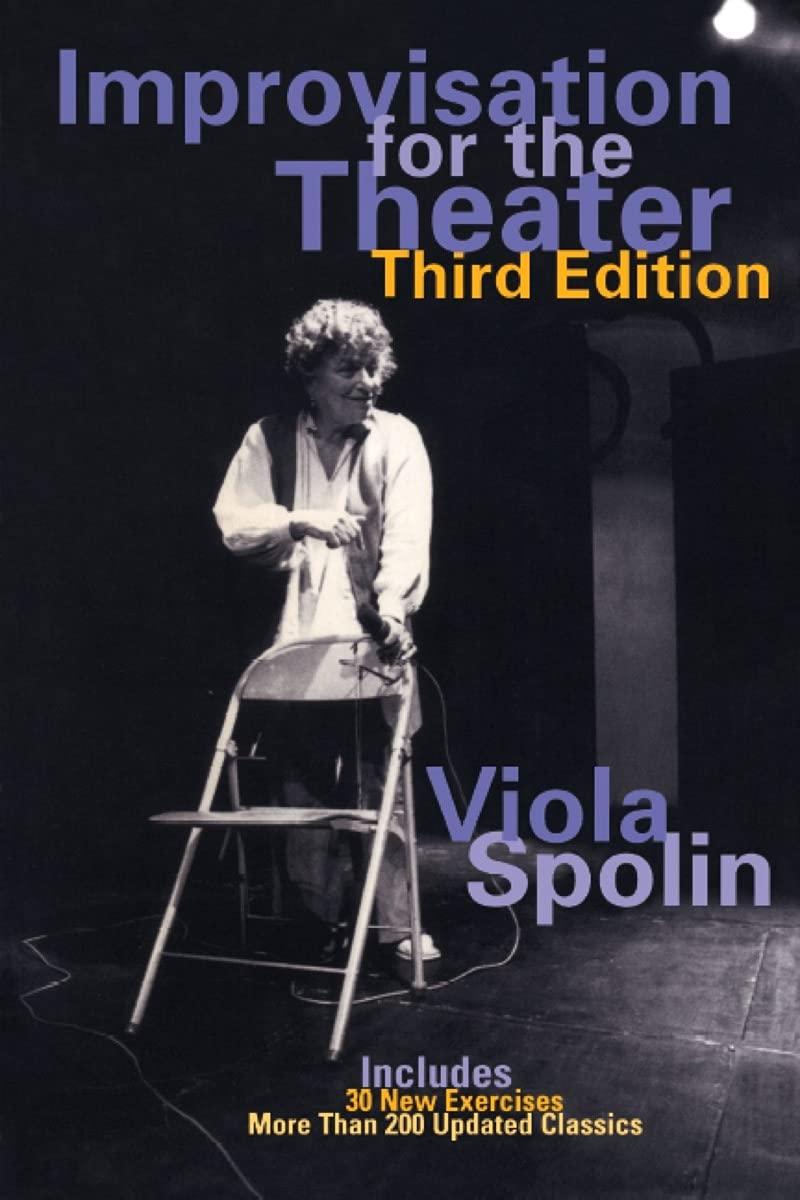
Improvisation for the Theater
A Handbook of Teaching and Directing Techniques
Viola Spolin
Theater Games for the Lone Actor
Viola Spolin
Theater Games for Rehearsal
Viola Spolin

The Young Actor's Book of Improvisation
Dramatic Situations
Sandra Caruso; Susan Kosoff
Related Games
Alter Ego
Alter Ego is a short-form scene game in which each main character has a second performer standing directly behind them who voices the character's inner thoughts. Two players perform a scene with dialogue and action while their respective alter egos narrate the unspoken subtext: desires, fears, judgments, and contradictions that the characters would never say aloud. The contrast between what a character says publicly and what they actually think generates natural comedy and dramatic irony. The game highlights the role of subtext in scene work and rewards performers who create clear, exploitable gaps between surface behavior and true feelings. Alter Ego appears across multiple improv traditions and is documented in Andy Goldberg's Improv Comedy among other sources.
Siamese Twins
Siamese Twins is a physical scene game in which two performers stand side by side and operate together as a single character, each using only their outer arm. The constraint requires close physical coordination and continuous nonverbal negotiation about every action, gesture, and movement. The game generates comedy from the inevitable mismatches between the two players' intentions and from the absurdity of watching two bodies attempt to function as one.
Dubbing
Dubbing is a performance game in which one performer provides the physical actions for a character while a separate performer supplies that character's voice from offstage or from behind. The deliberate separation of voice and body creates inherent comedy as the two performers attempt to synchronize, producing a character that appears to have a mind of its own. Dubbing trains complementary skills: the body performer must generate clear, readable physical actions, while the voice performer must interpret and justify those movements through dialogue. The game appears across many short-form formats and is one of the most audience-accessible improv games due to its immediately visible comic mechanism.
Evil Stick of Gum
Evil Stick of Gum is a scene game in which a cursed or mischievous piece of gum passes between characters, and whichever character is chewing it at any given moment becomes the focus of comic misfortune, transformation, or unusual behavior. The object drives the scene's engine: whoever holds the gum becomes the one things happen to. The game rewards physical specificity, commitment to absurd cause-and-effect, and ensemble play around a shared, escalating object.
Double Endowment
Double Endowment is a short-form guessing game in which two performers are each secretly endowed with a character trait by the audience, and both must simultaneously figure out their own trait from the clues the other performer is giving. Each performer knows the other's secret trait but not their own, and must embed clues for the other player while interpreting the clues being embedded for them. The result is a mutual guessing dynamic that rewards listening and responsive improvisation.
Little Voice
Little Voice is a scene game in which one performer provides a running internal monologue for another performer's character, speaking the private thoughts aloud while the character plays the scene with a different outward presentation. The technique adds psychological depth by externalizing what the character would never say. The gap between the inner voice and the outer behavior creates comedy, dramatic irony, and character complexity. The game trains performers to play with subtext and demonstrates how much scene work depends on the difference between what characters think and what they reveal.
How to Reference This Page
The Improv Archive. (2026). Evil Twin. Retrieved September 28, 2026, from https://improvarchive.org/games/evil-twin
The Improv Archive. "Evil Twin." The Improv Archive, 2026. https://improvarchive.org/games/evil-twin.
The Improv Archive. "Evil Twin." The Improv Archive, 2026, https://improvarchive.org/games/evil-twin. Accessed September 28, 2026.
The Improv Archive is a systemically maintained repository. The archive itself acts as the corporate author.