Ground Control
Ground Control is a scene game in which one performer acts as mission control while others play astronauts, field operatives, or remote agents on a distant mission. Physical separation between the two groups -- and the implied communication delay or signal interference -- creates natural dramatic tension. The game rewards the ability to build suspense through restricted information, heightened stakes, and the dramatic irony of mission control knowing things the field team does not, or vice versa.
Structure
Setup
A suggestion establishes the mission: a space exploration, a remote field operation, a deep-sea dive, or any context in which two teams are separated by distance and dependent on radio communication. One performer (or one group) plays Ground Control at a notional console; the others play the field team.
The Scene
The game alternates between the two groups. Ground Control issues directives, monitors data, and manages the mission from a position of incomplete information. The field team executes the mission, encountering obstacles, discoveries, or emergencies that Ground Control must respond to.
Communication is constrained: the two groups speak to each other through the conceit of the radio. They cannot see each other directly. Information arrives in stages, and each new piece of information changes what each side knows about the situation.
Escalation
The game builds through escalating complications -- signal interference, unexpected discoveries, conflicting data, or emergencies that put one side in possession of information the other urgently needs. The drama lives in the gap between what each side knows.
Ending
The scene ends at a dramatic peak -- mission success, catastrophic failure, or an ambiguous resolution -- or when the host brings the scene to a blackout.
How to Teach It
Objectives
Ground Control trains the management of restricted information, status asymmetry between groups, and the ability to build drama through what is not said as much as what is. It develops the skill of playing toward and away from information in real time.
How to Explain It
"Ground Control, you see the data -- you know the situation -- but your field team is the only one who can act. Field team, you're the ones on the ground, but Ground Control has information you don't. Your job is to solve the mission together across that gap."
Scaffolding
Begin with a clear mission context so both groups have an immediate frame. Encourage performers to create specific technical details rather than generic radio communication. Concrete details -- oxygen levels, atmospheric pressure, coordinates -- make the stakes specific and therefore dramatic.
Common Pitfalls
The game stalls when both groups simply relay information without raising stakes or withholding anything. The drama lives in the gap between what each side knows -- information asymmetry is the engine. Coach performers to use what they know to create problems for the other group, not just to share data.
How to Perform It
Audience Intro
"We have a mission underway. Our ground team is managing from here; our field operatives are out there. Exactly where out there -- we'll find out."
Cast Size
Ideal: 3 to 5 performers. One or two as Ground Control, two or three as field operatives.
Staging
Spatial separation between the two groups is important. Ground Control at one area of the stage (perhaps with a suggested console), field operatives at a distinct downstage area or opposite side. The audience should see both groups simultaneously.
Wrap-Up Logic
End at a dramatic peak: a successful touchdown, a catastrophic system failure, or the moment of maximum information asymmetry. The scene rarely needs to resolve cleanly -- an ambiguous ending can be more powerful.
Worth Reading
See all books →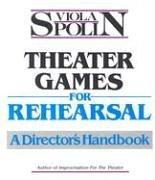
Theater Games for Rehearsal
Viola Spolin

The Improvisation Game
Discovering the Secrets of Spontaneous Performance
Chris Johnston

Improvisation for the Theater
A Handbook of Teaching and Directing Techniques
Viola Spolin
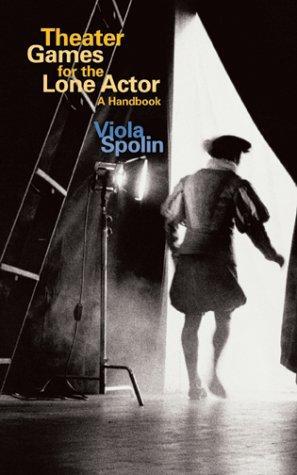
Theater Games for the Lone Actor
Viola Spolin
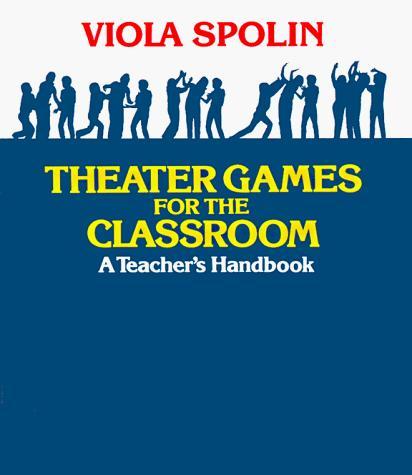
Theater Games for the Classroom
Viola Spolin

Drama Games and Improvs
Games for the Classroom and Beyond
Justine Jones; Mary Ann Kelley
Related Games
Airport
Airport is an improv structure that uses the airport terminal as a setting for character-driven scene work and trust-building exercises. The airport provides a natural framework for dramatic encounters: strangers with different destinations, emotional states, and agendas occupy shared space under time pressure. As a scene game, players adopt distinct characters navigating arrivals, departures, delays, and the heightened emotions of travel. As a training exercise, the airport setting frames trust and communication drills where players guide each other through physical challenges. The structure appears across multiple improv and acting traditions, with variations ranging from scenic improvisations in waiting areas to guided obstacle courses using the metaphor of pilots and signalmen. The game rewards clear character choices, environmental awareness, and the ability to build layered group dynamics within a fixed location.
Remote Control
Remote Control is a short-form game in which a host or audience member operates an imaginary television remote control, switching between channels that each feature a different improvised scene, genre, or show. Performers snap instantly into their assigned channel's content wherever it left off when the channel was last visited. The game rewards rapid context-switching, scene memory, and the ability to inhabit distinct styles and genres on demand.
Rash
Rash is a short-form scene game in which a performer develops an increasingly strange physical affliction during a scene, which they must justify and maintain without breaking character. The condition escalates in intensity or spreads to other performers over the course of the game. The game tests the ability to integrate absurd physical premises into a scene's emotional reality without abandoning the scene's human stakes.
Caligula
Caligula is a short-form game in which one player assumes the role of an all-powerful emperor who can demand anything of the other performers. Scene partners must comply with increasingly absurd commands while maintaining their own characters and the logic of the scene. The game explores status dynamics and rewards creative compliance.
Nuclear Bomb Chicken
Nuclear Bomb Chicken is a short-form game in which two performers play a scene with escalating stakes, each daring the other to back down from an increasingly absurd or dangerous commitment. The game functions like a comedic game of chicken: both performers raise the stakes higher and higher until one breaks, creating a climactic moment of surrender or mutual destruction.
How to Reference This Page
The Improv Archive. (2026). Ground Control. Retrieved October 15, 2026, from https://improvarchive.org/games/ground-control
The Improv Archive. "Ground Control." The Improv Archive, 2026. https://improvarchive.org/games/ground-control.
The Improv Archive. "Ground Control." The Improv Archive, 2026, https://improvarchive.org/games/ground-control. Accessed October 15, 2026.
The Improv Archive is a systemically maintained repository. The archive itself acts as the corporate author.