Rhymes
Rhymes is a short-form game in which performers must end every line of dialogue with a word that rhymes with the previous line's final word. Players advance a scene while satisfying this linguistic constraint, creating comic pressure through the constant risk of hesitation or failure. The game rewards broad vocabulary, quick verbal recall, and the ability to keep a scene moving while navigating a demanding formal structure.
Structure
Setup
Players receive a scene suggestion from the audience: a relationship, location, or situation. Before the scene begins, the rule is announced: every line of dialogue must end with a word that rhymes with the final word of the previous line. The first player speaks any opening line; from that point, every subsequent line must rhyme.
Gameplay
Players build the scene under continuous rhyme pressure. Each new line must do two things: advance the scene's narrative, and end on a rhyming word. Lines that satisfy the rhyme but abandon the scene's logic feel hollow; lines that ignore the rhyme constraint fail the game. The best performances make both requirements look effortless.
When a player hesitates too long, lands on a forced near-rhyme, or fails to rhyme at all, the audience or a designated host buzzes them. In competitive formats, eliminated players sit out; in workshop formats, the scene continues with coaching.
Variants adjust the difficulty: players may be required to rhyme in couplets (two consecutive lines rhyming with each other), or in alternating rhyme schemes. Some versions allow the scene to shift rhyme sounds after a natural beat, keeping the game fresh across a longer scene.
Debrief
After the scene, players discuss which rhymes felt earned versus forced. The distinction is instructive: a rhyme that advances the scene's logic and character relationships is dramatically useful; a rhyme that merely satisfies the sound requirement while producing a non-sequitur reveals the player serving the game's surface rule rather than its dramatic purpose.
How to Teach It
How to Explain It
"Every line must rhyme with the line before it. The scene continues. The characters do not notice the rhyming. You do not pause to find the rhyme. Keep going."
Objectives
Rhymes develops two distinct skills. The first is verbal reflexivity: the ability to search for rhyming words quickly while maintaining the thread of a scene. This is a concrete, trainable capacity that improves with repetition. The second is constraint integration: the ability to use a formal requirement as a generative tool rather than as an obstacle. Players who fight the rhyme produce forced scenes; players who let the rhyme suggest content find unexpected directions.
Scaffolding
Begin with paired rhyming exercises that isolate the linguistic constraint from scene content: one player speaks any line; the partner rhymes the final word and speaks a new line; the first player rhymes and continues. This builds facility with the rhyming reflex before the additional cognitive load of scene-building is introduced.
Once players have facility with the constraint, reintroduce scene content. Start with simple relationships and clear locations, so players have fewer variables to manage while navigating the rhyme requirement.
For advanced players, add a second constraint: the rhyme must be a word that is logically connected to the scene, not just phonetically valid. This eliminates word-salad rhyming and pushes players toward constraint integration.
Common Coaching Notes
- "Keep the scene going. The rhyme comes last, not first."
- "If you're planning your rhyme before your partner finishes speaking, you've stopped listening."
- "A bad rhyme that advances the scene is better than a perfect rhyme that goes nowhere."
- "Play the hesitation. The audience loves watching you find it."
How to Perform It
The game's value as a performance piece lies in the visible tension between narrative momentum and linguistic constraint. Audiences engage when they feel the performer is genuinely searching for a rhyme while also trying to advance the scene.
Salinsky identifies the central failure mode: performers who visibly plan their rhymes produce polished but lifeless scenes, because the audience can see them serving the form rather than inhabiting the scene. The solution is to let the scene drive the line, then find the rhyme at the last moment. The hesitation before a good rhyme is often funnier than the rhyme itself.
Forced rhymes, near-rhymes, and deliberate groaners can all work comedically if the player commits to them fully. A performer who clearly knows they are stretching for a rhyme and plays that desperation honestly generates more audience goodwill than one who lands a technically correct but dramatically dead rhyme.
In performance, the game works best in short scenes with clear stakes. Extended rhyming scenes tend to drift as players exhaust easy rhyme sounds and resort to increasingly absurd word choices that disconnect the scene from any narrative logic.
History
Viola Spolin documents Rhymes as a named exercise in Improvisation for the Theater (1963), listing it in the table of contents among her core workshop games. Its placement alongside foundational exercises such as Rhythm and Singing Syllables suggests rhyming constraint work was part of her established teaching curriculum from the earliest period of systematic improv pedagogy.
Edward Nevraumont and Nicholas Hanson document a call-and-response variant in The Ultimate Improv Book in which one player feeds a line to a partner, who must rhyme the final word and feed a new line back. This structured dyadic version isolates the constraint for pedagogical purposes, training the rhyming reflex separately from scene-building.
Norm Newton describes the same call-and-response mechanic in Improvisation and its second edition: one student feeds the line "I went to the store today"; the partner rhymes with "Yes, I heard you bought some hay" and then feeds a new line. Newton frames the exercise as a listening and language game, noting its value for educational contexts.
Tom Salinsky and Deborah Frances-White in The Improv Handbook observe that rhyming games carry a particular performance risk: when performers appear to be planning their rhymes in advance, the audience loses confidence in the spontaneity of the game. The game's entertainment value depends on the performer visibly operating under genuine time pressure, not on the quality of the rhymes themselves.
Worth Reading
See all books →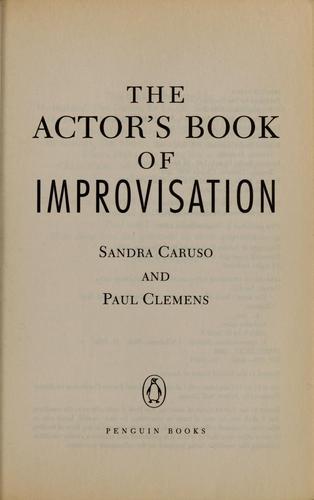
The Actor's Book of Improvisation
Sandra Caruso; Paul Clemens

Theatrical Improvisation
Short Form, Long Form, and Sketch-Based Improv
Jeanne Leep
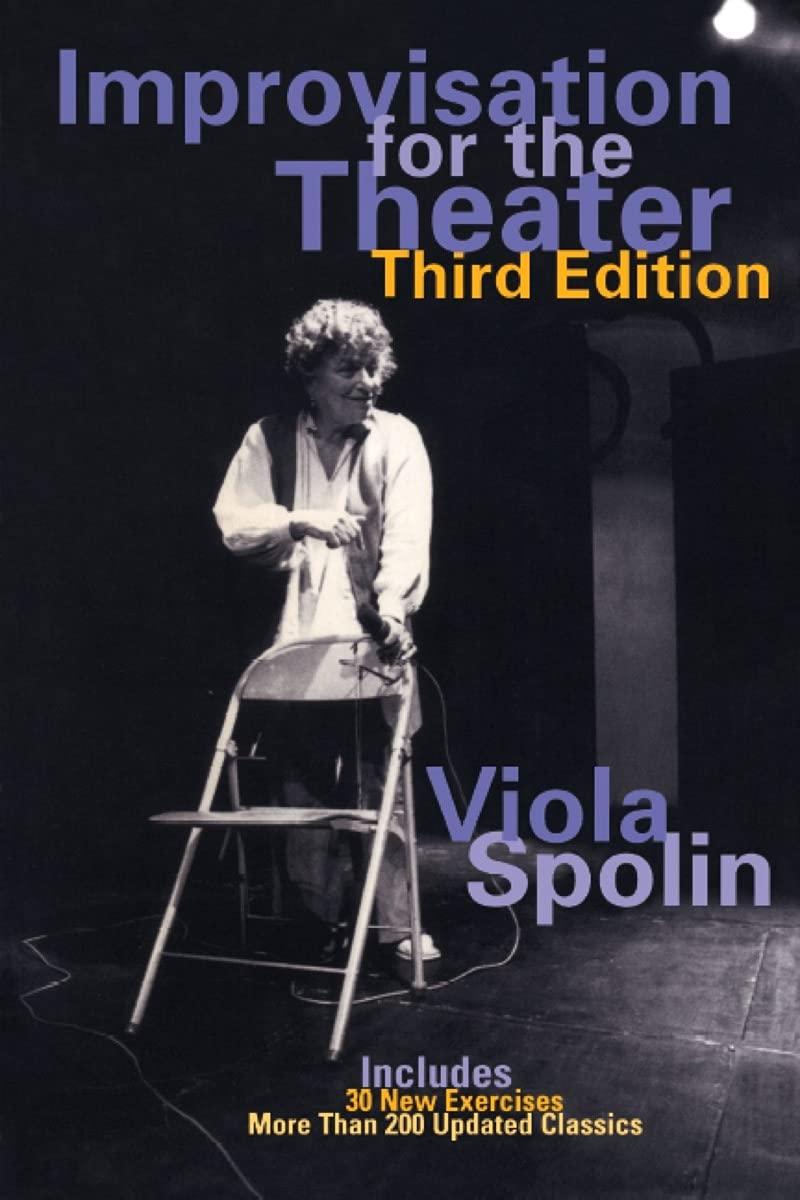
Improvisation for the Theater
A Handbook of Teaching and Directing Techniques
Viola Spolin

The Improv Handbook
The Ultimate Guide to Improvising in Comedy, Theatre, and Beyond
Tom Salinsky; Deborah Frances-White

Improvisation
Use What You Know, Make Up What You Don't
Brad Newton

The Ultimate Improv Book
A Complete Guide to Comedy Improvisation
Edward J. Nevraumont; Kurt Smeaton; Nicholas P. Hanson
Related Games
Verses
Verses is a musical improv game in which performers trade improvised song verses on a given topic, each verse building on or responding to the previous one. The alternating structure creates a musical conversation that develops through successive exchanges, with each performer advancing the song's argument, narrative, or emotional arc. The game rewards lyrical creativity, melodic consistency, and the ability to support a partner's musical choices.
Last Letter Scene
Last Letter Scene is a hybrid game and exercise in which each line of dialogue must begin with the last letter of the previous line. The constraint forces performers to listen with acute precision -- not to the general content of what is said but to the exact final sound of each utterance -- while maintaining scene coherence, character, and forward momentum simultaneously.
Script Tease
Script Tease is a short-form game in which performers hold actual scripts or random text and must incorporate the written lines into their improvised scene, reading from the page at key moments while making the pre-written text fit naturally within the context of the scene.
Non Sequitor
Non Sequitur is a hybrid game and exercise in which performers deliberately break logical connections between lines of dialogue, forcing each new statement to have no apparent relationship to the one before it. The exercise trains performers to let go of the need to make sense, builds comfort with absurdity, and paradoxically reveals how audiences will construct meaning even from disconnected material.
How to Reference This Page
The Improv Archive. (2026). Rhymes. Retrieved September 28, 2026, from https://improvarchive.org/games/rhymes
The Improv Archive. "Rhymes." The Improv Archive, 2026. https://improvarchive.org/games/rhymes.
The Improv Archive. "Rhymes." The Improv Archive, 2026, https://improvarchive.org/games/rhymes. Accessed September 28, 2026.
The Improv Archive is a systemically maintained repository. The archive itself acts as the corporate author.