Sound Effects
Sound Effects is a short-form game in which one or more players perform a scene while a designated sound-effects player (or audience members) provides live audio: crashes, music, ambient noise, animal sounds, or any sound they choose. The scene players must justify and physically embody whatever they hear. The game trains acceptance of external offers, physical commitment, and real-time narrative adaptation. It appeared as a recurring game on Whose Line Is It Anyway?
Structure
Setup
Two scene players take the stage. One or two additional players are designated as sound-effects providers, positioned at a microphone offstage or at the side. Alternatively, two audience members are brought onstage and given the microphone. An audience suggestion establishes the scene's premise, location, or genre.
Gameplay
Tom Salinsky describes the basic format in The Improv Handbook: one or two improvisers act out a scene while another makes sound effects into a microphone. The sound-effects player produces whatever sounds they choose, in whatever sequence; the scene players must physically react to and justify those sounds within the fiction of the scene. A crash means something crashed; a roar means something roared; a click means something clicked.
Janeece Kramer documents the game in Improvised Theatre and the Autism Spectrum as "Audience Sound Effects (SFX)," with three students creating a scene while a fourth student offstage provides sound effects. The game tests flexibility and justification: scene players must adapt their physical and narrative choices in real time to whatever the sound-effects player introduces.
In the audience-participation variant, two audience members are given the microphone and allowed to produce any sounds they can make with their voices and bodies. The scene players treat whatever emerges as reality.
Sound Design Support (UCB Variant)
The Upright Citizens Brigade manual describes a related practice in which backline improvisers supply sound effects from offstage during scenes as a form of scene support, rather than as a dedicated game. Sound effects in this context should be realistic and purposeful, reinforcing the scene's environment rather than introducing disruptions.
Modern Variant
A contemporary variant uses preloaded soundboard apps: audience members are given a device loaded with dozens of sound effect options and press buttons at will during the scene. This format produces predictable sound effects with an unpredictable timing, increasing the auditory variety beyond what a human voice-effects player can produce.
How to Teach It
How to Explain It
"Two players do a scene, but a third player controls all the sounds. Whenever the performers move, pick something up, or do anything physical, the sound person makes the sound effect. The performers accept whatever sound they get and commit to it physically. If the sound says the door is a creaky hinge, it is a creaky hinge. If the sound says the phone is a foghorn, it is a foghorn."
Objectives
Sound Effects trains two skills simultaneously. The first is physical acceptance: the player must commit their body to whatever the sound implies before the mind has a chance to evaluate whether the implication is plausible. The second is narrative justification: the scene must remain coherent even as its physical reality is periodically redefined by the audio layer.
The game also makes the principle of acceptance visible and trainable in a way that pure scene work sometimes obscures: there is no ambiguity about whether the player has accepted the offer, because the audience can hear what was offered and see whether the player responded.
Scaffolding
For beginner groups, begin with the facilitator controlling the sound effects rather than an audience member, using predictable, legible sounds (a phone ringing, a car starting, a door slamming) that give scene players a clear physical action to justify. Gradually introduce less predictable sounds.
For advanced groups, have the sound-effects player operate at a faster rate and introduce genre-incongruent sounds: nature sounds in an urban scene, electronic sounds in a historical setting. This increases the cognitive demand of the justification task.
Common Coaching Notes
- "Hear it, move first, explain later."
- "Your body knows what that sound is. Trust it."
- "Sound effects player: vary your rhythm. Silence is your friend."
- "If you don't know what the sound was, your character doesn't know either. React with your character, not your confusion."
How to Perform It
Audience Experience
Sound Effects is one of the most reliably entertaining short-form games for general audiences because the constraint is immediately legible and the failure states are funny. When a performer misses or ignores a sound, the audience notices; when they commit fully to an absurd sound interpretation, the audience rewards the commitment. The game requires no specialized improv knowledge to follow.
The audience-participant version generates additional investment because the audience has given members an active role. Audience members who produce creative, aggressive, or absurd sounds become collaborators in the scene rather than spectators.
Pacing and Casting
Sound effects players should be coached to vary rhythm: not one sound per second without pause, but a dynamic pattern of clusters and silences that give scene players room to establish before the next audio intrusion. Scene players who are strong at physicality tend to excel in this game; the audio input is best handled through the body first, narrative second.
For the audience-participation variant, brief coaching before the game begins is essential: tell the audience members to make sounds as varied as possible and not to worry about being helpful or logical. The less coherent the sound choices, the more entertaining the scene players' justifications.
History
Sound effects as a theatrical device have a long history in radio drama and theater production. In the context of improvisational performance, live vocal sound effects appear in Viola Spolin's Improvisation for the Theater (1963) under the heading "Vocal Sound Effects" as a warm-up and ensemble exercise.
As a dedicated short-form game with a designated sound-effects player, the format is associated with Whose Line Is It Anyway?, the British improvised comedy television program (Channel 4, 1988-1998) and its American adaptation (ABC, 1998-2007). The show featured a recurring Sound Effects game in which two performers acted out a scene while two audience members provided all sounds through the microphone. The format became widely recognized through the show's television exposure.
Tom Salinsky and Deborah Frances-White document the game in The Improv Handbook in its standard form. Janeece Kramer adapts it for educational and special-needs contexts in Improvised Theatre and the Autism Spectrum (2015), emphasizing its value for developing flexibility and physical justification.
No single originator of the game as a distinct format has been identified outside the Whose Line television context.
Worth Reading
See all books →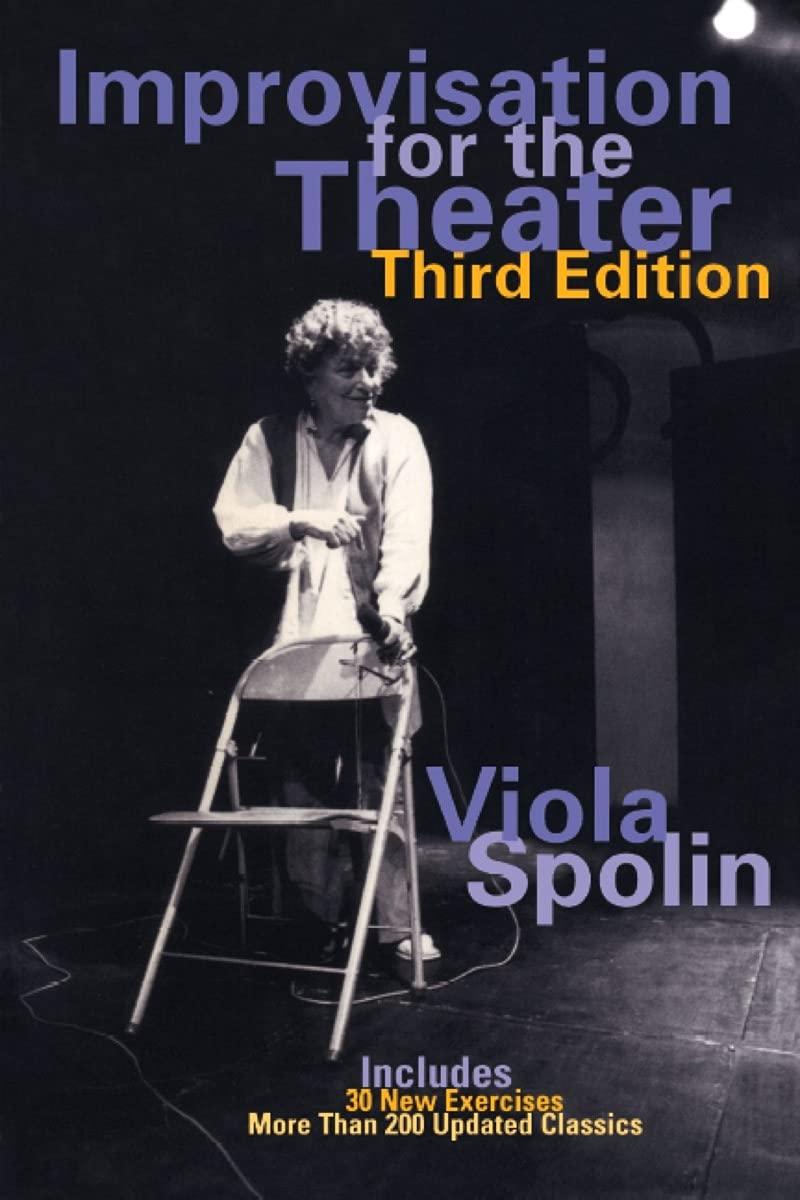
Improvisation for the Theater
A Handbook of Teaching and Directing Techniques
Viola Spolin

The Improv Handbook
The Ultimate Guide to Improvising in Comedy, Theatre, and Beyond
Tom Salinsky; Deborah Frances-White

Acting Through Improv
Improv Through Theatresports
Lynda Belt; Rebecca Stockley

The Upright Citizens Brigade Comedy Improvisation Manual
Matt Besser; Ian Roberts; Matt Walsh

Improvised Theatre and the Autism Spectrum
A Practical Guide
Gary Kramer; Richie Ploesch

Theatrical Improvisation, Consciousness, and Cognition
Clayton D. Drinko
Related Games
Radiophonics
Radiophonics is a performance game in which players create an improvised radio play using only their voices and sound effects, without any visual performance. The audience closes their eyes or the performers work behind a screen. The game trains vocal expressiveness, sound design, and the ability to paint vivid pictures through audio alone.
Ding
Ding is a short-form game in which a host rings a bell or buzzer to signal a performer to replace their last line of dialogue with a new one. The host can ring repeatedly, demanding multiple replacements for the same moment, each new line erasing the previous one within the scene's reality. The game is one of the most widely performed short-form games in the world, popularized through its frequent appearance on Whose Line Is It Anyway? Ding rewards fast verbal invention, the ability to generate multiple alternatives under pressure, and the willingness to abandon a safe choice in favor of a riskier, funnier one.
Voices from Heaven
Voices from Heaven is a short-form game in which offstage performers provide the spoken thoughts, inner commentary, or narration for onstage performers who move and react silently, creating comedy and dramatic irony through the gap between visible behavior and revealed interior.
Scene in the Dark
Scene in the Dark is a game in which performers play a scene with the stage lights turned off, relying entirely on vocal performance, sound effects, and the audience's imagination to convey action, environment, and physical comedy. The absence of visual information forces performers to make every sound deliberate and descriptive.
Ventriloquist
Ventriloquist is a two-player game in which one performer provides the voice and another provides the body of a single character. The voice player speaks; the body player moves, gestures, and reacts physically, without speaking. The two must coordinate in real time without prior planning to create a coherent, unified character. The structural split between voice and body generates comedy from the inevitable misalignments while training deep physical listening and ensemble coordination.
Asides
Asides is a scene technique game in which performers periodically break from the action to address the audience directly with their character's private thoughts. Borrowed from theatrical convention dating back to Shakespeare and the Restoration comedy tradition, the aside allows a character to reveal inner monologue, secret motives, or contradictory feelings while other characters on stage cannot hear what is said. In improv, the technique layers subtext over surface dialogue, creating dramatic irony and comedy through the gap between what characters say to each other and what they confide to the audience. The game trains performers to maintain dual awareness of both the scene and the audience, and to develop rich inner lives for their characters that extend beyond spoken dialogue.
The Lineage
Explore the schools and structures that influenced or evolved from Sound Effects.
Whose Line Is It Anyway?
How to Reference This Page
The Improv Archive. (2026). Sound Effects. Retrieved September 28, 2026, from https://improvarchive.org/games/sound-effects
The Improv Archive. "Sound Effects." The Improv Archive, 2026. https://improvarchive.org/games/sound-effects.
The Improv Archive. "Sound Effects." The Improv Archive, 2026, https://improvarchive.org/games/sound-effects. Accessed September 28, 2026.
The Improv Archive is a systemically maintained repository. The archive itself acts as the corporate author.