Narrator
Narrator is a short-form game in which one performer serves as an omniscient narrator who describes and directs the action while other players act out whatever is narrated. The performers must physicalize the narrator's words instantly, even when the descriptions become absurd, contradictory, or physically challenging. The game generates comedy from the tension between what is narrated and what the performers can actually do, and from the narrator's power to control the scene's reality with a single sentence. The game rewards quick physical commitment from the actors and creative, descriptive language from the narrator.
Structure
One performer stands to the side of the stage as the narrator. Two or more performers take the playing space as actors. The audience suggests a story genre, a setting, or a character.
The narrator begins telling a story in the third person, describing the scene, the characters, and the action. The actors physicalize everything the narrator describes in real time. If the narrator says the character crosses a vast desert, the actor walks in place, shielding their eyes from the sun. If the narrator says the character suddenly transforms into a bird, the actor commits to the transformation immediately.
The narrator controls the scene's reality. Characters can be given thoughts, feelings, physical attributes, and abilities through narration alone. The actors must accept and embody every narrative choice without hesitation or negotiation.
The game's comedy often comes from the narrator testing the actors: describing increasingly difficult physical situations, contradicting what was just established, or narrating internal thoughts that the actors must somehow physicalize.
The actors can also speak as their characters, adding dialogue that the narrator incorporates into the ongoing story. The best Narrator scenes develop a dynamic interplay between narration and dialogue, with both channels contributing to the story.
Variations include rotating narrator (the narrator role passes between performers), dueling narrators (two narrators compete to control the story), and audience narrator (audience members take turns providing narration).
How to Teach It
How to Explain It
"One of you is the narrator. You describe what is happening as if telling a story. Everyone else performs exactly what you describe. Narrator, you control the story. Performers, you make it real."
Narrator is an effective game for teaching physical commitment and the skill of instant embodiment. Students who play the actor role discover that they can physicalize anything when the narrative framework removes the burden of invention. The narrator provides the what; the actors provide the how.
Coach the narrator to use vivid, sensory language. Narration that engages multiple senses (sight, sound, touch, temperature) gives actors richer material than narration that stays purely visual. "The character entered a room that smelled of burnt toast and old perfume" produces more interesting acting choices than "the character entered a room."
The game teaches the relationship between text and physicalization, a skill that transfers directly to scripted performance. Actors who can instantly embody a description develop the same responsiveness they need when working from a script or taking direction.
Use the game to practice the narrator voice. The narrator's style (deadpan, dramatic, noir, fairy-tale) shapes the entire scene. Experimenting with different narrative styles in rehearsal builds versatility and teaches performers how tone affects content.
How to Perform It
The narrator's language drives the game. Descriptive, specific narration gives the actors material to work with. Vague narration ("something happened") produces vague physicalization. A narrator who says "the detective reached into the cold, murky water and pulled out a shoe that was far too small" gives the actor a rich set of physical tasks.
The actors' commitment to the narration is the game's engine. An actor who hesitates, argues, or comments on the absurdity of the narration breaks the game's spell. The audience wants to see immediate, full-bodied physicalization of whatever the narrator describes, no matter how impossible.
The narrator should listen to the actors. A narrator who steamrolls over the actors' contributions creates a one-sided performance. A narrator who incorporates the actors' additions, builds on their physical choices, and responds to their energy creates a collaborative story.
Pacing matters. The narrator should allow moments for the actors to fully physicalize a description before adding the next narrative beat. Rushing past physical moments wastes the actors' work and denies the audience the visual comedy.
Worth Reading
See all books →
Theatrical Improvisation
Short Form, Long Form, and Sketch-Based Improv
Jeanne Leep
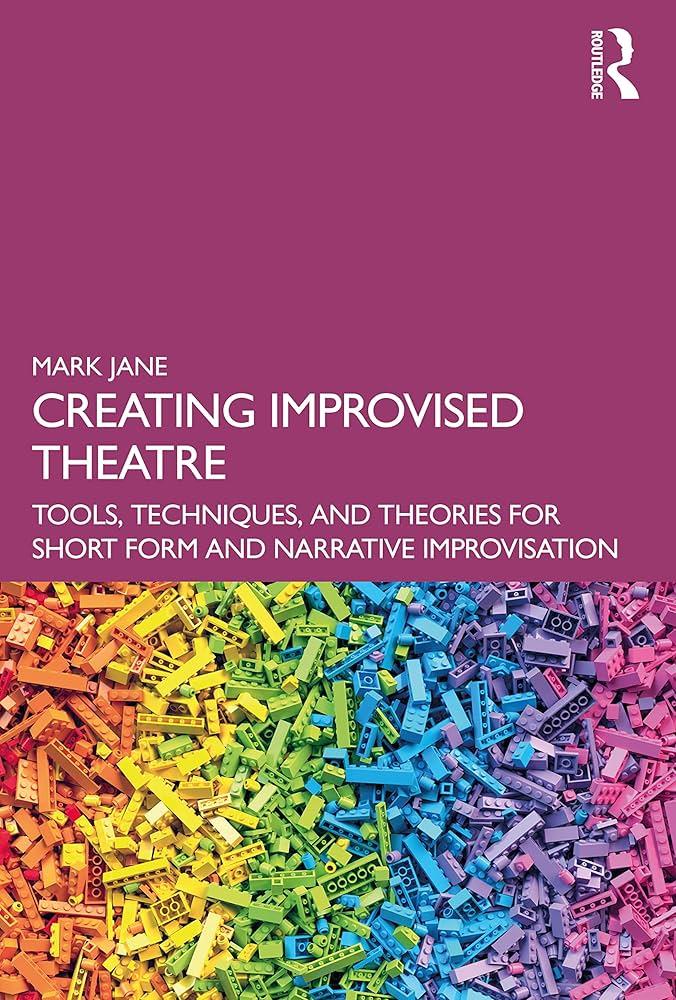
Creating Improvised Theatre
Tools, Techniques, and Theories
Mark Jane
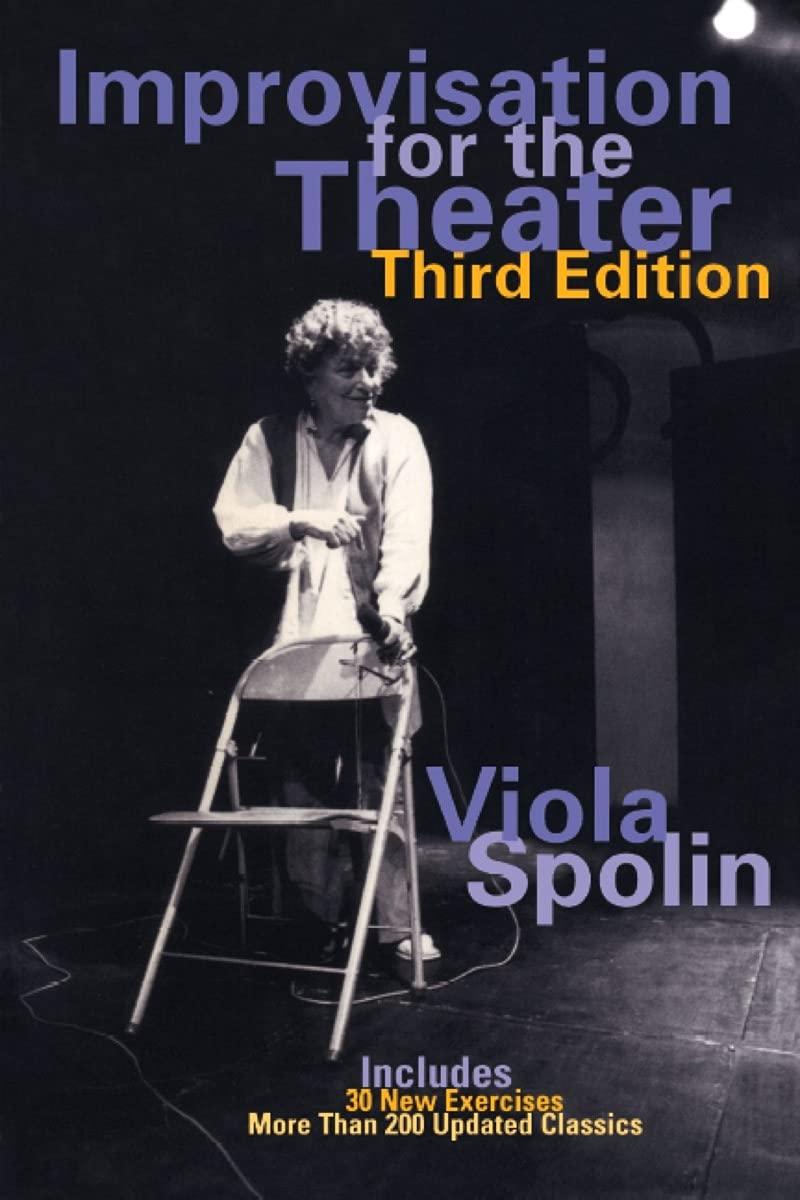
Improvisation for the Theater
A Handbook of Teaching and Directing Techniques
Viola Spolin

Mask Improvisation for Actor Training and Performance
the compelling image
Sears A. Eldredge

The Improv Handbook
The Ultimate Guide to Improvising in Comedy, Theatre, and Beyond
Tom Salinsky; Deborah Frances-White

Something Wonderful Right Away
An Oral History of The Second City and The Compass Players
Jeffrey Sweet
Related Games
He Said While She
He Said While She (also called Two-Headed Expert or Narration Game) is a scene game in which narration and action interweave: one performer narrates what a character says while the other physically performs and voices the character's actions. The split between narrator and performer creates a dual-track reality in which the narration and the physical performance can align, diverge, or generate irony through contrast. The game rewards physical specificity and the narrator's ability to use the performer's choices.
Interpretation for the Deaf
Interpretation for the Deaf is a performance game in which one player delivers a speech, presentation, or scene narration while another provides increasingly expressive and divergent sign language interpretation. The interpreter's physical commentary develops a parallel narrative that may amplify, contradict, or heighten what the speaker is saying. The game rewards physical creativity, comic timing, and the ability to find performance opportunities in the gap between the spoken and the signed.
Motivational Speaker
Motivational Speaker is a short-form game in which a performer delivers an improvised motivational speech on an audience-suggested topic, often with the help of other players who provide visual aids, physical demonstrations, or audience participation segments. The game combines public speaking with character work, as the performer creates and sustains a larger-than-life self-help persona throughout the presentation. The game rewards confident stage presence, commitment to absurd premises, and the ability to find genuine emotion and persuasive logic within comedic material.
One Voice
One Voice is a game and exercise in which two or more performers speak simultaneously, attempting to produce the same words at the same time without prior coordination. The group must listen intently and follow collective impulses rather than individual intention, producing coherent shared speech as a single entity. The game develops group mind, deep listening, and the capacity to surrender individual control to collective will.
Rhymes
Rhymes is a short-form game in which performers must end every line of dialogue with a word that rhymes with the previous line's final word. Players advance a scene while satisfying this linguistic constraint, creating comic pressure through the constant risk of hesitation or failure. The game rewards broad vocabulary, quick verbal recall, and the ability to keep a scene moving while navigating a demanding formal structure.
Id
Id is a scene game in which a performer's unfiltered subconscious desires are voiced by a second player, creating a running commentary of primal wants beneath the surface dialogue. The tension between polite conversation and raw impulse generates comedy and dramatic irony. The game highlights the gap between social behavior and inner life.
The Lineage
Explore the schools and structures that influenced or evolved from Narrator.
TheatreSports
How to Reference This Page
The Improv Archive. (2026). Narrator. Retrieved September 28, 2026, from https://improvarchive.org/games/narrator
The Improv Archive. "Narrator." The Improv Archive, 2026. https://improvarchive.org/games/narrator.
The Improv Archive. "Narrator." The Improv Archive, 2026, https://improvarchive.org/games/narrator. Accessed September 28, 2026.
The Improv Archive is a systemically maintained repository. The archive itself acts as the corporate author.