Translate Gibberish
Translate Gibberish is an exercise and short-form game in which one performer speaks in invented nonsense language while a second performer translates their speech into English for a third performer or the audience. The exercise trains commitment, physical storytelling, and the skill of reading emotional and physical information rather than linguistic content.
Structure
The Roles
Three participants are assigned roles: the speaker, the translator, and the recipient. The speaker communicates only in invented gibberish. The translator renders each statement into English in real time. The recipient responds to the translated content.
The Speaker
The gibberish speaker commits fully to the emotional and physical content of what they are saying, using tone, rhythm, facial expression, and gesture to convey meaning without words.
The Translator
The translator watches the speaker rather than imposing their own narrative. The English translation should follow the emotional and physical signals of the gibberish, not invent a parallel story.
The Scene
The three-way exchange plays as a scene, with the translator bridging the speaker and recipient. Comedy and drama emerge from the gap between gibberish expression and English translation.
How to Teach It
Objectives
Translate Gibberish trains performers to read physical and emotional information as the primary content of communication. The exercise demonstrates that meaning is carried by body, face, and tone more reliably than by words.
Facilitation Notes
When the exercise is used for training rather than performance, run it without an audience and debrief the translator: what were you reading? What were you following? What did you add that was not in the gibberish?
How to Perform It
Performer Notes
The game depends on the translator genuinely following the speaker rather than leading them. A translator who invents content makes the game a solo performance with unnecessary partners. Watch the speaker. Translate what they are physically and emotionally offering.
The Speaker's Job
Gibberish should be emotionally committed, not linguistically clever. Changing accents or inventing phonetic systems is less useful than genuine emotional investment in what is being communicated.
Worth Reading
See all books →
Semiotics and Pragmatics of Stage Improvisation
Domenico Pietropaolo; Paul Bouissac
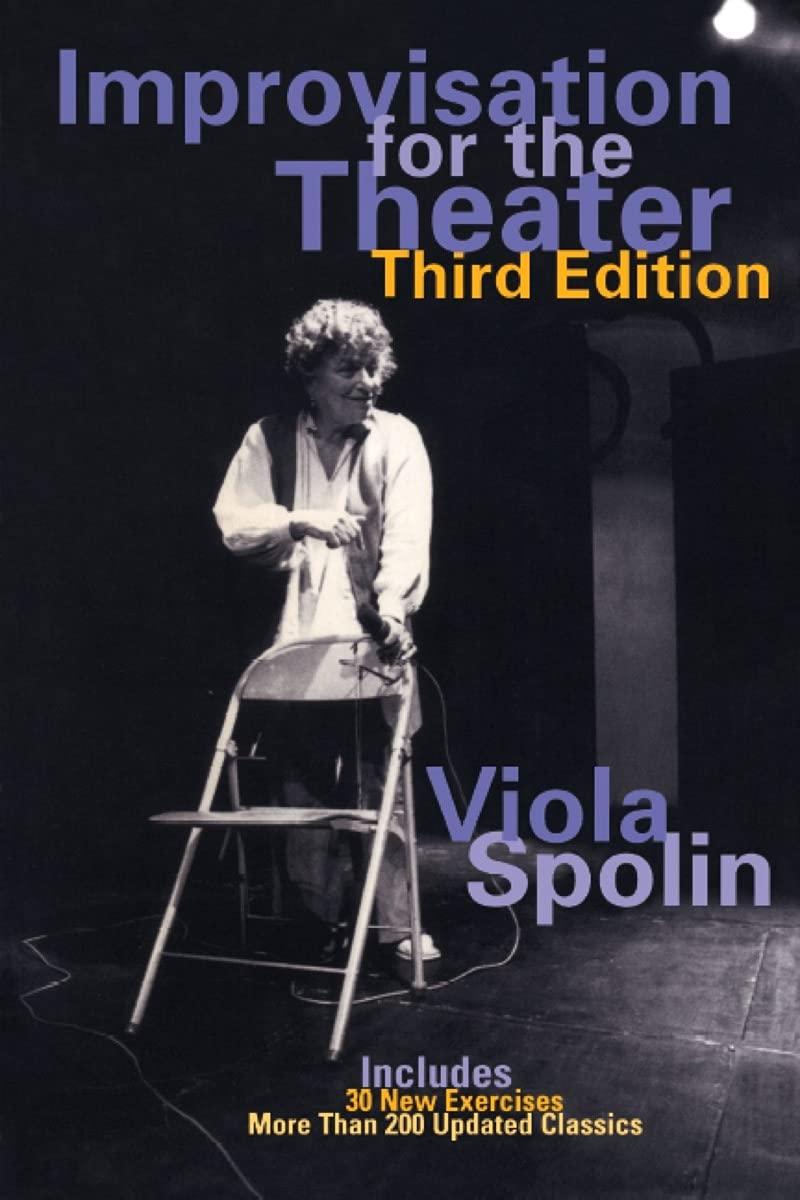
Improvisation for the Theater
A Handbook of Teaching and Directing Techniques
Viola Spolin
Theater Games for Rehearsal
Viola Spolin

Group Improvisation
The Manual of Ensemble Improv Games
Peter Campbell Gwinn; Charna Halpern

Acting Through Improv
Improv Through Theatresports
Lynda Belt; Rebecca Stockley

The Improv Handbook
The Ultimate Guide to Improvising in Comedy, Theatre, and Beyond
Tom Salinsky; Deborah Frances-White
Related Games
Gibberish
Gibberish is a foundational improv exercise in which performers communicate using invented nonsense language while relying on vocal tone, facial expression, gesture, and physical action to convey meaning. The exercise demonstrates that communication transcends words and that audiences read emotional truth through nonverbal channels. Gibberish builds confidence in physical and vocal expression, frees performers from dependence on clever dialogue, and reveals how much information the body communicates before language enters the picture. It is one of the most widely used exercises across all improv traditions and appears in the training curricula of Viola Spolin, Keith Johnstone, and nearly every major improv school.
Replay Gibberish
Replay Gibberish is a short-form game in which a scene is first performed in coherent dialogue, then replayed entirely in gibberish. The performers must convey the same story, emotions, and relationships using only invented sounds, facial expressions, and physicality, demonstrating how much communication exists beyond words.
Switch Gibberish
Switch Gibberish is a scene game in which performers alternate between speaking coherent dialogue and speaking in invented gibberish language. The switch happens on a signal from the facilitator or host, requiring performers to maintain scene continuity across radically different modes of communication.
Gibberish Award Ceremony
Gibberish Award Ceremony is a performance game in which an awards ceremony is conducted entirely in gibberish, with a translator providing English interpretation for the audience. A host conducts the event, presenters deliver speeches in invented nonsense language, and winners accept their awards with heartfelt gibberish gratitude. The translator -- speaking after or simultaneously -- renders each utterance into English, constructing comedy from the gap between the formal occasion and the invented language. The game rewards committed performance and the translator's ability to build coherent, escalating comedy from abstract vocal material.
How to Reference This Page
The Improv Archive. (2026). Translate Gibberish. Retrieved September 28, 2026, from https://improvarchive.org/games/translate-gibberish
The Improv Archive. "Translate Gibberish." The Improv Archive, 2026. https://improvarchive.org/games/translate-gibberish.
The Improv Archive. "Translate Gibberish." The Improv Archive, 2026, https://improvarchive.org/games/translate-gibberish. Accessed September 28, 2026.
The Improv Archive is a systemically maintained repository. The archive itself acts as the corporate author.