Finding the Game Together
The collaborative process by which scene partners discover the central comedic pattern of a scene through mutual attention and organic exploration rather than through one performer imposing a pre-planned idea. The concept emphasizes that the best games emerge from the space between the performers.
At the heart of long-form improvisation lies a principle that distinguishes collaborative scene work from solo performance: the game of a scene is not brought in by one player but discovered jointly through listening, agreement, and mutual heightening. Finding the game together describes the process by which two or more performers identify the central comedic pattern of a scene organically, building it from the raw material of their shared attention rather than from any single player's preconceived plan.
The concept is rooted in the philosophy of group mind that emerged from the work of Viola Spolin and was later refined through the long-form traditions of iO Chicago and the Upright Citizens Brigade. Del Close's emphasis on trust between performers laid the groundwork: if players genuinely listen and respond to one another, the unusual thing in a scene will surface naturally. The UCB tradition formalized this into a pedagogical framework, teaching that the first unusual thing in a scene, the moment where something departs from ordinary behavior, is a signal both performers should recognize and explore together. Neither player owns the game; it belongs to the scene.
In practice, finding the game together begins with active listening during the opening beats of a scene. Rather than planning ahead or steering toward a predetermined comedic idea, performers pay close attention to what their partner establishes: word choices, emotional shifts, behavioral patterns, and offers that carry an unexpected charge. When one player notices something unusual in the other's behavior, they respond by reflecting it back, naming it, or heightening it. The second player then recognizes this reflection and leans into the pattern. Through this back-and-forth calibration, the game crystallizes.
Teachers and coaches often describe this process using the metaphor of two people building a bridge from opposite banks. Each performer extends their half of the structure, adjusting as they see what the other is constructing, until the two halves meet. The game lives in the space between the performers, not inside either one of them. Exercises that develop this skill include pattern games, mirroring work, and scenes where performers are instructed to make no decisions in the first thirty seconds, focusing entirely on absorbing what their partner provides.
A common pitfall is steamrolling: one performer arrives with a strong idea and forces the scene toward it regardless of what their partner offers. While this can sometimes produce functional comedy, it violates the collaborative principle and tends to leave the other performer playing a supporting role rather than co-creating. Equally problematic is passivity, where a performer waits for their partner to establish the game entirely, contributing nothing to the discovery process. Finding the game together requires both players to be simultaneously generous and assertive, offering material while remaining ready to abandon it in favor of whatever emerges from the interaction.
The concept is closely related to yes-and, which provides the foundational agreement that makes joint discovery possible, and to the game of the scene itself, which is the pattern that results from this collaborative process. It also connects to the principle of following the follower, where neither performer leads exclusively but both alternate between initiating and supporting. When executed well, finding the game together produces scenes that surprise both the performers and the audience, generating comedy that could not have existed in either player's mind alone.
Further Reading
See all books →
Group Improvisation
The Manual of Ensemble Improv Games
Peter Campbell Gwinn; Charna Halpern
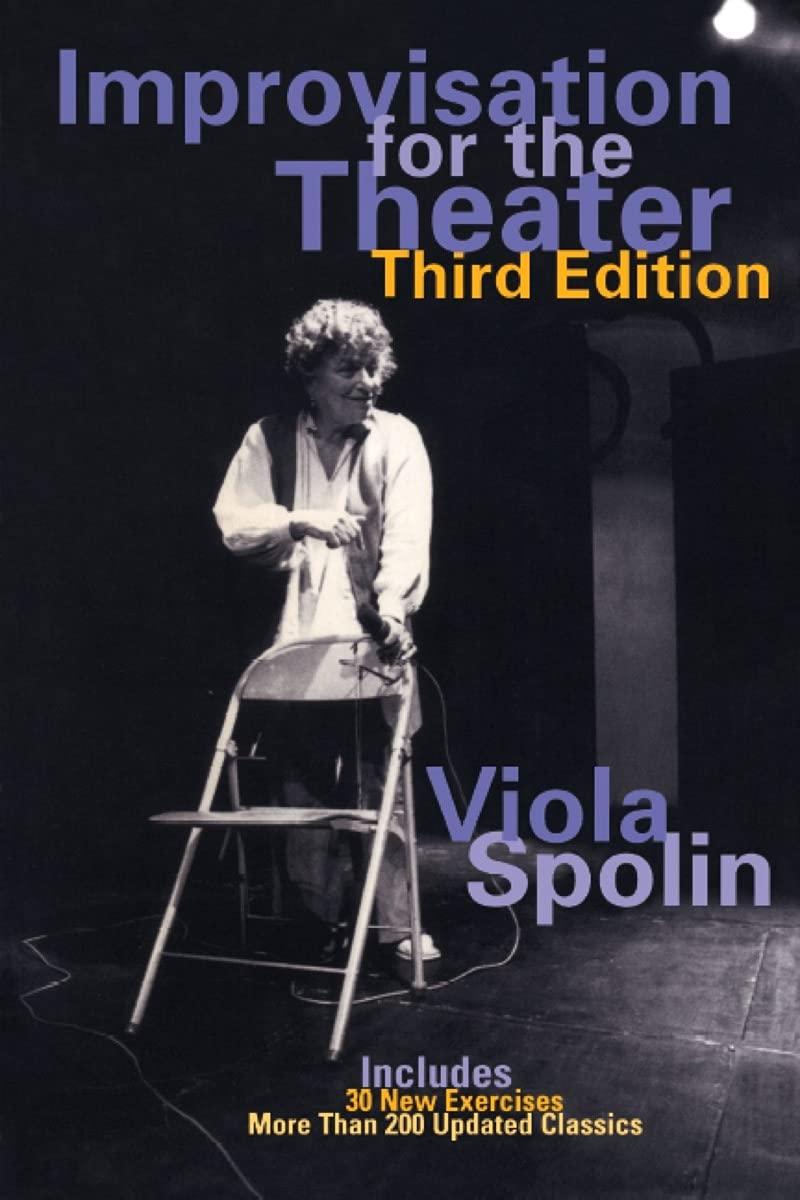
Improvisation for the Theater
A Handbook of Teaching and Directing Techniques
Viola Spolin
The Improvisation Game
Discovering the Secrets of Spontaneous Performance
Chris Johnston
Theater Games for Rehearsal
Viola Spolin

Theatrical Improvisation, Consciousness, and Cognition
Clayton D. Drinko

Playing Along
37 Group Learning Activities Borrowed from Improvisational Theater
Izzy Gesell
How to Reference This Page
The Improv Archive. (2026). Finding the Game Together. Retrieved September 28, 2026, from https://improvarchive.org/learn-improv/concepts/finding-the-game-together
The Improv Archive. "Finding the Game Together." The Improv Archive, 2026. https://improvarchive.org/learn-improv/concepts/finding-the-game-together.
The Improv Archive. "Finding the Game Together." The Improv Archive, 2026, https://improvarchive.org/learn-improv/concepts/finding-the-game-together. Accessed September 28, 2026.
The Improv Archive is a systemically maintained repository. The archive itself acts as the corporate author.