Gagging
The practice of inserting jokes that serve the performer rather than the scene. Gagging prioritizes getting a laugh over supporting the reality, characters, or game that the scene has established. While individual gags may land, they undermine the collaborative storytelling that sustains long-form improvisation.
In improvisation, gagging refers to the practice of inserting jokes that serve the performer rather than the scene. A performer who gags prioritizes getting a laugh over supporting the reality, characters, or narrative that the scene has established. While an individual gag may land with the audience, the habit undermines the collaborative storytelling that sustains long-form improvisation and erodes the trust between scene partners.
The concept has deep roots in improv pedagogy. Keith Johnstone identified gagging as one of the key traps that performers fall into, noting that the immediacy of audience laughter conditions improvisers to repeat the behavior. Once performers have been lured into gagging or blocking, Johnstone warned, the audience is already on the way toward irritation and boredom. What audiences want, more than laughter, is action. This insight frames gagging not merely as a stylistic preference but as a structural problem: it stalls scenes and replaces forward momentum with isolated moments of comedy that lead nowhere.
Tom Salinsky and Deborah Frances-White, writing in The Improv Handbook, point to a common form of gagging in accent scenes, where performers break character to mock their own or others' vocal wobbles. The problem, they observe, is twofold: the gagging destroys the story, and it relies on a boring cliché. Their advice is blunt: cut it out. This illustrates how gagging often masquerades as self-awareness or cleverness when it is actually a retreat from the more demanding work of sustaining a believable reality.
In teaching contexts, gagging is typically presented as a habit to recognize and eliminate. Brie Jones Campbell defines it as making a joke to make yourself look funny or cool, at the expense of the scene. The emphasis on "at the expense of" is significant; it frames gagging as a form of selfishness within a collaborative art form. Similarly, The Ultimate Improv Book advises performers to avoid gagging or playing "characters" during emotionally grounded scenes, recognizing that gags are particularly destructive when a scene calls for genuine stakes.
Coaching against gagging often involves helping performers notice the difference between humor that emerges organically from the scene's circumstances and humor that is imposed from outside the scene's logic. A laugh that comes from heightening an established pattern or deepening a character's commitment belongs to the scene. A laugh that comes from a performer stepping outside the reality to wink at the audience belongs only to the performer. The distinction is subtle in theory but usually obvious in practice: scenes that are gagged tend to feel fragmented, while scenes built on genuine discovery feel cohesive even when they are very funny.
Gagging is closely related to several other improv concepts. It represents a specific form of breaking the reality of a scene, and it often accompanies or leads to blocking, since a performer chasing laughs is unlikely to accept and build on a scene partner's offers. It stands in opposition to commitment, the principle that performers should invest fully in their characters and circumstances rather than hedging with comedy. Understanding gagging helps performers recognize that the strongest humor in improvisation comes not from cleverness but from truthful behavior within absurd or heightened situations.
Further Reading
See all books →
Devising Performance
A Critical History
Deirdre Heddon; Jane Milling

The Improv Handbook
The Ultimate Guide to Improvising in Comedy, Theatre, and Beyond
Tom Salinsky; Deborah Frances-White

Impro
Improvisation and the Theatre
Keith Johnstone

Acting Through Improv
Improv Through Theatresports
Lynda Belt; Rebecca Stockley
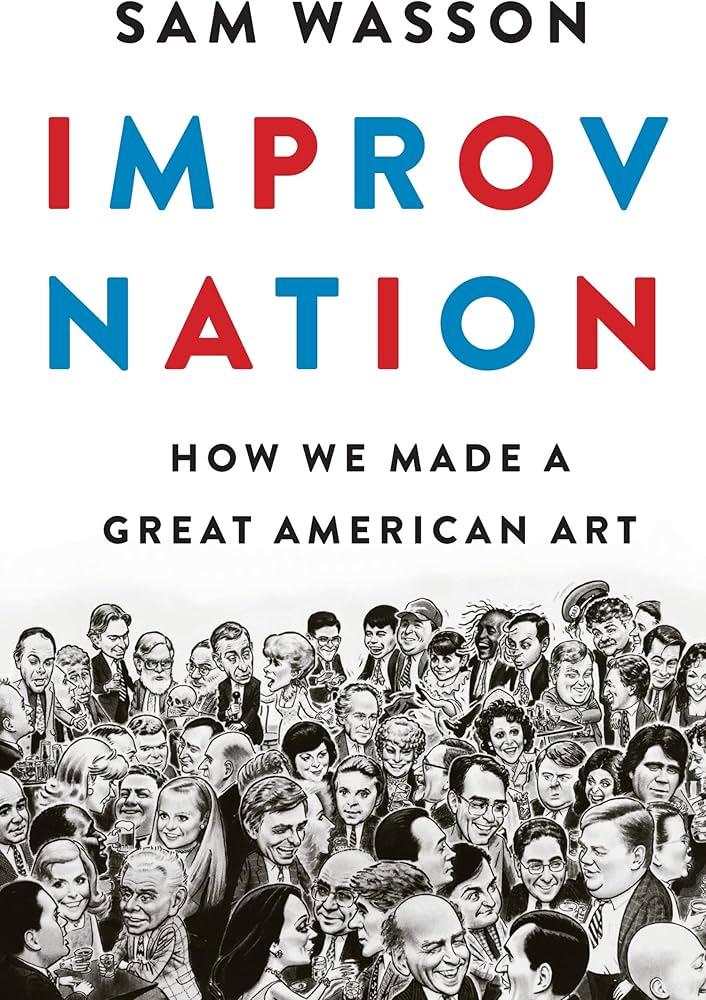
Improv Nation
How We Made a Great American Art
Sam Wasson

The Improv Illusionist
Using Object Work, Environment, and Physicality in Performance
David Raitt
How to Reference This Page
The Improv Archive. (2026). Gagging. Retrieved September 28, 2026, from https://improvarchive.org/learn-improv/concepts/gagging
The Improv Archive. "Gagging." The Improv Archive, 2026. https://improvarchive.org/learn-improv/concepts/gagging.
The Improv Archive. "Gagging." The Improv Archive, 2026, https://improvarchive.org/learn-improv/concepts/gagging. Accessed September 28, 2026.
The Improv Archive is a systemically maintained repository. The archive itself acts as the corporate author.