Justification
The technique of retroactively providing a logical reason for an unusual choice, line, or behavior that has already occurred in a scene. Rather than denying or ignoring a confusing offer, the improviser finds a way to make it make sense within the world of the scene. Justification turns potential mistakes into intentional choices.
At its core, justification is the technique of retroactively providing a logical reason for an unusual choice, line, or behavior that has already occurred in a scene. Rather than denying or ignoring a confusing offer, the improviser finds a way to make it make sense within the world of the scene. Justification turns potential mistakes into intentional choices, and in doing so, it becomes one of the most practical and widely taught principles in improvisation.
The concept operates on a simple premise: anything that happens on stage is real within the fiction, and it is the performers' job to build context around it. If an improviser accidentally knocks over a chair, justification means treating that event as meaningful, perhaps deciding the character is in a rage or the floor is shaking. If a scene partner makes an unexpected declaration, the other performer's task is not to question it but to supply the reasoning that integrates it into the narrative. This principle reinforces the broader ethic of acceptance in improvisation, where every offer is treated as a gift to be used rather than a problem to be solved.
Justification also functions as a engine for creative complexity. As noted in discussions of improvisation pedagogy, the technique encourages both speed and depth of response, requiring performers to reconcile two seemingly conflicting ideas within a constantly evolving scene. This integration of diverse, even contradictory, elements is sometimes described as a form of complex thinking, where the improviser must hold multiple possibilities in mind and select the one that best serves the scene. The result is often surprising to both the audience and the performers themselves, producing moments that feel simultaneously inevitable and unexpected.
In teaching contexts, justification is often introduced through exercises that deliberately create situations requiring it. Timed activities, for example, ask players to provide a reason why a time constraint exists within the fiction of the scene: an antique clock must be refinished before a deadline, a bomb must be defused, a cake must be finished before the guests arrive. These exercises train performers to think in terms of narrative logic rather than external pressure, grounding technical demands in character and story. Coaches frequently emphasize that justification should feel organic rather than forced; the goal is not to produce a clever explanation but to discover one that deepens the scene's emotional or narrative stakes.
A common pitfall arises when performers treat justification as purely intellectual, generating explanations that are logically coherent but emotionally disconnected from the scene. The strongest justifications tend to emerge from a performer's in-the-moment connection with their scene partner rather than from analytical reasoning. When that connection falters, performers may feel pressure to project into the future or seek external reasons for their interactions, losing the present-tense quality that makes improvisation compelling. The technique works best when it is reflexive rather than deliberate, a habit of mind that transforms every accident into an opportunity.
Justification is closely related to the concept of "Yes, And" in that both require acceptance of what has been established, but justification specifically addresses the backward-looking work of making sense of what has already happened. It also connects to the concept of commitment: a justified choice made with full conviction reads as intentional to an audience, while the same choice offered tentatively reads as a mistake. In this way, justification serves as a bridge between the unexpected and the coherent, allowing improvisers to maintain the illusion of a fully realized world even when that world is being invented in real time.
Further Reading
See all books →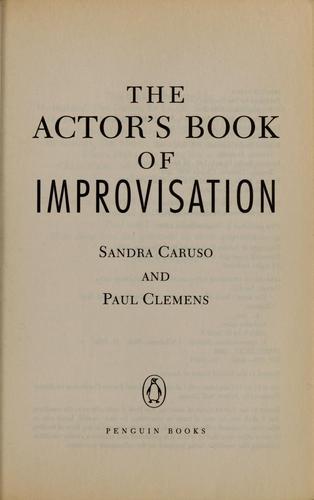
The Actor's Book of Improvisation
Sandra Caruso; Paul Clemens

Comedy and Distinction
The Cultural Currency of a 'Good' Sense of Humour
Sam Friedman

Legislative Theatre
Using Performance to Make Politics
Augusto Boal

Theatrical Improvisation
Short Form, Long Form, and Sketch-Based Improv
Jeanne Leep

The Art of Chicago Improv
Short Cuts to Long-Form Improvisation
Rob Kozlowski
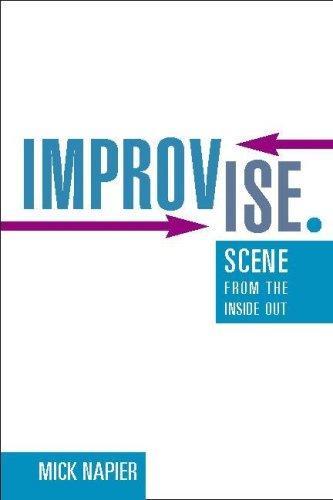
Improvise
Scene from the Inside Out
Mick Napier
How to Reference This Page
The Improv Archive. (2026). Justification. Retrieved September 28, 2026, from https://improvarchive.org/learn-improv/concepts/justification
The Improv Archive. "Justification." The Improv Archive, 2026. https://improvarchive.org/learn-improv/concepts/justification.
The Improv Archive. "Justification." The Improv Archive, 2026, https://improvarchive.org/learn-improv/concepts/justification. Accessed September 28, 2026.
The Improv Archive is a systemically maintained repository. The archive itself acts as the corporate author.