Pattern
A recurring structure, behavior, or thematic element within an improv scene or across a long-form piece. Identifying and playing patterns allows improvisers to create coherent, satisfying scenes that reward audience attention. Patterns emerge from repetition and provide the foundation for callbacks and heightening.
At the heart of improvisation lies the human instinct to recognize and respond to recurrence. A pattern in improv refers to any recurring structure, behavior, or thematic element that emerges within a scene or across a longer performance piece. When improvisers identify and play these patterns, they create coherent, satisfying work that rewards audience attention and builds the foundation for callbacks, heightening, and game.
Patterns operate on multiple levels simultaneously. At the most basic level, a pattern might be a repeated physical gesture, a verbal phrase that recurs with variation, or a character's consistent behavioral response to a particular stimulus. In long-form work, patterns can span entire pieces: a thematic concern that resurfaces across seemingly unrelated scenes, a structural rhythm that the ensemble establishes and then plays with or against, or a relationship dynamic that echoes from one beat to the next. The power of pattern lies not merely in repetition itself but in the audience's growing awareness of the recurrence and the performers' ability to use that awareness, whether by fulfilling expectations or deliberately subverting them.
The concept draws from deep roots in comedic tradition. Sketch comedy, as noted in cultural histories of the form, quickly settled into recognizable patterns involving recurring characters, running jokes, and cross-dressing, elements that audiences came to expect and that performers could play against. Even earlier comedic traditions relied on pattern recognition: the "green world" structure identified by Northrop Frye, in which characters leave the city for pastoral settings and return transformed, represents a macro-level pattern that shaped centuries of comic storytelling. Awareness of pattern and surprising uses of language have generated laughter across eras, from Dryden's carefully constructed reversals to contemporary freestyle rap, where neuroscience research has shown that improvisational pattern-making activates similar brain regions whether the medium is jazz or hip-hop.
In teaching, pattern work often begins with simple physical and rhythmic exercises. A common warm-up has participants shake their limbs to the rhythm of counting up to eight, then repeat the pattern counting down one fewer number each round while increasing speed and volume. This kind of structured repetition trains improvisers to feel pattern in their bodies before they are asked to recognize and deploy it intellectually in scene work. Coaches frequently guide performers to notice what is already recurring in a scene rather than inventing something new, reinforcing the principle that patterns emerge organically from the choices performers have already made.
One significant challenge in pattern work involves the tendency of newer improvisers to observe and wait rather than participate. Research in applied improvisation has documented a pattern of reticence and observation before participation, which may relate to emotional contagion and the psychological safety required to take creative risks. Breaking established cognitive patterns is itself part of the training: exercises that disrupt habitual thinking enable participants to be present and responsive rather than defaulting to familiar routines.
Pattern connects directly to several other core improv concepts. It is the mechanism through which game emerges in a scene, the engine that drives heightening, and the structural basis for callbacks. Without pattern recognition, an improviser cannot effectively play the game of a scene, because the game itself is a pattern identified and repeated with escalation. Pattern also relates closely to agreement and listening, since recognizing a pattern requires genuine attention to what scene partners are offering rather than planning ahead.
Further Reading
See all books →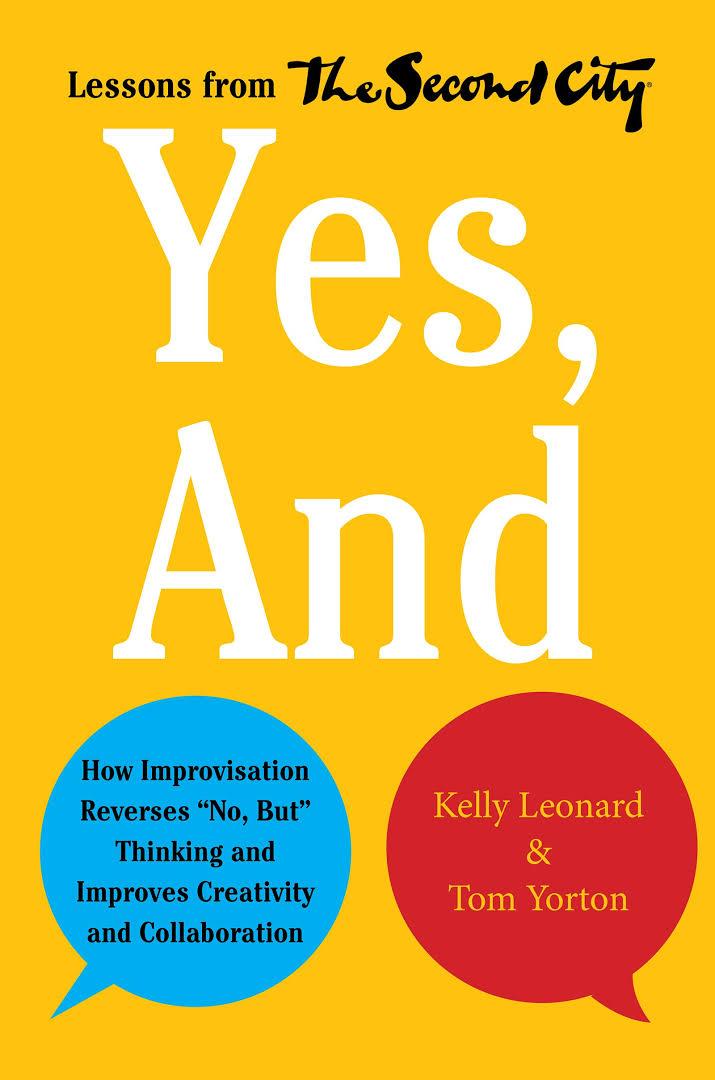
Yes, And
How Improvisation Reverses No, But Thinking and Improves Creativity and Collaboration
Kelly Leonard; Tom Yorton

Business Improv
Experiential Learning Exercises to Train Employees
Val Gee
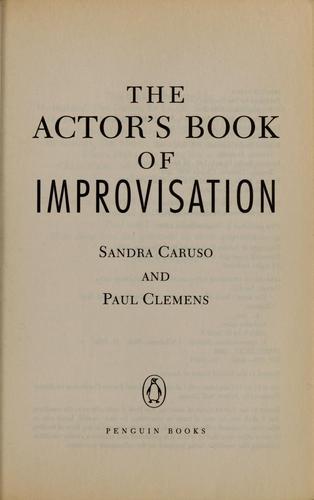
The Actor's Book of Improvisation
Sandra Caruso; Paul Clemens

Comedy and Distinction
The Cultural Currency of a 'Good' Sense of Humour
Sam Friedman

Theatrical Improvisation
Short Form, Long Form, and Sketch-Based Improv
Jeanne Leep

Devising Performance
A Critical History
Deirdre Heddon; Jane Milling
How to Reference This Page
The Improv Archive. (2026). Pattern. Retrieved September 28, 2026, from https://improvarchive.org/learn-improv/concepts/pattern
The Improv Archive. "Pattern." The Improv Archive, 2026. https://improvarchive.org/learn-improv/concepts/pattern.
The Improv Archive. "Pattern." The Improv Archive, 2026, https://improvarchive.org/learn-improv/concepts/pattern. Accessed September 28, 2026.
The Improv Archive is a systemically maintained repository. The archive itself acts as the corporate author.