Where Who What
Viola Spolin's foundational framework for establishing scenes: Where (the environment), Who (the characters and their relationship), and What (the activity or situation). Spolin taught that establishing all three elements grounds a scene in concrete reality and gives performers a stable platform from which to explore.
Viola Spolin's foundational framework for establishing scenes identifies three essential elements that ground improvised work in concrete reality: Where (the environment), Who (the characters and their relationship), and What (the activity or situation). Spolin taught that when performers establish all three elements early in a scene, they create a stable platform from which to explore, play, and discover. The framework appears throughout her published work, most notably in Improvisation for the Theater (1963), where she presents it not as a rigid formula but as a diagnostic tool for understanding why scenes succeed or fail.
The concept operates on the principle that human behavior is always situated. People do not exist in abstraction; they occupy physical spaces, hold relationships with others present, and engage in activities that carry purpose and stakes. When improvisers neglect any one of the three elements, scenes tend to drift into abstraction or devolve into talking heads floating in undefined space. Spolin observed that performers who physically engage with their environment (the Where) naturally discover behavior that reveals character (the Who) and generates activity (the What). The three elements are interdependent rather than sequential.
In teaching contexts, the framework is often introduced through exercises that isolate each element before combining them. Students might first practice building environments through physical specificity, then layer in relationship dynamics, then add purposeful activity. Spolin's side-coaching technique frequently invokes Where Who What as a corrective prompt: when a scene loses grounding, the coach can call attention to whichever element has been abandoned. Many teachers use the framework as a diagnostic shorthand during notes sessions, identifying that a scene struggled because, for example, the Who was clear but the Where remained unestablished.
A common misunderstanding treats Where Who What as information to be communicated verbally at the top of a scene. This produces the "transaction opening" where performers announce their location, state their relationship, and declare their activity in expository dialogue. Spolin's intention was the opposite: the elements should be shown through physical behavior, spatial awareness, and embodied interaction rather than narrated. The framework describes what audiences should be able to perceive, not what performers should say aloud.
The concept relates closely to several other foundational ideas in improvisation. Object work and environment building serve the Where. Status, point of view, and emotional truth serve the Who. Game, activity, and scene painting serve the What. Keith Johnstone's platform concept shares significant overlap, describing the stable base of reality that must exist before tilting or disrupting a scene. The CROW framework (Character, Relationship, Objective, Where) used in some pedagogies represents a direct expansion of Spolin's original three elements, splitting Who into its component parts. Del Close's Harold structure assumes competence with Where Who What as a prerequisite, building long-form connections on top of well-grounded base scenes.
The enduring influence of Where Who What across nearly all schools of improvisation reflects its fundamental insight: that theatrical reality requires spatial, relational, and behavioral specificity working in concert.
Further Reading
See all books →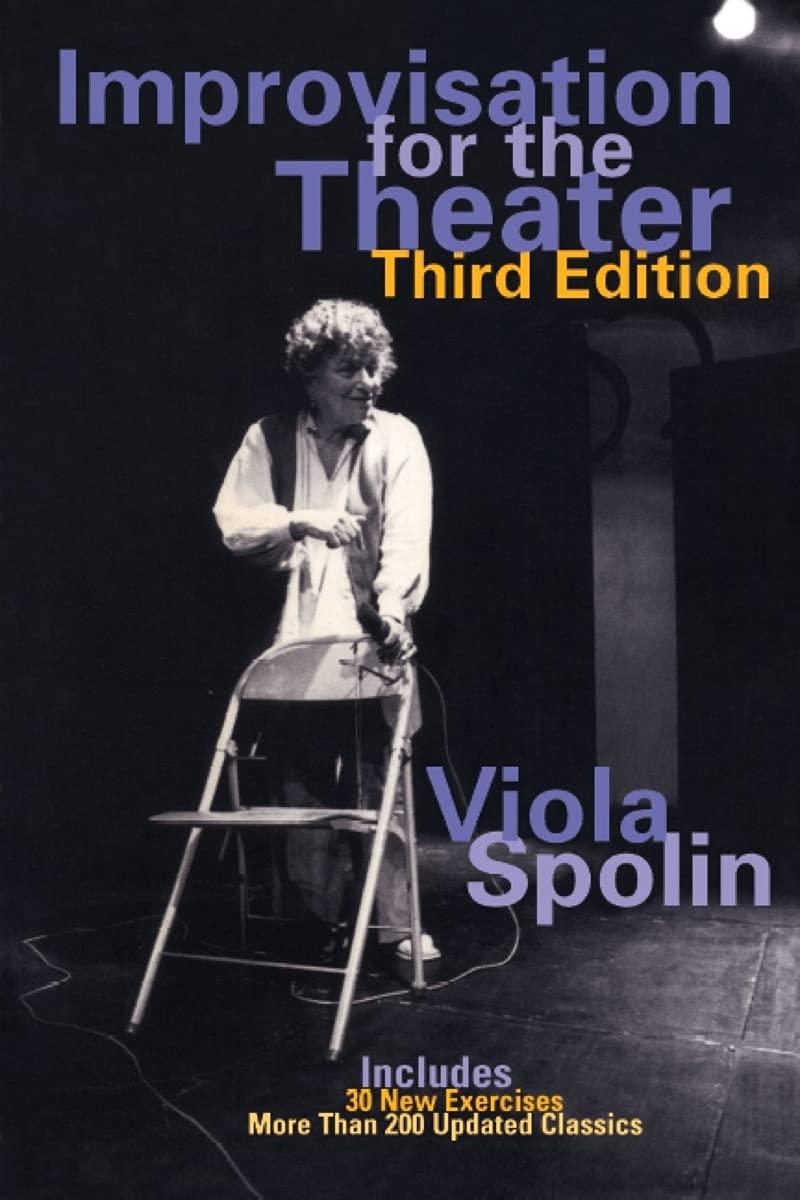
Improvisation for the Theater
A Handbook of Teaching and Directing Techniques
Viola Spolin
Theater Games for Rehearsal
Viola Spolin
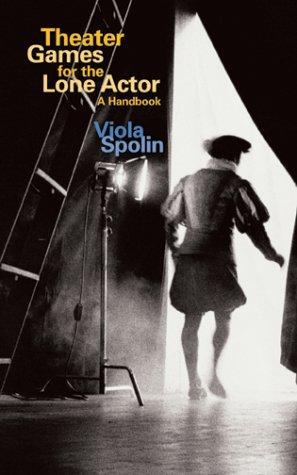
Theater Games for the Lone Actor
Viola Spolin
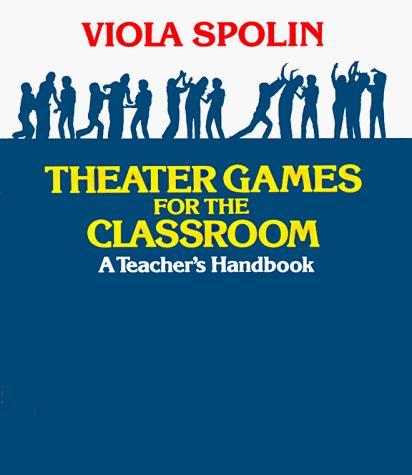
Theater Games for the Classroom
Viola Spolin

Book on Acting
Improvisation Technique for the Professional Actor in Film, Theater & Television
Stephen Book
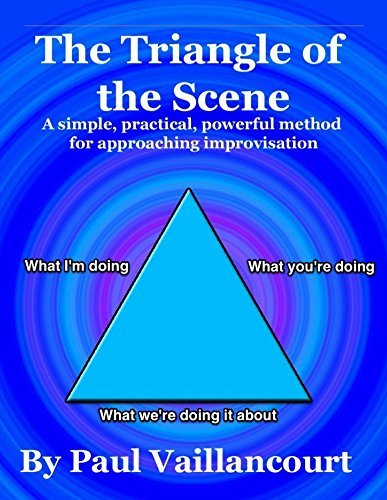
The Triangle of the Scene
A Simple, Practical, Powerful Method for Approaching Improvisation
Paul Vaillancourt
How to Reference This Page
The Improv Archive. (2026). Where Who What. Retrieved November 11, 2026, from https://improvarchive.org/learn-improv/concepts/where-who-what
The Improv Archive. "Where Who What." The Improv Archive, 2026. https://improvarchive.org/learn-improv/concepts/where-who-what.
The Improv Archive. "Where Who What." The Improv Archive, 2026, https://improvarchive.org/learn-improv/concepts/where-who-what. Accessed November 11, 2026.
The Improv Archive is a systemically maintained repository. The archive itself acts as the corporate author.