Mike Nichols
Mike Nichols (born Mikhail Igor Peschkowsky, November 6, 1931, Berlin, Germany; died November 19, 2014, Manhattan, New York) was a director, comedian, and producer who began his career as a performer with the Compass Players in Chicago and as one half of the groundbreaking comedy duo Nichols and May with Elaine May. He became one of the most acclaimed directors in American entertainment history, achieving EGOT status (Emmy, Grammy, Oscar, Tony) and winning six Tony Awards for directing, an Academy Award for Best Director for The Graduate (1967), and Emmy Awards for Wit (2001) and Angels in America (2003).
Nichols was born in Berlin to a Russian-Jewish physician father and a German-Jewish mother. Following the escalation of Nazi persecution, his family emigrated to the United States in 1939, with the seven-year-old Nichols arriving in New York unaccompanied with his brother aboard the steamship Bremen. At age four, he had suffered a severe allergic reaction to a whooping cough vaccine that caused permanent alopecia universalis, the total loss of body hair.
Nichols enrolled at the University of Chicago in 1950, initially pursuing pre-medical studies before shifting to theatre. He trained briefly under Lee Strasberg at the Actors Studio in New York, then returned to Chicago to join the Compass Players in 1955. The Compass, founded by Paul Sills and David Shepherd, was the pioneering improvisational ensemble that employed Viola Spolin's theatre games methodology. There Nichols performed alongside Elaine May, Shelley Berman, Barbara Harris, and Severn Darden, developing the skills in character invention, satirical observation, and spontaneous scene construction that would define his artistic approach.
Nichols and May formed a professional comedy duo in 1957, debuting at New York nightclubs including the Village Vanguard and the Blue Angel. Their act consisted of urbane, dialogue-driven improvisational sketches that satirized middle-class social dynamics, intellectual pretension, and sexual anxiety. The duo recorded the albums Improvisations to Music (1958) and An Evening with Mike Nichols and Elaine May (1960), the latter winning the Grammy Award for Best Comedy Performance. Their Broadway show An Evening with Mike Nichols and Elaine May opened at the John Golden Theatre in October 1960 and ran for 306 performances. The partnership dissolved in 1961.
Nichols turned to directing, making his Broadway debut with Neil Simon's Barefoot in the Park in 1963 and winning the Tony Award for Best Direction in 1964. He directed a string of hit Broadway productions including The Odd Couple (1965), Plaza Suite (1968), The Real Thing (1984), and Monty Python's Spamalot (2005), accumulating six Tony Awards for directing.
His film directing debut, Who's Afraid of Virginia Woolf? (1966), received thirteen Academy Award nominations. The following year, The Graduate earned Nichols the Academy Award for Best Director at age thirty-six and became a defining film of the 1960s counterculture. He directed Catch-22 (1970), Carnal Knowledge (1971), Silkwood (1983), The Birdcage (1996), Primary Colors (1998), and Closer (2004), among more than twenty features.
In television, Nichols directed Wit (2001) for HBO, winning the Primetime Emmy for Outstanding Directing, and Tony Kushner's Angels in America (2003), which swept the 2004 Emmys with eleven wins including a second directing Emmy for Nichols. These two awards, combined with his Oscar and Tonys, gave him EGOT status, making him one of fewer than twenty people to achieve the distinction.
Nichols received the Kennedy Center Honors in 2003 and the AFI Life Achievement Award in 2010. His films accumulated forty-two Academy Award nominations across their runs.
Historical Context
Nichols's time at the Compass Players in 1955 placed him at the origin point of American improvisational theatre. The Compass, performing at a bar near the University of Chicago campus, was the first professional ensemble to build shows entirely from audience suggestions using Viola Spolin's theatre games. The performers Nichols worked alongside, including Elaine May, Shelley Berman, Barbara Harris, and Severn Darden, would collectively define the first generation of American improvisational performers.
The Nichols and May partnership represented the first time an improvisational comedy act achieved mainstream commercial success at the highest level. Their Broadway run and Grammy-winning recordings demonstrated that the skills developed in the Compass Players' back-room performances could translate to the biggest stages in American entertainment. The duo's influence on comedy extended through their demonstration that two performers with improvisational training could sustain a full evening of material built on listening, spontaneous character work, and intellectual precision.
Nichols's transition from improviser to director established a pathway that subsequent Compass and Second City alumni would follow. His directing methodology drew explicitly on improvisational principles. He described every dramatic scene as either a negotiation, a seduction, or a fight, a framework rooted in the same impulse-driven scene analysis that Compass performers used to build improvised scenes in real time. He favored minimal intervention once trust was established with skilled actors, creating what he described as a "jazz band" dynamic where performers self-generated options within a structured framework.
The Graduate (1967) channeled the satirical observation of middle-class American life that Nichols had first practiced in Compass scenes into a film that became a generational touchstone. The improvisational instinct to find the authentic human behavior beneath social performance informed his direction of Dustin Hoffman, Anne Bancroft, and Katharine Ross in ways that critics recognized as a departure from conventional Hollywood filmmaking.
Key Events
Mike Nichols and Elaine May Join the Compass Players
Mike Nichols and Elaine May begin performing together with the Compass Players, developing the improvisational partnership that makes them one of the most celebrated comedy duos of the twentieth century. Their scenes demonstrate a new level of psychological sophistication in improvised performance, drawing on character, subtext, and the unspoken tensions between people. Their work with the Compass sets the standard for character-based improv comedy.
Compass Players Dissolves, Its Ensemble Dispersing to Found The Second City and Nichols and May
The Compass Players ceased operations by 1958, ending approximately three years of improvisational performance in Chicago and St. Louis. Mike Nichols and Elaine May formed their duo and moved to New York City, performing material developed during their Compass years. Paul Sills, Bernie Sahlins, and Howard Alk founded The Second City in Chicago in December 1959, carrying the Compass's improvisational methods into a durable institutional form.
Mike Nichols and Elaine May Open on Broadway
"An Evening with Mike Nichols and Elaine May" opens on Broadway at the John Golden Theatre, running for 306 performances. The show demonstrates that improvisational comedy can reach mainstream audiences without sacrificing sophistication or intelligence. The Broadway success brings unprecedented national attention to the Chicago improv tradition and introduces character-driven, psychologically grounded improvised comedy to the American theatrical mainstream.
Mike Nichols, Compass Players Alumnus and Acclaimed Director, Dies in New York
Mike Nichols died on November 19, 2014 in New York City at the age of 83. Nichols began his career improvising with the Compass Players in Chicago, where he developed a celebrated comedy partnership with Elaine May. He went on to become one of the most decorated directors in American entertainment, winning Oscar, Emmy, Tony, and Grammy awards.
Legacy
Nichols's career demonstrated that the skills developed in improvisational performance could produce one of the most decorated directing careers in American entertainment history. His EGOT achievement, six Tony Awards, and the cultural impact of The Graduate all trace back to the training he received at the Compass Players under the influence of Viola Spolin's methodology.
His directing philosophy, which emphasized extensive rehearsal processes modeled on improvisational dynamics where actors explored character motivations to discover authentic responses rather than execute predetermined readings, influenced generations of directors. His collaborations with Meryl Streep, Jack Nicholson, Dustin Hoffman, and other performers were built on the same principle of listening and response that defines ensemble improv.
The Nichols and May partnership remains the foundational example of how improvisational comedy can reach the highest levels of mainstream entertainment. Their Grammy-winning recordings and Broadway run established the template for the two-person comedy act built on spontaneous discovery rather than rehearsed material. The duo's influence extends through every improviser who has translated ensemble training into a commercially successful performing career.
Nichols's death on November 19, 2014, at age eighty-three, marked the loss of the most commercially successful artist to emerge from the Compass Players generation. His career spanned nearly sixty years from the back room of a Chicago bar to the Academy Awards stage, demonstrating the full range of what improvisational training could enable.
Recommended Reading
Books are ordered from the strongest direct connection outward to broader relevance.

Something Wonderful Right Away
An Oral History of The Second City and The Compass Players
Jeffrey Sweet
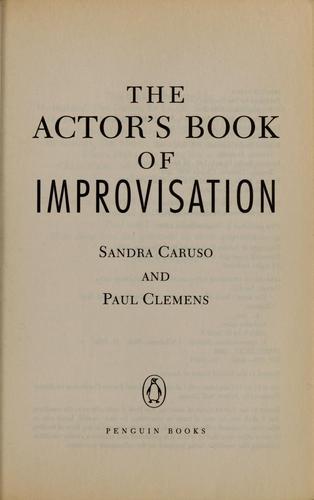
The Actor's Book of Improvisation
Sandra Caruso; Paul Clemens

The Young Actor's Book of Improvisation
Dramatic Situations
Sandra Caruso; Susan Kosoff

The Art of Chicago Improv
Short Cuts to Long-Form Improvisation
Rob Kozlowski

The Second City Unscripted
Revolution and Revelation at the World-Famous Comedy Theater
Mike Thomas
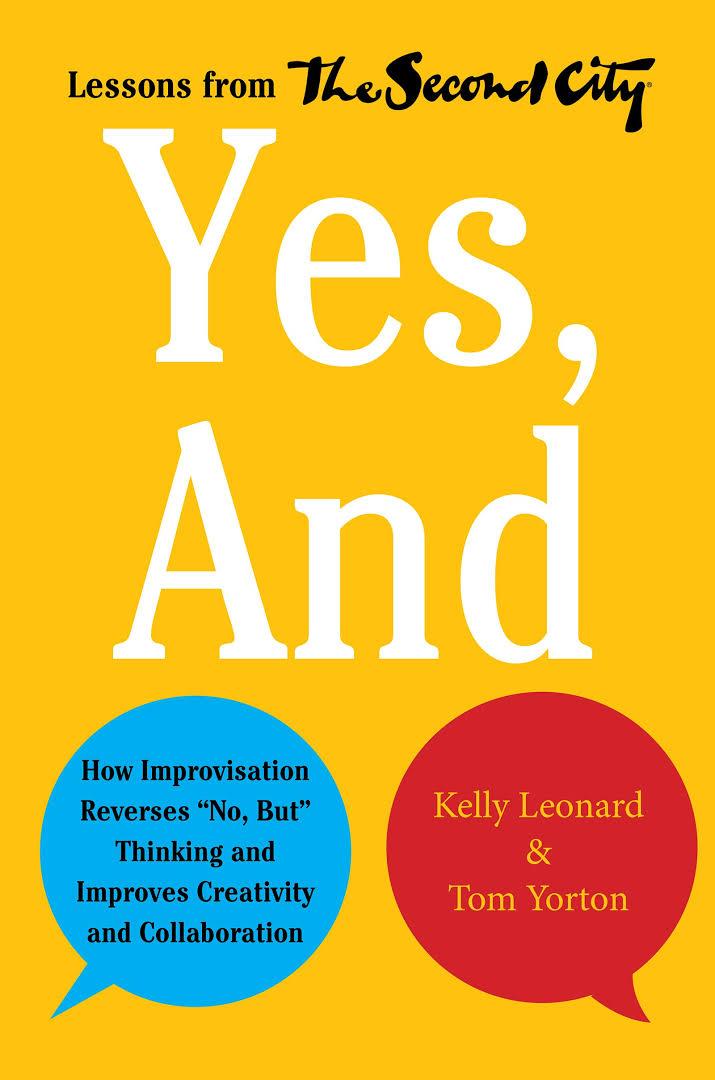
Yes, And
How Improvisation Reverses No, But Thinking and Improves Creativity and Collaboration
Kelly Leonard; Tom Yorton
References
In the Archive
How to Reference This Page
The Improv Archive. (2026). Mike Nichols. Retrieved September 29, 2026, from https://improvarchive.org/people/mike-nichols
The Improv Archive. "Mike Nichols." The Improv Archive, 2026. https://improvarchive.org/people/mike-nichols.
The Improv Archive. "Mike Nichols." The Improv Archive, 2026, https://improvarchive.org/people/mike-nichols. Accessed September 29, 2026.
The Improv Archive is a systemically maintained repository. The archive itself acts as the corporate author.