Patricia Ryan Madson
Patricia Ryan Madson is an American educator, author, and improvisation teacher who served as a senior lecturer in drama at Stanford University from 1977 to 2005, where she founded the Stanford Improvisors in 1991 and introduced Keith Johnstone's Theatresports to the university. Her book Improv Wisdom: Don't Prepare, Just Show Up (2005) distills thirty years of teaching into thirteen maxims that apply improvisational principles to everyday life, and she received the Lloyd W. Dinkelspiel Award for Outstanding Innovation in Undergraduate Education in 1998.
Madson began her university teaching career as an assistant professor of drama at Denison University in Granville, Ohio, in 1969. In 1977, Stanford University offered her the position of leading the undergraduate acting program in the Drama Department, where she would teach for nearly three decades.
In the summer of 1980, Madson encountered Keith Johnstone at a Tai Chi workshop at the Esalen Institute. Johnstone had recently published Impro (1979), and the meeting sparked a friendship and intellectual exchange that transformed Madson's approach to teaching. She began incorporating Johnstone's ideas about spontaneity, status, and theatrical games into her Stanford curriculum, developing an approach that combined Johnstone's methods with the ideas of psychologist David Reynolds and her own pedagogical innovations.
In 1991, Madson founded the Stanford Improvisors, an ensemble that performed and studied improvisational games and theatrical forms, with particular emphasis on techniques developed by Johnstone at the University of Calgary. In the winter of 1992, the Stanford Improvisors applied for and received a license to study, perform, and teach Theatresports from the International Theatresports Institute, making Stanford one of the few American universities with a formal Theatresports program.
Madson also founded the Creativity Initiative at Stanford in 1996, recognizing the connection between improvisational practice and broader creative development. Her teaching expanded beyond the Drama Department to include Design Improv for engineering students and guest lectures for entrepreneurship and innovation programs across the university.
In 1998, she received the Lloyd W. Dinkelspiel Award for Outstanding Innovation in Undergraduate Education, Stanford's recognition for faculty who have made distinctive contributions to the undergraduate experience.
Her book Improv Wisdom: Don't Prepare, Just Show Up was published by Bell Tower in 2005, the same year she retired from Stanford. The book distills thirty years of teaching into thirteen strategies, including "Say Yes," "Start Anywhere," "Face the Facts," and "Make Mistakes, Please," presenting improvisation not as a performance technique but as a philosophy for living. The book reached audiences far beyond the theater world and has been used in business, education, therapy, and personal development contexts.
Madson has conducted workshops at the Esalen Institute, major corporations including Google, Hewlett-Packard, IDEO, and Adobe Systems, and various psychological and educational associations.
Historical Context
Madson's encounter with Keith Johnstone at Esalen in 1980 represents one of the key moments in the transmission of Johnstone's improvisational philosophy from Canada to the American university system. While Johnstone's ideas had been circulating through the Loose Moose Theatre in Calgary and through the international Theatresports network, Madson's position at Stanford gave those ideas access to one of the world's most influential educational institutions.
The Stanford Improvisors' 1992 Theatresports license connected the university to the formal international network that Johnstone had established, bringing structured competitive improvisation into an academic setting where it could be studied and taught alongside traditional dramatic training. This integration of Johnstone's methods into a major research university anticipated the broader movement toward applied improvisation that would accelerate in the 2000s and 2010s.
Teaching Philosophy
Madson's approach to teaching improvisation is rooted in the principle that the skills of the improviser are also the skills of a well-lived life. Drawing primarily on the influence of Keith Johnstone, whose ideas she encountered at Esalen in 1980, Madson developed a pedagogy that treats spontaneity not as a performance technique but as a practice of attention and presence.
Her 2005 book Improv Wisdom: Don't Prepare, Just Show Up codifies this approach in thirteen maxims: Say Yes; Start Anywhere; Face the Facts; Be Average; Use What's There; Minimize Output, Maximize Input; Act Now; Make Mistakes, Please; Take Care of Each Other; Pay Attention; Exhaust Your Options; Quit Complaining; and Enjoy the Ride. Each maxim functions both as scene advice for improvisers and as a principle for navigating daily experience.
The governing idea is that excessive preparation and over-rehearsal lead to rigidity, whereas a posture of openness and acceptance allows genuine creative response to become possible. Madson frames this using the concept of the beginner's mind: the willingness to encounter circumstances without the interference of prior expectation or the anxiety of failure.
In classroom settings at Stanford, Madson applied these principles through games and exercises derived from Johnstone's Theatresports tradition. Her Design Improv courses for engineering students at the d.school applied the same principles to creative problem-solving and product development, and her corporate workshops for companies including Google, IDEO, and Adobe Systems translated improvisational presence into professional communication and innovation contexts. In each setting, the core message remained consistent: the improviser who is fully present, accepting, and willing to act without certainty is more effective than the one who has prepared the perfect response.
Legacy
Madson's significance lies in her role as a bridge between Keith Johnstone's improvisational philosophy and the American educational and corporate worlds. By embedding improvisation at Stanford for nearly three decades, she demonstrated that improvisational practice belongs in universities as a discipline with intellectual rigor and practical applications far beyond entertainment.
Improv Wisdom extended her influence beyond the classroom, introducing Johnstone-influenced principles to readers who might never attend an improv show or take an acting class. The book's framing of improvisation as a life philosophy rather than a performance skill influenced the applied improvisation movement and the growing use of improv methods in business training, design thinking, and therapeutic contexts.
Her Dinkelspiel Award and her corporate workshop practice both confirm that improvisational education, when presented with academic seriousness and practical application, is valued at the highest institutional levels.
Recommended Reading
Books are ordered from the strongest direct connection outward to broader relevance.

Improv Wisdom
Don't Prepare, Just Show Up
Patricia Ryan Madson

Theatrical Improvisation
Short Form, Long Form, and Sketch-Based Improv
Jeanne Leep

Applied Improvisation
Leading, Collaborating, and Creating Beyond the Theatre
Theresa Robbins Dudeck; Caitlin McClure

The Applied Improvisation Mindset
Tools for Transforming Individuals, Organizations, and Communities
Theresa Robbins Dudeck; Caitlin McClure
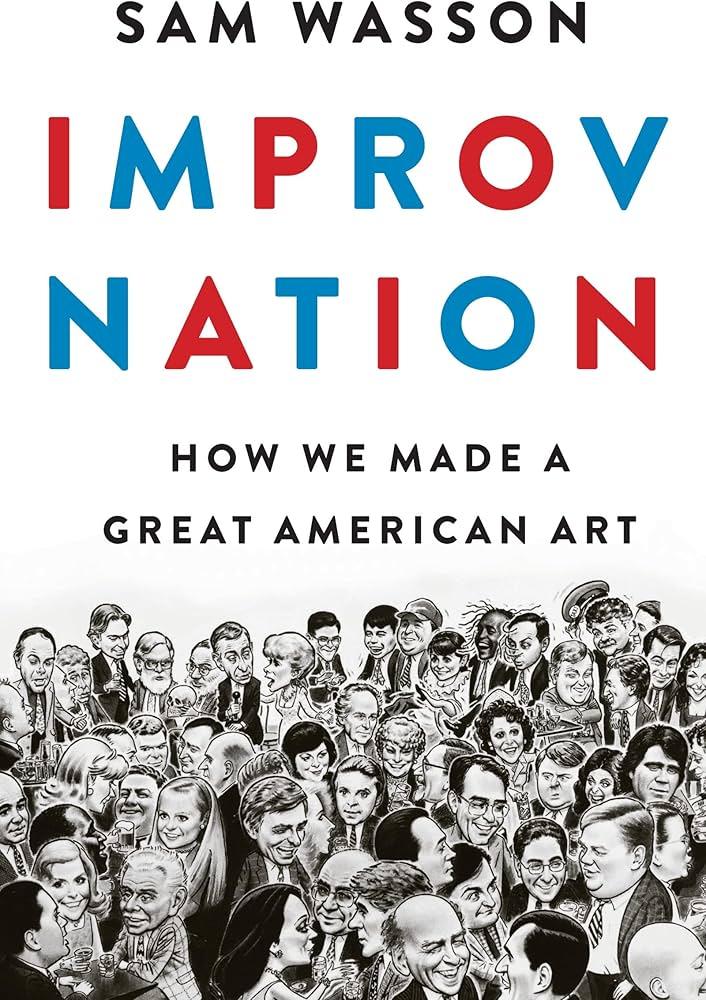
Improv Nation
How We Made a Great American Art
Sam Wasson

Directing Improv
Asaf Ronen
References
In the Archive
How to Reference This Page
The Improv Archive. (2026). Patricia Ryan Madson. Retrieved November 5, 2026, from https://improvarchive.org/people/patricia-ryan-madson
The Improv Archive. "Patricia Ryan Madson." The Improv Archive, 2026. https://improvarchive.org/people/patricia-ryan-madson.
The Improv Archive. "Patricia Ryan Madson." The Improv Archive, 2026, https://improvarchive.org/people/patricia-ryan-madson. Accessed November 5, 2026.
The Improv Archive is a systemically maintained repository. The archive itself acts as the corporate author.