YouTube Channel
Improv FAQ
Improv FAQ is an educational series answering the most common questions about Improv Comedy hosted by James Quesada.
Videos
Standard-length performances, demonstrations, interviews, and instructional material.
 1:37
1:37"Yes, And" In Spirit vs Literal
A short companion piece from Improv FAQ distinguishing between literal and spirit-based interpretations of "Yes, And." The video addresses a common point of confusion for improvisers learning to apply the principle beyond its surface-level meaning.
 7:41
7:41Yes, And...
Improv FAQ provides an extended exploration of "Yes, And," arguably the most widely cited principle in improvisational theatre. The video defines the concept, discusses its practical utility for building scenes, and examines how a performer's relationship with the principle evolves at different skill levels.
 7:30
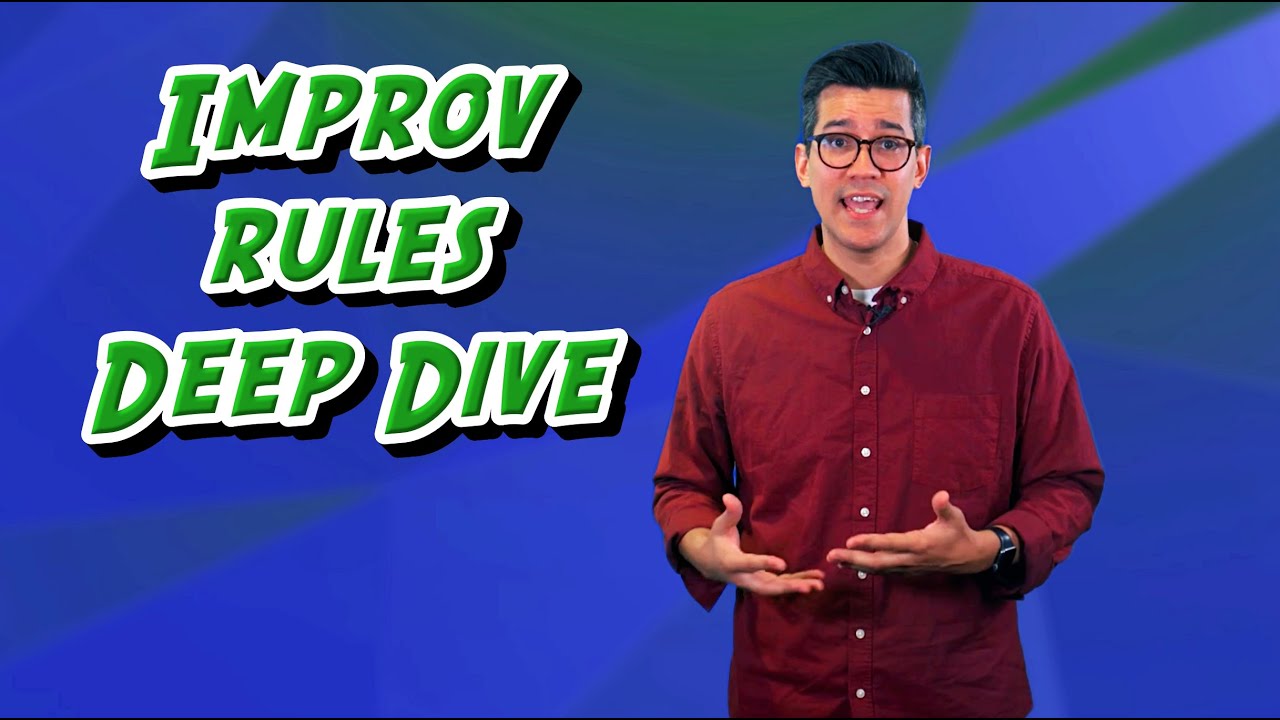
7:30Improv Rules - Deep Dive
Improv FAQ examines the function and value of rules in improvisation at greater depth than a surface-level overview. The video considers how codified guidelines serve the art form and where their application benefits or constrains performers.
 1:19
1:19Don't Deny The Reality of a Scene
Improv FAQ explores the principle of acceptance in scene work, focusing on why improvisers should avoid negating the reality established by their scene partners. The video covers one of the most frequently taught tenets in improvisation training.
 6:27
6:27Improv Rules & "Rookie Mistakes"
Improv FAQ presents five foundational guidelines aimed at newer improvisers, identifying common beginner habits and offering concise corrections. The video serves as a quick-reference primer on widely taught principles of scene work.
 3:04
3:04How Does Improv Work?
An introductory overview from the Improv FAQ channel explaining the basic mechanics of how improvisation works as a performance discipline. The video also covers what newcomers can expect when enrolling in improv classes, making it a useful orientation piece for those unfamiliar with the art form.
 1:12
1:12The name #improv ain't helping much...
A brief segment from the Improv FAQ channel discussing how the term "improv" itself may contribute to public misunderstanding of the art form.
 6:28
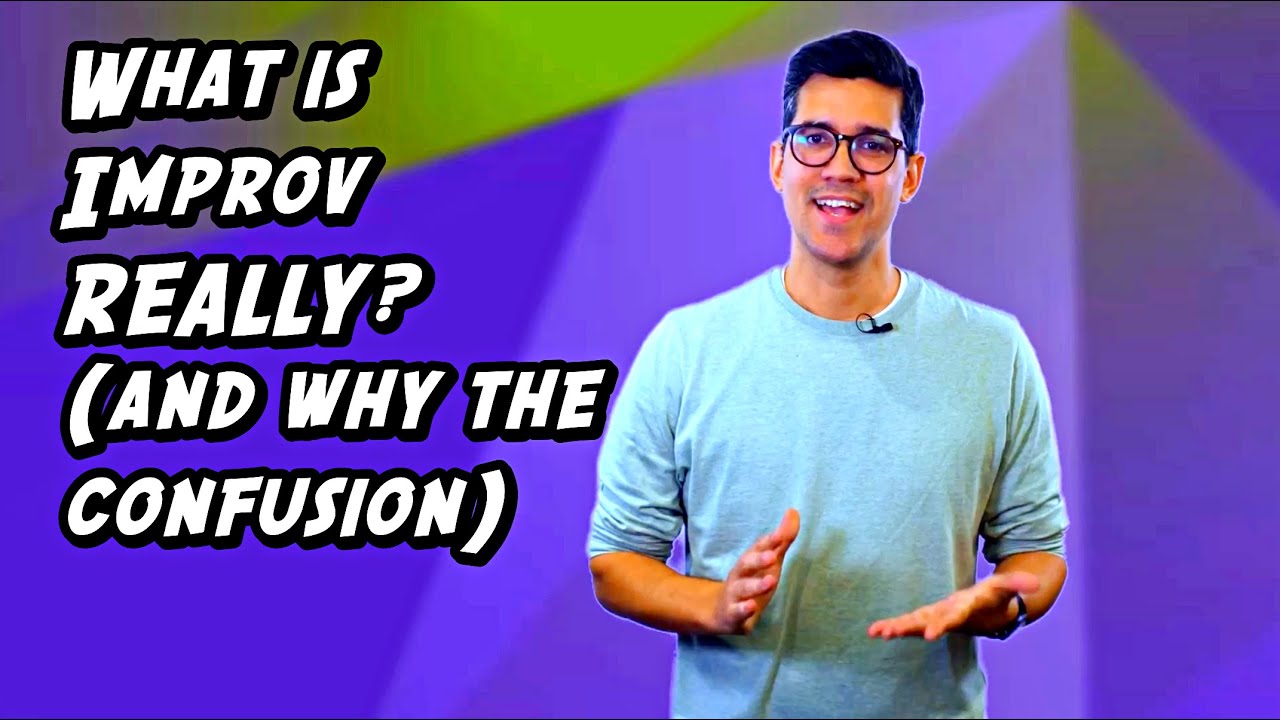
6:28What Is Improv REALLY? (And why the confusion)
The Improv FAQ channel examines the definition of improvisation and the sources of confusion that surround the term. The video addresses why improv can be difficult to define clearly, touching on the overlapping performance traditions and varied contexts in which the word is used.
 2:53
2:53What to expect from an #improvcomedy show.
A short primer from the Improv FAQ channel outlining what audience members can expect when attending an improv comedy show for the first time.
 6:54
6:54What Is Improv Comedy (2025)
Improv FAQ provides an introductory overview of improvisational comedy for newcomers. The video covers what to expect at an improv show, how improv differs from stand-up and sketch comedy, and the degree to which performances are genuinely unscripted.
 2:12
2:12New Videos in 2025!
A brief channel update from Improv FAQ announcing a return to regular video production in 2025.
 1:07:08
Jane Morris' Unpopular Ideas
Jane Morris joins the Improv FAQ stream to discuss what she frames as "unpopular ideas" in the improv world. Morris has a long history in comedy venue development, having opened the Chicago Comedy Showcase, Second City ETC, Second City Los Angeles, Upfront Comedy, and the Comedy Underground. She manages the fanaticSalon in Culver City.
 1:00:41
End of Year Wrap Up
Improv FAQ hosts Bob and James close out 2021 with a year-end retrospective stream.
 1:00:22
Parallelogramophonograph
The cast of Parallelogramophonograph (PGraph) joins the Improv FAQ stream to discuss their approach to narrative longform improvisation. Members Kaci Beeler, Kareem Badr, Roy Janik, and Valerie Ward have performed together since the group's premiere in November 2005, holding a weekly show continuously since 2006. The conversation covers PGraph's commitment to narrative improv and their book "Do It Now: Essays on Narrative Improv," which collects the ensemble's thinking on the form after more than fifteen years of collaboration.
 58:14
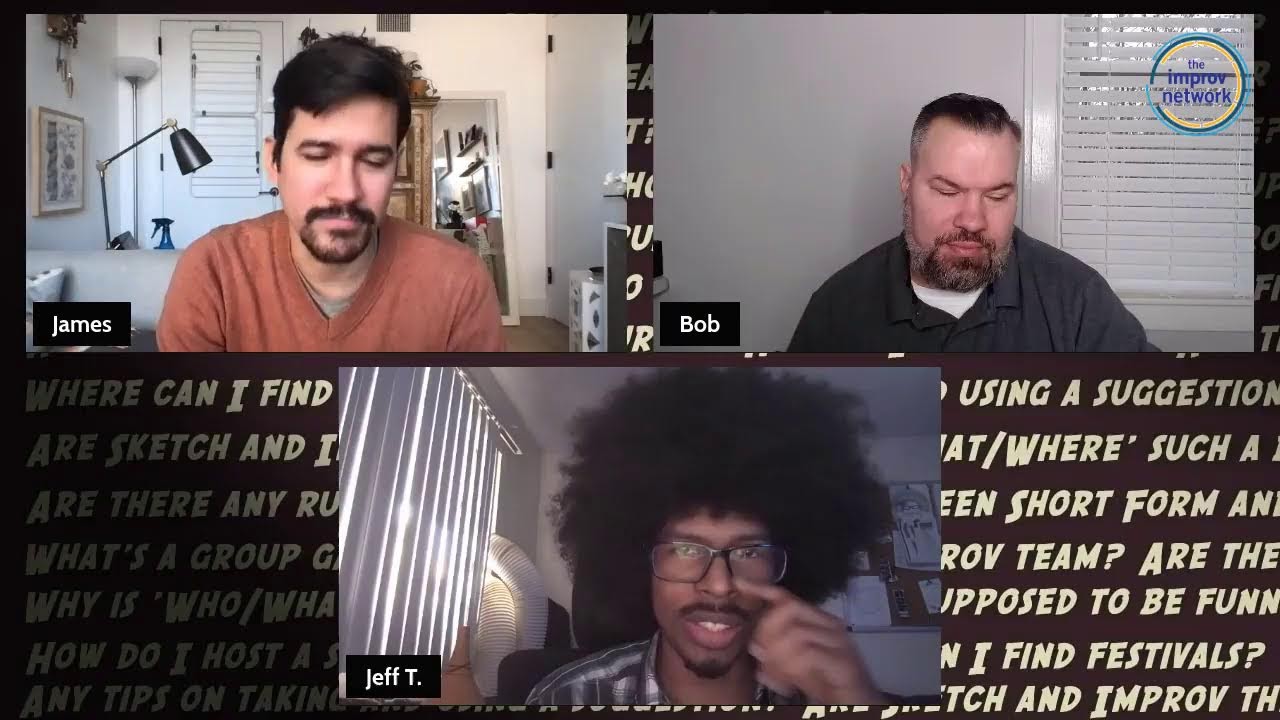
58:14Listening w Jeffrey Thompson
Jeffrey Thompson joins the Improv FAQ stream to discuss listening as a foundational scene skill. The conversation covers give and take between scene partners and techniques for actively using what you hear to build scenes.
 1:00:43
Immersive Theater w Mallory Vance
Mallory Vance joins Improv FAQ to discuss immersive theater, covering the process of creating, directing, and performing in productions that place audiences inside the performance environment rather than in front of a traditional stage.
 49:56
49:56Confidence w Natalie Roxas & Julia Schroeder
Natalie Roxas and Julia Schroeder join Improv FAQ for a conversation about the role of confidence in improvisation, examining how a performer's comfort level affects scene work and stage presence.
 55:37
55:37Negative Space w Sunny Atwal
Sunny Atwal joins Improv FAQ to discuss negative space in improvisation, focusing on the exchange between scene partners and the skill of identifying and filling in what is left unsaid or unplayed in a scene.
 1:03:42
"Aha!" Moments w Tom Novik
Tom Novik joins Improv FAQ for a long-form conversation about breakthrough moments in improvisation, examining those points when a performer's understanding of the art form shifts in a fundamental way.
 57:55
57:55Virtual Horizons w Bill Binder
Bill Binder joins the Improv FAQ podcast to discuss the evolution of virtual improv, covering both its development during the shift to online performance and its potential future applications.
 1:05:07
Impro Theatre w Dan O'Connor
Dan O'Connor joins the Improv FAQ podcast to discuss the "Impro" tradition rooted in Keith Johnstone's work and the international Theatresports community. The conversation distinguishes this lineage from the broader North American improv comedy scene.
 1:05:11
Ruby Rocket w Stacey Hallal
Stacey Hallal joins the Improv FAQ podcast to discuss Ruby Rocket, Private Detective, an improvised noir show that has expanded into an animated web series and comic book. The conversation explores the development of a single improvised premise across multiple media.
 59:21
59:21Wheel of Improv w Natasha Boomer
Natasha Boomer appears on this Improv FAQ "Show and Tell" episode to discuss Wheel of Improv, her original improv show format. She shares her experience developing and performing the show.
 1:02:56
Balancing Art and Business w PJ Jacokes
PJ Jacokes joins the Improv FAQ podcast to discuss the tension between artistic vision and business sustainability in improv. The conversation covers strategies for growing a community and developing a talent pool alongside commercial objectives.
 1:07:19
"Bad" Students w Shannon Stott
Shannon Stott returns to the Improv FAQ podcast to discuss strategies for managing difficult student dynamics in improv classes. The conversation addresses common challenges instructors face and practical approaches for maintaining a productive learning environment.
 1:10:30
Bringing Ideas to Life w Shawn Golden
Shawn Golden joins the Improv FAQ podcast to discuss the process of developing creative ideas into finished projects, including why many promising concepts stall before reaching completion. The conversation also touches on how a simple creative idea can evolve unexpectedly into a business venture. Golden is the founder of Ugly Magazine.
 55:29
55:29Subtlety w Adam Peacock
Adam Peacock joins the Improv FAQ podcast to discuss the role of subtlety in improvisation. The conversation explores how restraint and nuance in performance choices can shape scene work.
 1:02:32
Rachael Mason 100th Episode!
Rachael Mason joins the Improv FAQ podcast for its 100th episode to discuss her concept of "Head, Heart, and X-Factor" as a framework for scene work. Mason is a director, writer, and teacher with roots in the Chicago improv scene, having trained and performed at The Second City, iO, and The Annoyance. She developed a pedagogical approach centered on "Yes And Because," which emphasizes building scenes that are structurally sustainable. She has toured and taught internationally and performs with comedy partner Susan Messing as the duo The Boys.
 1:23:48
Clip Show!
A compilation episode from the Improv FAQ podcast presenting selected clips from previous installments. The episode features highlights of stories, advice, and notable moments drawn from the show's back catalog.
 1:02:11
Hip-Prov w Tam White
Improviser and comedian Tam White joins the Improv FAQ hosts to discuss Hip-Prov, her show blending hip-hop and improvisational performance.
 1:00:38
Tech w Marcus Sams
Marcus Sams joins the Improv FAQ hosts to discuss the role of technology in improv, with particular focus on virtual performance platforms. Sams is the founder and artistic director of Moment Improv Theatre and has been a notable figure in the development of online improv shows and classes. The episode also notes Sams's role as a board member of The Improv Network.
 1:07:34
Tension w Shannon Stott
Shannon Stott returns to Improv FAQ for a discussion on the role of tension in improvised scenes, covering methods for creating tension, deploying it effectively, and what happens when it is absent from a performance. Stott is the creator and director of Improv: On and Off the Stage, an Austin-based studio offering classes and workshops for both performers and non-performers. She has been performing and teaching improv since 2000, with a focus on using improvisation as a tool for personal connection both onstage and in everyday life.
 1:10:10
Mindfulness w Ken Hall
Guest Ken Hall joins the Improv FAQ hosts for an hour-long conversation on mindfulness as it relates to improvisational performance. The discussion explores the intersection of present-moment awareness and improv practice.
 57:38
57:38Players Workshop w Jeff Rogers
Jeff Rogers joins the Improv FAQ hosts to discuss the return of Players Workshop, a historically significant improv training institution. The conversation addresses the state of the improv industry and its trajectory following the disruptions of the pandemic era. Rogers is associated with Players Workshop and its affiliated programs including Playmaker Mindset and Profitable Improv.
 1:02:20
Show Styles w Paige Fockler
Guest Paige Fockler joins hosts Bob and James for a conversation about improv show formats and performance contexts. The discussion covers the differences between performing on an ensemble team, as a duo, and as a solo performer, along with how improv training translates to scripted work and where those skills may not apply. Fockler is a performer associated with The Second City Hollywood who works across both improvised and scripted comedy.
 1:02:52
Bulldozing
An hour-long Improv FAQ discussion on bulldozing, the common scene behavior in which a player steamrolls their partner's offers or dominates the direction of a scene. Hosts Bob and James explore how to recognize and respond to abrasive energy onstage, as well as techniques for self-monitoring to avoid the pattern in one's own work.
 1:05:25
Inspiration
Hosts Bob and James discuss strategies for maintaining creative inspiration as an improviser and comedian. The conversation covers sustaining long-term motivation in the art form across a roughly hour-long episode of the Improv FAQ series.
 44:05
44:05Breakthrough Play w Gary Ware
An Improv FAQ interview with Gary Ware about his Breakthrough Play methodology, which applies improvisation principles to emotional intelligence and personal development. The conversation explores how improv techniques can be used outside the theatre to foster creativity and engagement in everyday life.
 54:15
54:15Openers
An Improv FAQ episode in which hosts Bob and James discuss openers, the group exercises and structures used to generate source material at the top of a long-form set. The episode includes a live audience Q&A segment.
 47:10
47:10The Bearded Company w/ Joe Rapp
An Improv FAQ interview with Joe Rapp, a founding member of The Bearded Company, a Minneapolis- and Los Angeles-based improv troupe known for fully improvised long-form adventures. The conversation covers the group's formation, their performance style, and their podcast Breaking the Dice: The Improvised Campaign.
 58:19
58:19Zoomers to Boomers improv w/ Yael Schy
Yael Schy joins the Improv FAQ podcast to discuss Zoomers to Boomers, an intergenerational improv initiative. The conversation explores the dynamics, challenges, and rewards of bringing together performers across age groups.
 57:07
57:07Rick & Morty w Shannon Stott
Shannon Stott joins the Improv FAQ podcast to discuss the use of silence in improvisation, exploring how pauses and restraint can strengthen scene work.
 1:02:02
Yes And w Laurel James
Laurel James joins the Improv FAQ podcast to explore the foundational improv concept of Yes, And, discussing its various interpretations and practical applications in scene work.
 1:04:29
Destructive Humor w Molly Alampi
Molly Alampi joins the Improv FAQ podcast to examine destructive humor in improvisation, drawing the line between comedic risk-taking and harmful choices onstage. The conversation touches on bias, equity, and the performer's responsibility when navigating sensitive material.
 50:02
50:02Improv Simulations w Melanie Leon
Melanie Leon joins the Improv FAQ podcast to discuss the use of improvisation in training simulations and occupational role play, exploring how improv techniques translate into applied settings beyond the stage.
 45:13
45:13Group Scenes
Bob and James examine the dynamics of group scenes in improvisation, discussing the particular challenges and techniques involved when more than two performers share the stage simultaneously. The conversation addresses how improvisers can navigate focus, support, and pattern within larger ensemble configurations.
 57:39
57:39Creating an inclusive environment w Shannon Stott
Shannon Stott joins Improv FAQ for a conversation about fostering inclusive environments in improvisation. The discussion addresses practices and considerations for making improv spaces more welcoming and equitable for participants across backgrounds and experience levels.
 1:01:37
Improv Speeds
Bob and James discuss the concept of speed in improvisation, examining what performing at different tempos offers to scene work. The conversation explores the tactical uses of both slow and fast play, and how varying pace can serve different narrative and comedic functions within a performance.
 58:29
58:29Beats Part 2 w Shannon Stott
Shannon Stott returns to Improv FAQ for a continuation of an earlier discussion on beats, exploring how beat structure operates at both the scene and show level. The extended conversation format allows for a detailed look at how improvisers can identify, build, and transition between beats within longer performance contexts.
 1:00:07
The Evolution of a Script w Luke Zwanziger
Luke Zwanziger joins Improv FAQ to discuss the lifecycle of a script, from initial concept through first draft and extensive revision. While focused on scripted writing rather than improvisation directly, the conversation explores how written material evolves through iterative development.
 56:47
56:47Story Beats w Shannon Stott
Shannon Stott joins Improv FAQ to discuss story beats and their application to both longform narrative and individual scenes. The conversation covers how improvisers can recognize and build on the structural beats within their work.
 47:26
47:26Players and The Audience
Improv FAQ discusses the balance between performing for oneself and performing for the audience. The episode examines how improvisers navigate the tension between internal ensemble satisfaction and external audience engagement during a show.
 10:49
10:49Absurdity
Improv FAQ explores absurdity as a foundational concept in improvisation. The episode examines the inherently absurd nature of the improv task itself, the role of embracing failure, and practical approaches for navigating unexpected or disorienting moments onstage.
 1:01:25
Directing Pt. 3 w Pete Jacokes
The third installment in Improv FAQ's series on directing, featuring guest Pete Jacokes. The conversation covers directing across short form, long form, and hybrid improv show formats.
 1:20:35
Podcasting w Julia Schroeder
Julia Schroeder joins for a conversation exploring the intersection of improvisation and podcast hosting. The discussion examines what makes a strong conversational exchange, the relationship between improv skills and interviewing, and the practical challenges of producing a podcast.
 1:02:46
3 Person Scenes
Bob Wieck and James Quesada explore the dynamics specific to three-person improv scenes. The discussion addresses the structural and relational challenges that arise when a third performer is added to the standard two-person scene format.
 2:56
2:56Make it Worse
A brief tip addressing a common performer concern: what to do after making an unsatisfying choice in a scene. The episode advocates for the technique of heightening or worsening the choice rather than abandoning it.
 54:05
54:05Improv Network Podcast Debut!
The debut episode of the Improv Network Podcast, hosted by Bob Wieck and James Quesada. This first installment marks the show's transition to an official program of The Improv Network.
 59:31
59:31Improv Network Podcast LIVE! wsg Oliver Georgiou
Bob Wieck is joined by Oliver Georgiou for a live episode focused on the concept of "getting into trouble" in improv scenes. The conversation also includes an open question-and-answer segment covering a range of improv topics.
 8:25
8:25Being Supportive
A short-form lesson on supportive play in improvisation. The episode covers what it means to actively support scene partners and how performers can ensure they receive support in return.
 48:25
48:25Initiating a Scene LIVE 12.27
A live discussion between Bob Wieck and James Quesada examining methods for initiating an improv scene. The episode surveys multiple approaches to scene starts, addressing one of the foundational skills performers must develop.
 1:02:25
Directing Pt. 2 w Pete Jacokes
Bob Wieck and James Quesada welcome guest Pete Jacokes for the second part of their discussion on directing improvised shows. The conversation covers the practical responsibilities and creative decisions involved in directing improv, drawing on Jacokes's experience as a frequent directing collaborator with the hosts.
 9:26
9:26Justification
An Improv FAQ episode on justification, the skill of explaining or making sense of unexpected offers, moves, or choices within a scene. The discussion distinguishes between justification as a deliberate creative tool and justification as a reflexive panic response, offering guidance on how performers can use the technique intentionally rather than defaulting to it out of anxiety.
 45:25
45:25Directing LIVE 12.13.2020
A livestream Improv FAQ episode in which hosts Bob and James discuss the role of the director in improv shows. The conversation covers the responsibilities, decision-making, and skills involved in directing an improvised performance, a role that carries different demands than directing in scripted theatre.
 10:36
10:36Scene Initiations
An Improv FAQ episode examining scene initiations, the opening moves that establish a scene's world, relationship, or activity. Topics include starting scenes through dialogue versus physical action, managing the pressure to produce a strong first line, and whether planning an initiation before stepping out is a legitimate tactic or a counterproductive habit.
 50:55
50:55'Posthumous' w Melanie Leon
An Improv FAQ interview with Melanie Leon about her immersive virtual show "Posthumous." The conversation explores the production's format and Leon's approach to creating an interactive performance experience in a digital environment.
 53:27
53:27Checking in on The Future of Improv LIVE 11.22
A livestream episode from Improv FAQ recorded during the extended theatre closures of late 2020. Hosts Bob and James discuss the near-term outlook for improv venues and the practical realities of an industry facing months of continued shutdown.
 8:13
8:13Active Choices
An Improv FAQ episode examining active choices in scene work. The video defines what makes a choice "active" rather than passive, explores the impact of decisive initiations on scene momentum, and offers practical approaches for performers looking to strengthen their commitment in scenes.
 57:02
57:02Truth w Oliver Georgiou
Oliver Georgiou joins Improv FAQ for a live-stream conversation exploring the role of truth in improvisation. The extended discussion examines how truthful responses and genuine emotional investment shape scene work.
 10:13
10:13Forms
An Improv FAQ primer on longform structures, covering what defines a form, why forms are used to organize longform shows, and how performers can get the most out of working within a given structure. The episode breaks down the core design elements that distinguish one form from another.
 55:33
55:33Stage Fright w/ Jen Hansen & Pete Jacokes (Live 11/1)
Jen Hansen and Pete Jacokes join Improv FAQ to discuss Stage Fright, a scripted one-act show staged on Halloween that blended horror and comedy. The production placed a zombie outbreak inside a community theatre performance of Dracula, requiring the cast to maintain the show-within-a-show conceit while navigating the fictional crisis. Hansen and Jacokes co-directed the piece.
 59:05
59:05Thinking Too Much or Too Little (LIVE 10/25)
A live Improv FAQ episode in which hosts Bob and James examine the balance between overthinking and underthinking in the creative process. The discussion addresses how improvisers can recognize when analytical habits are helping versus hindering their scene work.
 57:16
57:16Risk w Chad Damiani
Chad Damiani joins the Improv FAQ podcast to discuss risk-taking in performance. The conversation explores the distinction between productive risk and outright danger, the creative value of embracing failure, and how audiences engage more deeply when performers put themselves in uncertain territory.
 9:24
9:24Vulnerability
An Improv FAQ short-form episode on building vulnerable characters. The video covers what vulnerability means in a scene context, why it strengthens improvised work, and practical approaches for giving characters emotional openness.
 1:00:15
Improv FAQ LIVE wsg Gary Lehman
A live episode of the Improv FAQ podcast featuring Gary Lehman as a guest.
 49:08
49:08Conflict w Steve Kleinedler
Steve Kleinedler joins the Improv FAQ podcast for a discussion on conflict in improvisation. The conversation distinguishes between conflict that advances narrative and conflict that stalls scenes, examines why newer improvisers often default to disagreement, and emphasizes the role of grounded character relationships in making scenic conflict work.
 55:03
55:03Die Centennial w Heather Sejnow
Heather Sejnow joins the Improv FAQ podcast to discuss Die Centennial, an improvised Halloween format built around a ghost couple celebrating the hundredth anniversary of their death. The conversation explores the structure and thematic constraints of the format.
 44:21
44:21Clusterf*@# w Mary Beth Kolbicz & Jennifer Socia
Mary Beth Kolbicz and Jennifer Socia discuss their Clusterfuck sketch show series, including the one-off All American Clusterfuck and the subsequent Very Merry Clusterfuck. The conversation covers the impulse to work outside conventional formats, the advantages and challenges of self-directed production, and the value of committing fully to unconventional ideas.
 13:44
13:44Game of the Scene
An instructional breakdown of the concept known as Game of the Scene. The video defines "game" and "scene" as separate elements, examines how they interact, and discusses reasons a performer might or might not choose to study this framework. References to the Upright Citizens Brigade Manual and related critical writing provide additional context.
 59:33
59:33Branding w Collin Stanley
Guest Collin Stanley joins the Improv FAQ hosts to discuss branding strategies for improv and sketch teams. The conversation draws parallels between how musicians and bands build audience identity and how comedy ensembles might apply similar thinking to distinguish themselves.
 1:00:11
Improv 4 Life LIVE 9.27
A live conversation between hosts Bob and James exploring the crossover between improv principles and everyday life. The episode examines how skills developed in improvisation transfer to personal and professional contexts, and how life experience in turn shapes scene work.
 56:57
56:57Being a Good Community Member
Hosts Bob and James discuss the responsibilities and rewards of active participation in an improv community. The conversation covers contributing beyond stage time, different avenues for involvement and support, and the role that a healthy community plays in the long-term growth and stability of a theatre.
 39:18
39:18Constructive Group Talks
Bob and James examine how improv groups can hold productive conversations before and after performances. The discussion addresses frameworks for giving and receiving feedback within an ensemble setting.
 7:11
7:11Yes, And
An Improv FAQ explainer covering the foundational principle of Yes, And. The video defines the concept, discusses its practical benefits for scene work, and considers its limitations, questioning whether it is always the most useful guiding principle for performers.
 59:41
59:41Meta Play LIVE 9.20
An Improv FAQ live stream dedicated to meta play in improvisation. Hosts Bob and James cover breaking character, fourth-wall breaks, winking at the audience, and the technique of commenting as a player through the voice of a character. The discussion examines when meta-theatrical choices serve a scene and when they undermine it.
 51:26
51:26Scene Mapping and LIVE Q&A - 9/13
Hosts Bob and James open this Improv FAQ live stream with a discussion of scene mapping, satire, and analogous scene work. The episode explores how performers can use parallel structures and real-world references to build layered scenes, followed by an open Q&A with the audience.
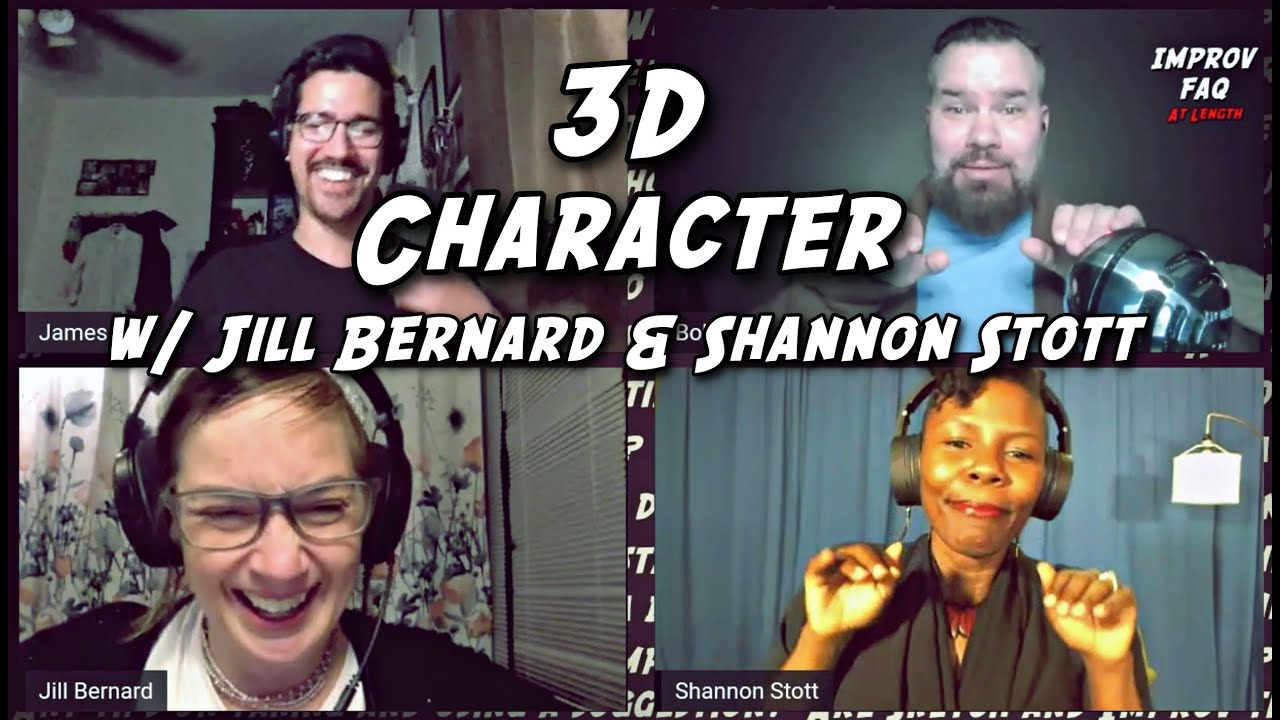 49:10
49:103D Characters w Jill Bernard and Shannon Stott
Jill Bernard and Shannon Stott join Improv FAQ to discuss building three-dimensional characters in improv. Topics include giving exaggerated or cartoonish characters emotional depth, drawing from personal experience and real people as character sources, and whether it is appropriate to pause a scene to check in with a scene partner.
 57:59
57:59Questions LIVE 9/6
A live discussion from Improv FAQ in which hosts Bob and James examine the role of questions in improv scenes. The conversation addresses when questions serve a scene and when they become a crutch, with audience participation throughout the stream.
 51:55
51:55Status w Allen Smock
Allen Smock joins the Improv FAQ podcast to discuss status as a foundational concept in scene work. The conversation examines how shifts in status drive both comedy and drama, and covers practical techniques for playing status dynamics onstage. A secondary topic addresses the importance of self-promotion and putting one's creative work into the world.
 47:50
47:50Humor Theory w Chris Fortin
Chris Fortin joins the Improv FAQ podcast to explore the academic study of humor. The conversation surveys various theoretical frameworks for what makes things funny, how comedic impact shifts with context, and approaches to studying humor theory without undermining the spontaneity of the creative process.
 1:52:32
The Parent Trap Trilogy w Nicole & Julia
Nicole Pascaretta and Julia Schroeder join the Improv FAQ podcast for an extended discussion of The Parent Trap film trilogy.
 46:45
46:45Playing Grounded w Margaret Edwartowski
Margaret Edwartowski of Planet Ant Theater joins the Improv FAQ podcast to discuss grounded performance in improvisation. The conversation explores the discipline of committing to a character's reality within a scene, trusting creative choices as they emerge, and how some of the strongest audience reactions can come from genuinely serious emotional moments.
 52:51
52:51Ego w Tiffany Baxi
Tiffany Baxi joins the Improv FAQ podcast for a conversation about ego in improvisation. Topics include the heightened stakes that accompany different performance opportunities, the value of patience with both one's own ego and the egos of scene partners, and whether embracing ego can serve a constructive purpose onstage.
 54:31
54:31Da Bureau (Live 8/23)
Members of the improv team Da Bureau join the Improv FAQ podcast to discuss their self-titled debut sketch comedy album. The conversation covers the group's creative process and the crossover between their improv work and recorded sketch material.
 1:06:06
Power Dynamics w Jennifer Socia
Jennifer Socia joins the Improv FAQ podcast to discuss power dynamics in improvisation. The conversation covers how power operates both onstage and offstage, and examines the way dominant performance styles tend to self-perpetuate while underrepresented approaches receive less visibility and fewer opportunities to develop.
 39:36
39:36Theo's Comedy Nights
James tells Bob about Theo's Comedy Nights, a combined improv and stand-up show he co-hosted from 2010 to 2011. The discussion covers the realities of bar-venue improv (sometimes called "barprov"), promotion strategies beyond social-media outreach to friends, and how creating a stage for yourself can open doors for other performers as well.
 1:02:32
POTUS Interruptus w Jess Kay
Author Jess Kay joins Improv FAQ to discuss her book "POTUS Interruptus," which examines the intersection of U.S. presidential history and sexuality. The episode is structured as a conversation about the book with live audience questions.
 49:28
49:28Total Commitment w Eileen Earnest
Eileen Earnest joins Improv FAQ to discuss the principle of total commitment in performance. The conversation touches on approaching improvisation from a theatre background, prioritizing scene partners over audience reactions, and the idea that performing improv alone may not be the most effective way to develop one's craft. Earnest performs with ComedySportz and the sketch-improv duo Two Sketchy Dames.
 46:32
46:32Home School
Bob recounts his time with Home School, his first dedicated improv team, in this show-and-tell episode of Improv FAQ. Topics include goal-setting as a team, the advantages and drawbacks of competing in improv tournaments, and lessons learned about ambition and enjoyment in ensemble work.
 53:08
53:08Improv FAQ LIVE 8/9
A live Q&A episode of Improv FAQ in which hosts Bob and James field submitted and real-time audience questions about improvisation.
 54:11
54:11The Improv Place w Katy Schutte
Katy Schutte joins Improv FAQ to discuss The Improv Place, an online education and community platform for improvisers. The conversation covers the platform's offerings, setting professional goals within improvisation, and the pursuit of constructive online spaces for the improv community.
 45:03
45:03Secrets Secrets
Bob and James of Improv FAQ discuss "Secrets, Secrets," an unscripted show built around family secrets. The production was inspired by the book "Annie's Ghosts" and developed as part of the Ferndale Reads program. The conversation covers Bob's experience performing in the cast and James's first time directing a show on his own, along with the challenge of adapting serious subject matter into an improvised comedy format.
 1:01:54
Improv FAQ LIVE Debut
The debut live episode of Improv FAQ, in which hosts Bob and James take a Q&A format for the first time, fielding previously submitted questions alongside real-time audience queries from the comments.
 46:16
46:16Comfort Zones w Corene Ford
Corene Ford joins Improv FAQ to discuss the role of comfort zones in improvisation. The conversation covers seeking out the things that feel most challenging onstage and how pushing past those boundaries in performance can drive personal growth beyond the stage.
 42:02
42:02What Makes Today Different
Bob and James of Improv FAQ explore the scenic concept of "what makes today different," a foundational idea in scene work that asks performers to identify why the events of a scene are happening now rather than at any other time.
 58:31
58:31Consistency w Garrett Fuller
Garrett Fuller joins Improv FAQ to discuss consistency as a practice in improvisation. Topics include being selective with projects and show opportunities, the risks of spreading oneself too thin, and how Fuller and Michael Owen Smith built an audience of over 100,000 followers for their web series "Wayne County Lyfe" by committing to the principle of sustained, enjoyable output.
 51:46
51:46Substance v Form
Improv FAQ hosts Bob and James examine the tension and interplay between substance and form in improv. The discussion addresses how scene content and show structure can both conflict with and complement each other, and whether performers need grounding in form before they can effectively move beyond it.
 57:45
57:45Clown w Isaac Kessler Part 2
Part two of the Improv FAQ conversation with Isaac Kessler on clown and its influence on improvisation. The discussion continues from the first installment, with a mention of the Pack Theater as part of the broader context.
 59:03
59:03Clown w Isaac Kessler Part 1
Isaac Kessler joins the Improv FAQ podcast to discuss clown work and its relationship to improvisation. The conversation explores how clown technique has influenced the broader improv world and Kessler's own artistic development. This is part one of a two-part discussion.
 51:10
51:10Free Form w Rachel Rosenthal
Rachel Rosenthal joins the Improv FAQ podcast to discuss free form improvisation, a style used by her touring ensemble Big Bang. The conversation explores organic improv, the creative possibilities that open up when structure is loosened, and the various devices and techniques that distinguish different playing styles within a free form framework.
 54:25
54:25Simplicity w Dave Powell
Dave Powell joins the Improv FAQ podcast to discuss the value of simplicity in scene work. The conversation covers pacing and the discipline of restraint, focusing on why performers benefit from resisting the impulse to make every move in a scene a big swing. Powell is associated with OTR Improv and ComedySportz Cincinnati.
 48:49
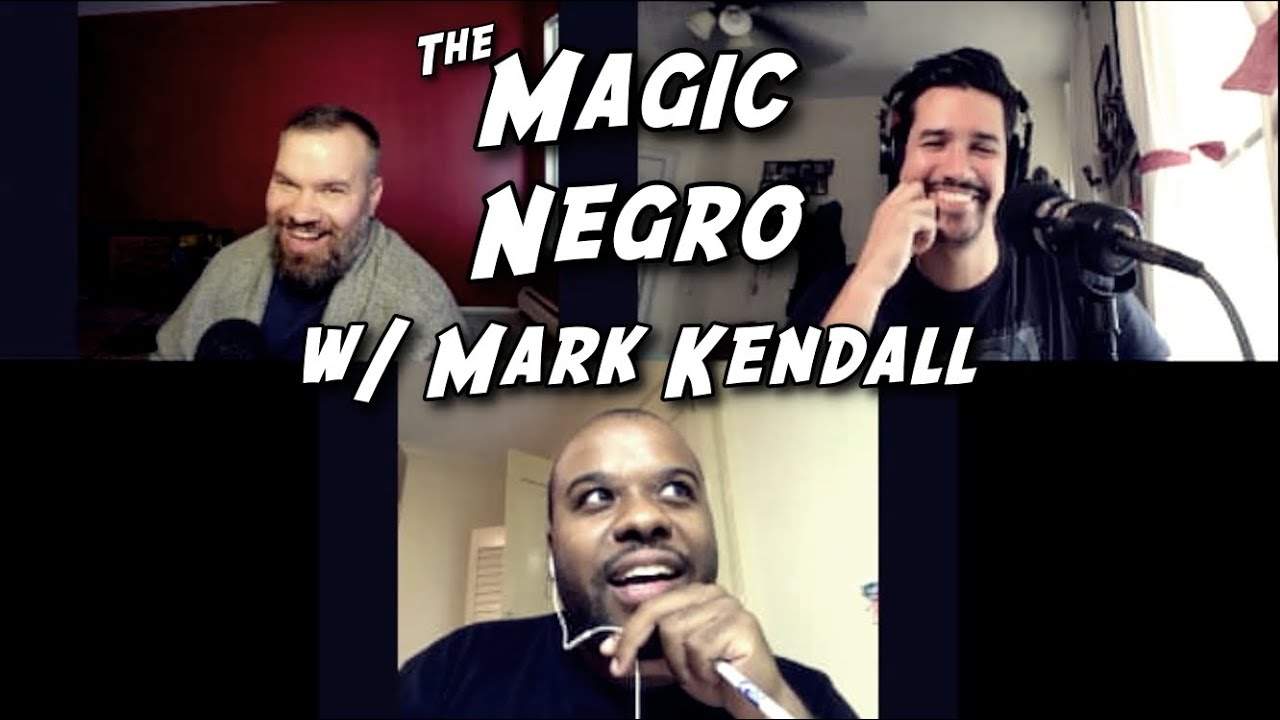
48:49Magic Negro w Mark Kendall
Mark Kendall joins the Improv FAQ podcast to discuss his solo show "The Magic Negro and Other Blackness," a racially driven performance piece he has toured nationally. The conversation covers Kendall's experience performing the show for varied audiences across the country and the importance of strategically building and releasing tension. Kendall is associated with Kickstand Comedy in Atlanta, where he teaches a BIPOC improv class.
 48:06
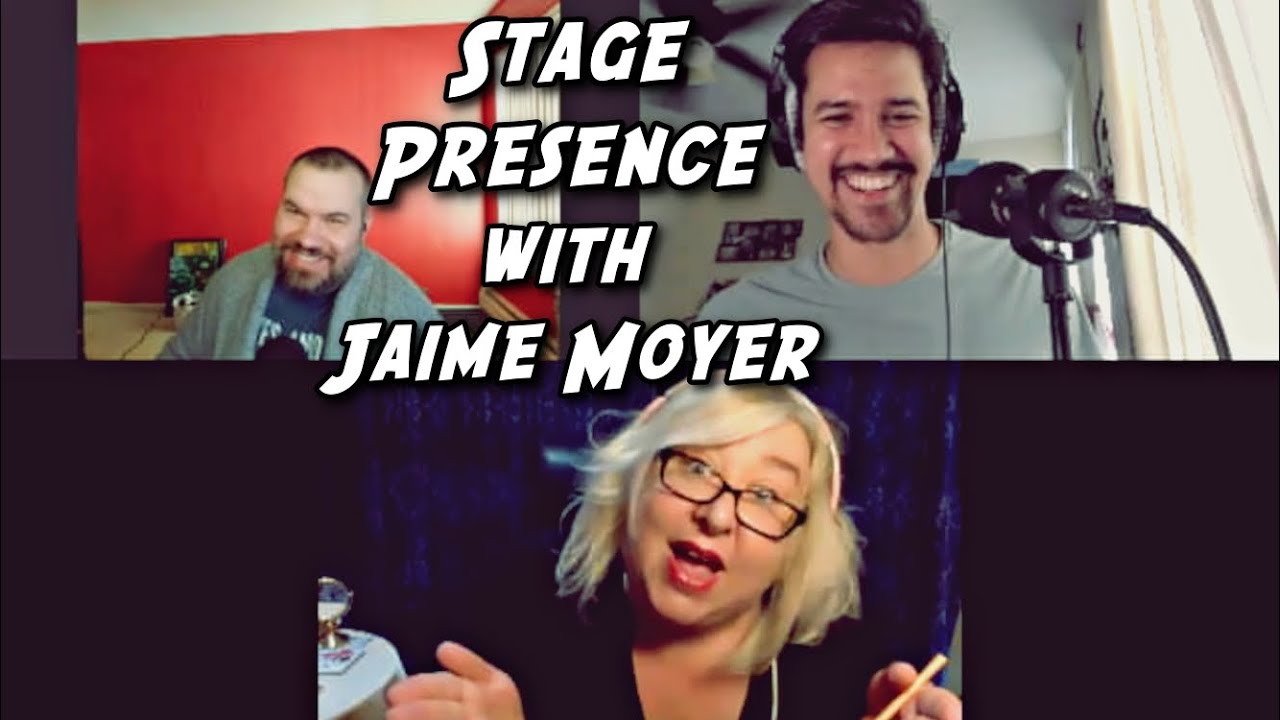
48:06Stage Presence w Jaime Moyer
Jaime Moyer joins the Improv FAQ podcast to discuss stage presence in improvisation. The conversation explores the degree to which an improviser can actively work an audience and how much attention performers should devote to their stage presence relative to other elements of their craft.
 53:56
53:56Coaching w Chris Petersen
Chris Petersen joins the Improv FAQ podcast to discuss the craft of coaching improv teams. The conversation addresses raising performance standards and explores how both teams and individual performers can examine their work constructively.
 1:01:15
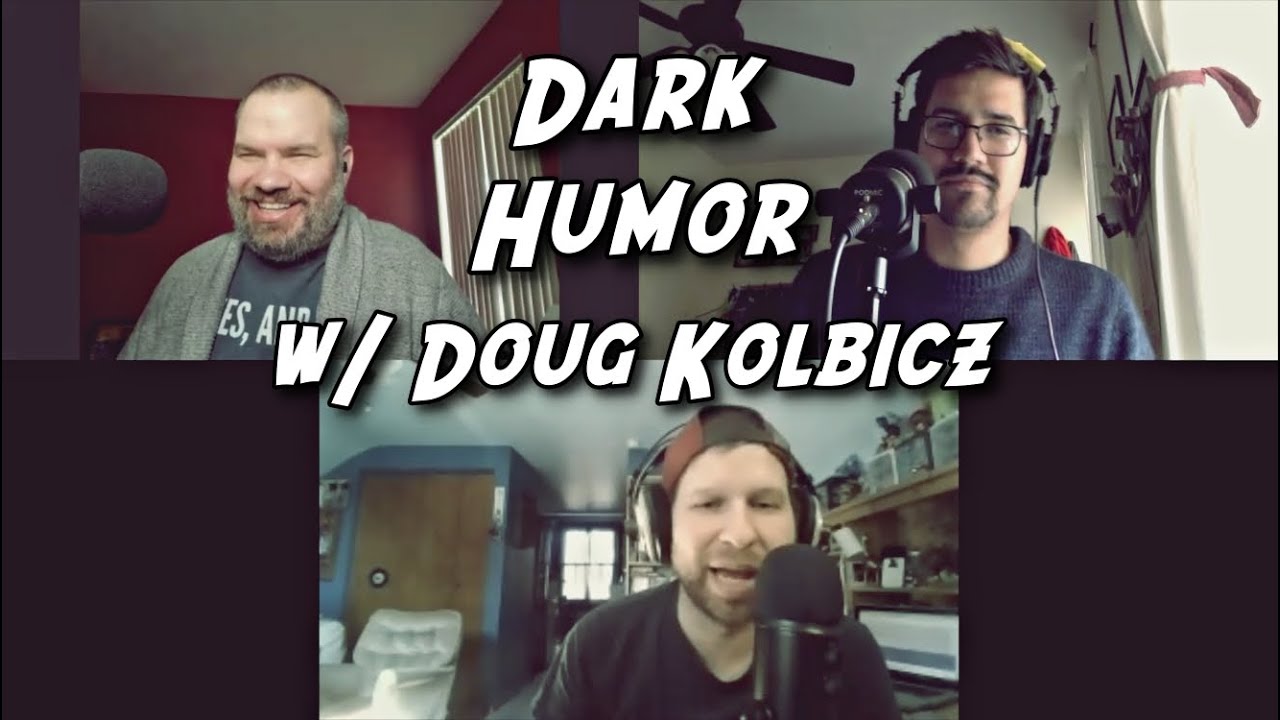
Dark Humor w Doug Kolbicz
Doug Kolbicz joins the Improv FAQ podcast for a conversation about dark humor in improvisation. The discussion examines the role of empathy and risk-taking in comedic work that ventures into uncomfortable territory, and where the boundary falls between productively dark material and content that crosses into the inappropriate.
 51:54
51:54Short & Long Form w Miranda Fyfe
Miranda Fyfe joins the Improv FAQ podcast to discuss the distinctions between short form and long form improvisation, examining the particular appeals of each style. The conversation also covers the practical challenge of relocating to a new city and integrating into an unfamiliar improv community, drawing on Fyfe's experience moving from Atlanta to the Metro Detroit area.
 47:48
47:48Playing the Moment w Rocky Powell
Rocky Powell joins Improv FAQ to discuss presence and responsiveness in scenework. The conversation focuses on listening, staying available to scene partners, and committing to unexpected moves rather than defaulting to preconceived choices. Powell performs with the Armory improv team Weird Cat.
 44:21
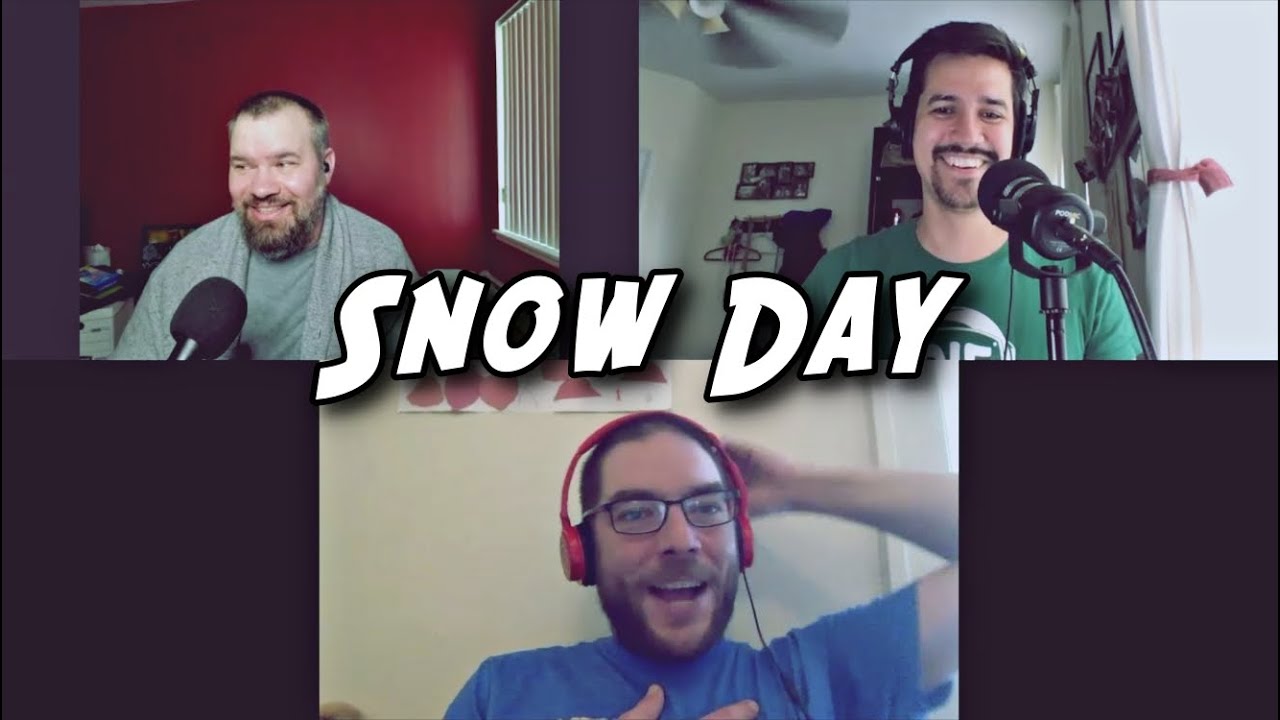
44:21Snow Day (w/ Pete Jacokes)
Bob and Pete Jacokes describe the origins and growth of Snow Day, an annual 26-hour improv marathon, in this "Show & Tell" episode of Improv FAQ. What began accidentally has grown since 2007 from a two-hour lineup of six teams into a marathon featuring approximately 60 teams. The event serves as a benefit show supporting cancer-related causes.
 1:18:21
The Improv Inferno w Dan Izzo
Dan Izzo joins Improv FAQ to discuss The Improv Inferno, an improv theatre in Ann Arbor, Michigan that operated from 2004 to 2006. Despite its brief two-year run, the theatre left a notable mark on the local scene. The conversation explores the venue's rapid rise, its impact during its short existence, and the circumstances of its closing.
 1:00:41
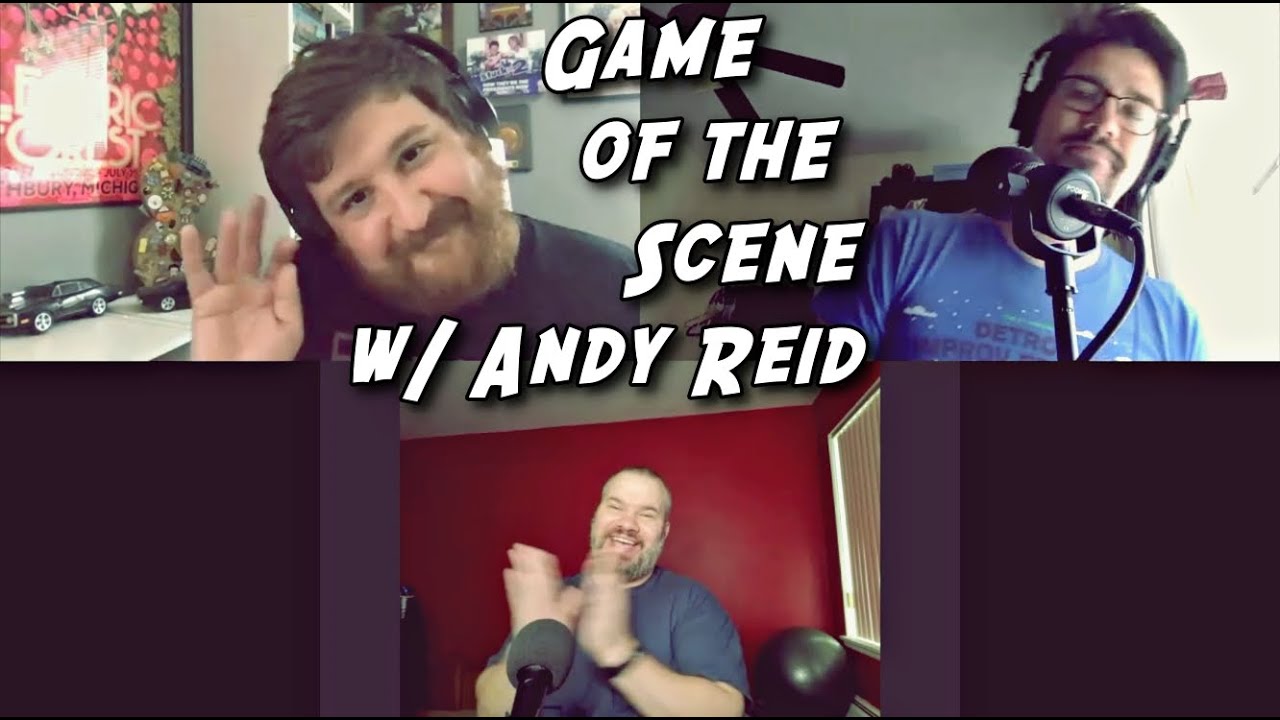
Game of the Scene w Andy Reid
Andy Reid of Planet Ant Theatre joins Improv FAQ for an extended conversation on game of the scene. The discussion covers defining what constitutes a game, making game moves, heightening, and the multiple meanings of "exploring" within a game-based framework. Reid and the hosts also examine how emotion and acting technique function within game-driven scenework.
 54:42
54:42The Elastic Time Cannon
James presents "The Elastic Time Cannon" in this "Show & Tell" episode of Improv FAQ. The format is described as a show that begins, ends, and continues simultaneously. The conversation covers the process of workshopping a high-concept show from scratch and the value of setting ambitious structural goals for an ensemble.
 55:42
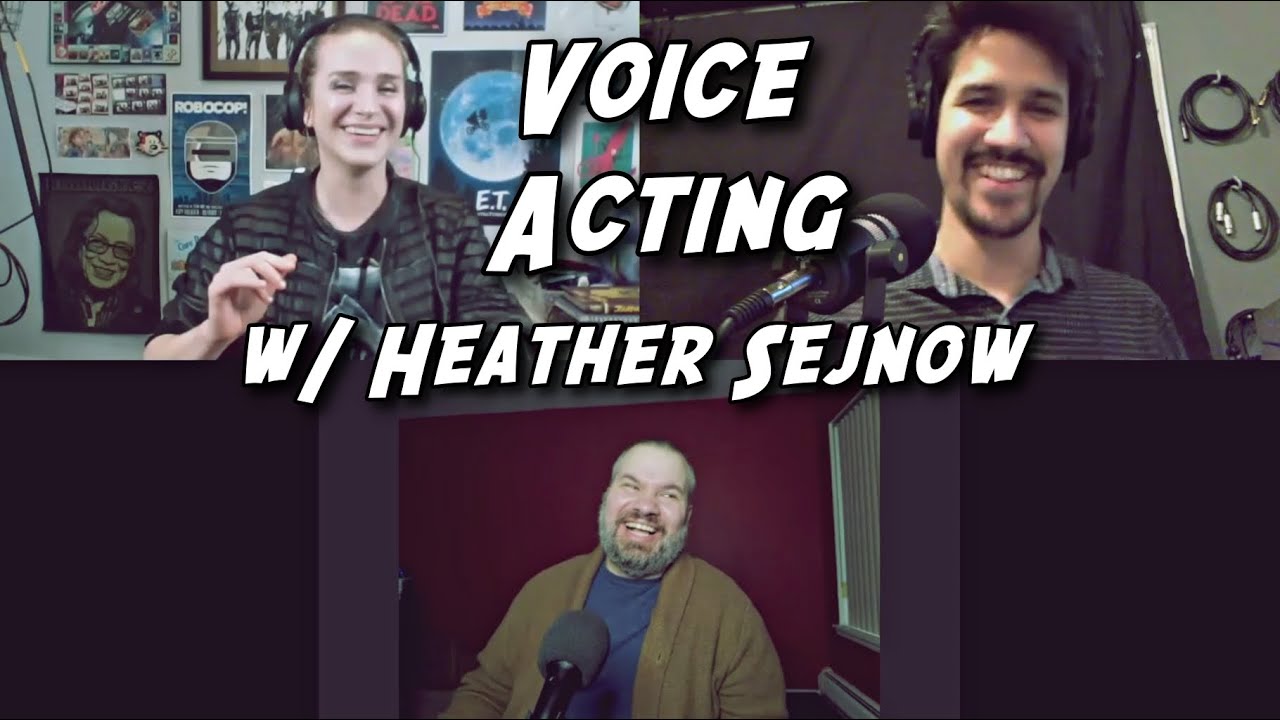
55:42Voice Acting w Heather Sejnow
Voice actor and improviser Heather Sejnow joins Improv FAQ to discuss the intersection of voice acting and improvisation. Topics include using vocal technique to discover and differentiate characters, the craft of impressions, and bringing authentic emotional commitment to broad character work.
 48:51
48:51Battleprov
Host Bob recounts the history of Battleprov, one of the first shows he helped produce early in his improv career. This "Show & Tell" episode of Improv FAQ explores the practical realities of mounting an independent improv show in a bar venue, including the challenges of performing for a bar crowd and the volatility of self-produced work.
 51:29
51:29Birth of a Ho' Ass Nation w Jake Russell
Jake Russell discusses his solo show "Birth of a Ho' Ass Nation" with Improv FAQ. The conversation covers the show's ambitious structure, which follows a condensed 200-year storyline tracing modern-day Russell through the history of slavery in America. Russell describes how the piece has evolved through successive performances and the personal growth he has experienced in developing it. Russell is also associated with Planet Ant Theatre in Detroit, where he performs on "Masks Off" and "Boxed in with Friends."
 46:48
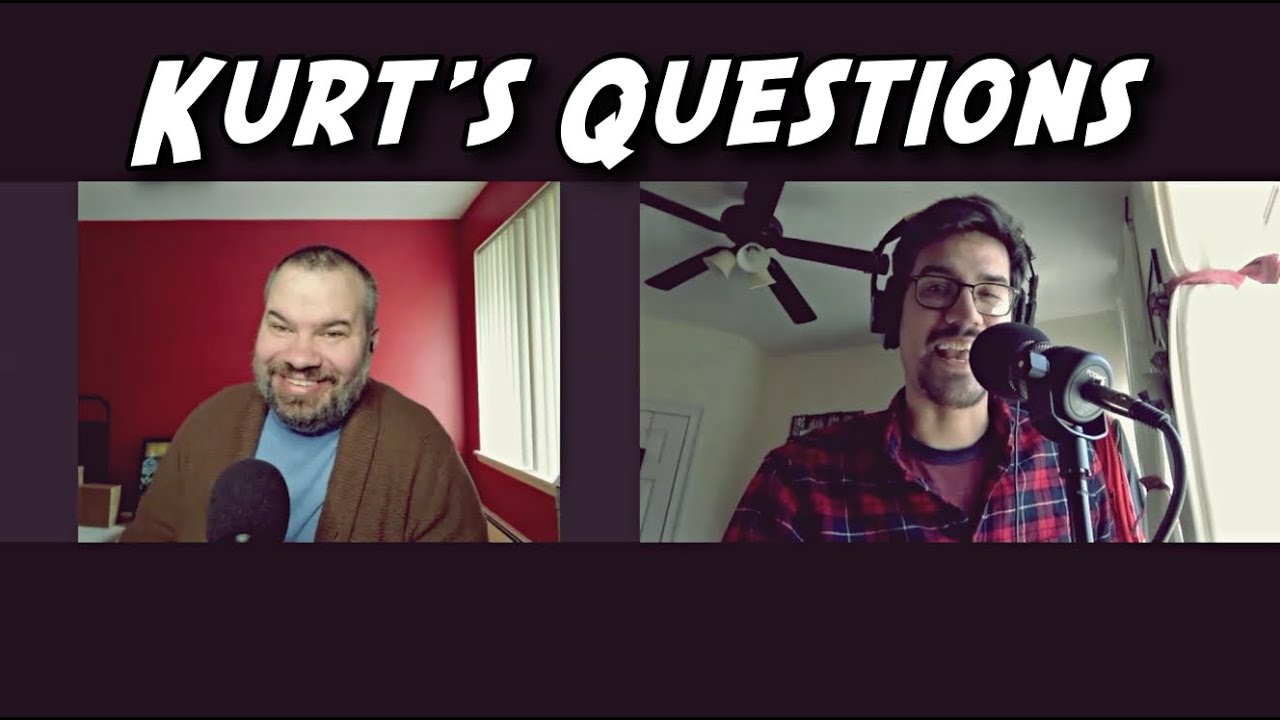
46:48Kurt's Questions
A listener Q&A episode built around a set of questions submitted by a community member. Topics range widely, covering motivations for doing improv, tips for coaching and teaching, common improv cliches and pet peeves, and strategies for maintaining an improv team.
 53:43
53:43Change & Notes
A listener Q&A episode in which the Improv FAQ hosts discuss how to make a character's change of heart feel authentic in a scene. They also share some of the most memorable performance notes they have received.
 49:43
49:43Playing Beyond Classes
A listener Q&A episode in which the Improv FAQ hosts address community questions about performing after completing a training program, participating in jams, and navigating mixed experience levels within ensembles.
 1:23:04
Producing w Matt Naas
Matt Naas joins the Improv FAQ hosts to discuss producing improv shows and pursuing new creative opportunities. Naas is the owner and producer of Gabber Media, the podcast network behind Improv FAQ.
 41:02
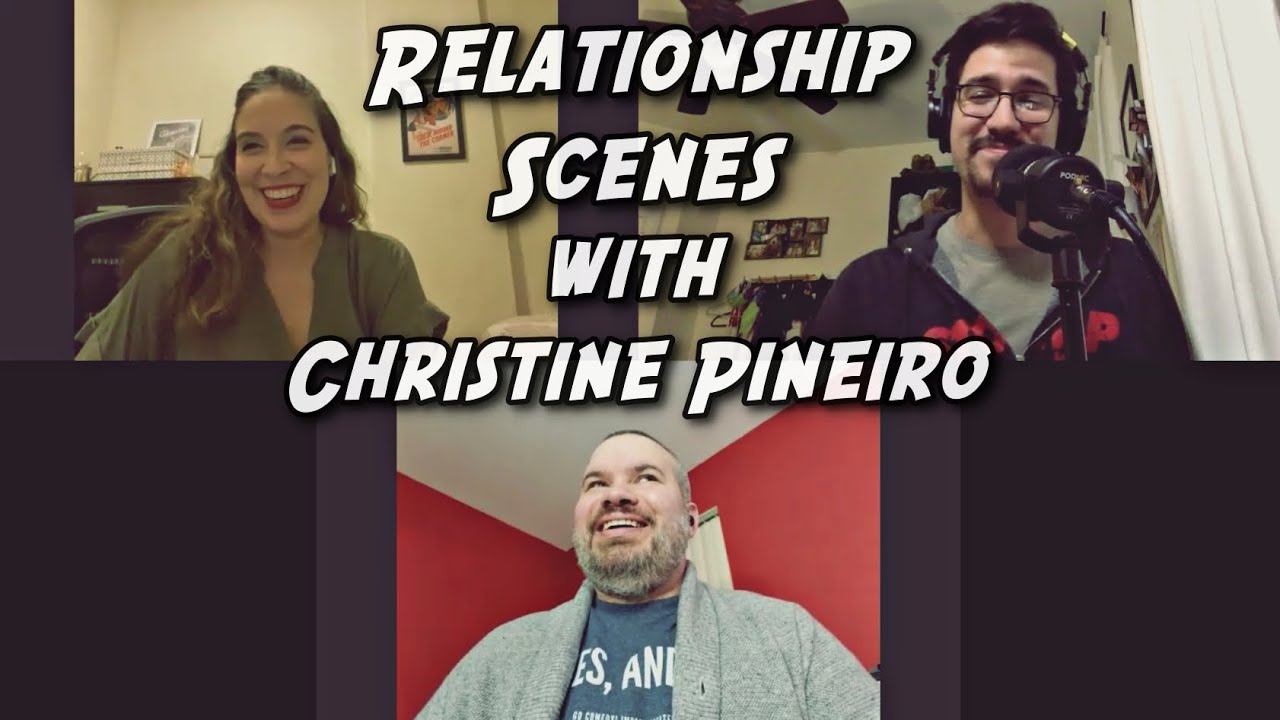
41:02Relationship w Christine Pineiro
Christine Pineiro joins the Improv FAQ hosts to explore the role of character relationships in scene work. Pineiro's credits include The Armory and the Peoples Improv Theater.
 53:02
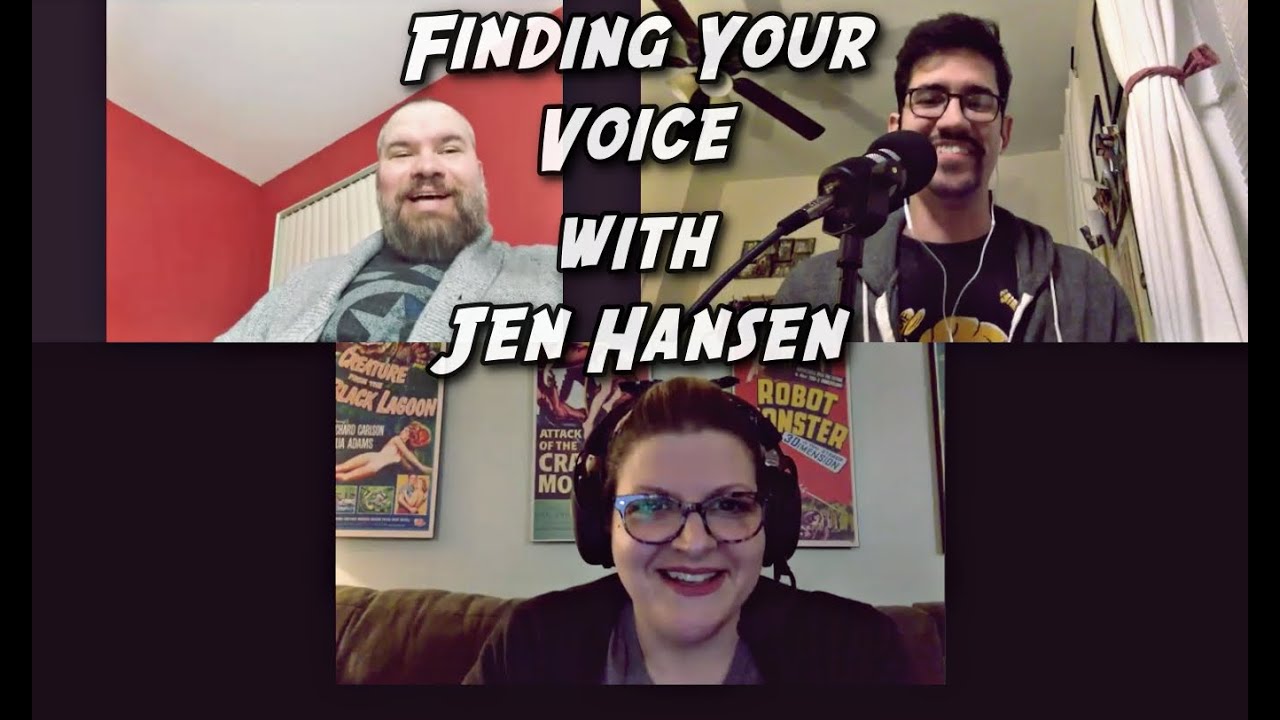
53:02Finding Your Voice w Jen Hansen
Jen Hansen joins the Improv FAQ hosts to discuss finding a personal performance voice. Topics include the role of artistic influences in shaping a performer's style, the variable usefulness of feedback, and the idea that a performer's voice exists whether or not it has been consciously defined.
 50:36
50:36Teaching Teachers and Improv Training Programs w Gary Lehman (Part 2)
Part two of a conversation between the Improv FAQ hosts and Gary Lehman, continuing their discussion on training improv teachers and designing improv training programs.
 46:45
46:45Teaching Teachers and Improv Training Programs w Gary Lehman (Part 1)
Part one of a conversation with Gary Lehman on the Improv FAQ podcast, focused on the challenges of running improv training programs. The discussion centers on the particular difficulty of training teachers, examining what it takes to move from performing knowledge to effective pedagogy within an improv curriculum.
 52:05
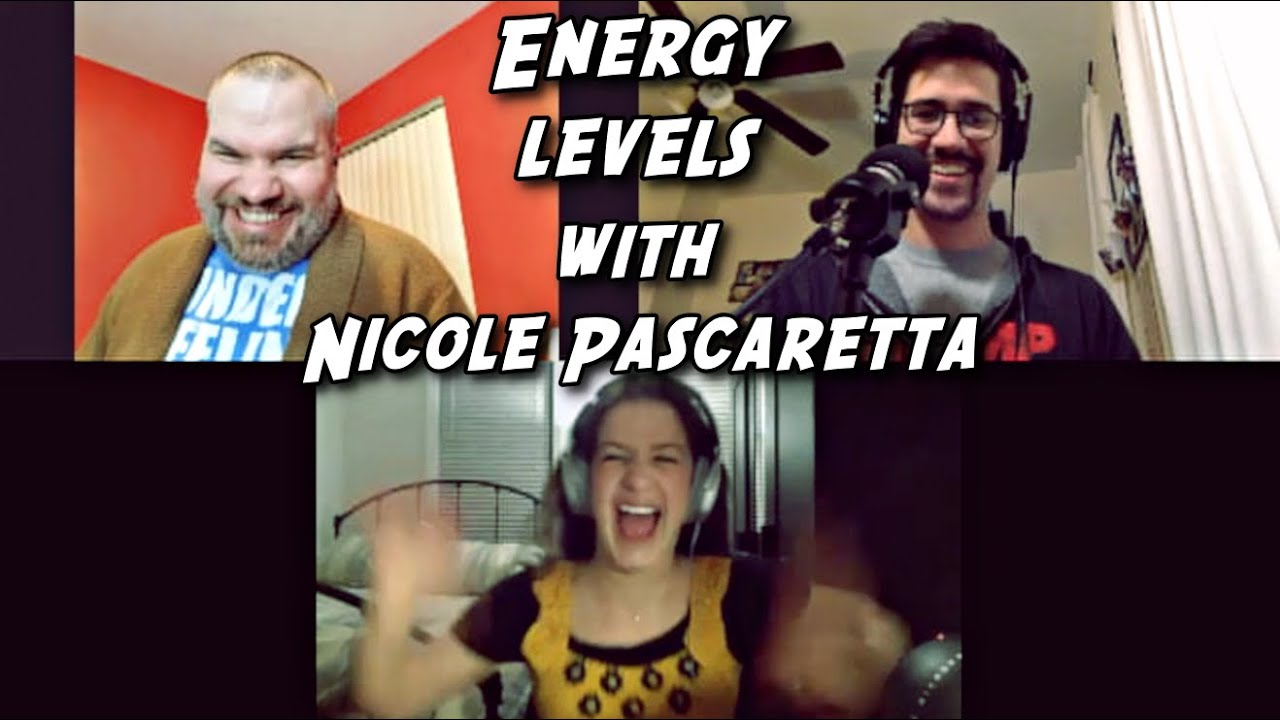
52:05Energy Levels w Nicole Pascaretta
Nicole Pascaretta joins the Improv FAQ podcast to discuss managing energy as a performer. The conversation covers the challenges of calibrating intensity on stage, recognizing one's natural performance tendencies, and developing individual strengths within an ensemble context.
 41:16
41:16Pushing the Funny Button
Hosts Bob and James address a listener question about breaking the habit of reaching for jokes in scenes. The episode explores why improvisers default to comedic pressure, how that instinct can undermine scene work, and strategies for shifting focus away from forcing humor.
 47:23
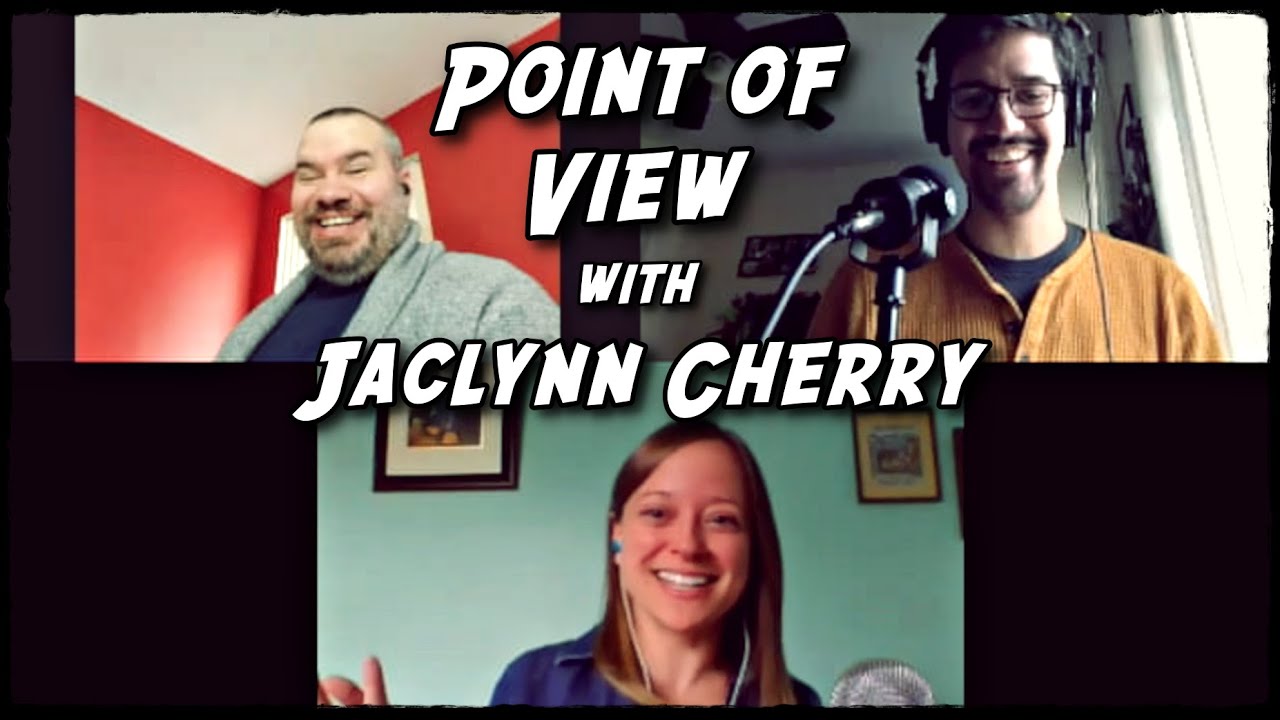
47:23POV w Jaclynn Cherry
Jaclynn Cherry joins the Improv FAQ podcast to discuss point of view as a foundational tool in scene work. The conversation focuses on how a clear personal perspective helps performers build character and navigate scenes with stronger choices.
 48:13
48:13Acting w Patrick Williams
Patrick Williams joins the Improv FAQ podcast to examine the relationship between acting technique and improvisation. The discussion covers where the two skill sets overlap, where they diverge, and how training in one discipline can inform and strengthen the other.
 52:49
52:49Multi Comedian w Ankara
Ankara Savone joins the Improv FAQ podcast to discuss working across multiple comedy disciplines. The conversation examines how improvisation, sketch comedy, podcasting, and stand-up each develop distinct performance skills and what practitioners gain from training in more than one form.
 55:12
55:12Improv Resources and Recommendations
Hosts Bob and James survey their recommended resources for improvisers, spanning books, podcasts, films, and video content. The episode serves as a curated reading and viewing list for performers looking to deepen their study of the form beyond class and stage time.
 47:18
47:18Silence & Stillness w Neil Batra
Neil Batra joins the Improv FAQ podcast to discuss the role of silence and stillness in improvisation. The conversation explores how pausing and restraining impulses can strengthen scene work, covering the tension between the instinct to fill space and the value of letting moments breathe on stage.
 32:23
32:23Run for Laughs, Improv & Yoga w Natalie Roxas
Natalie Roxas joins the Improv FAQ hosts to discuss the Run for Laughs virtual walkathon, a fundraising event in support of Go Comedy! Improv Theater in Ferndale, Michigan. The conversation also covers Roxas's Yes And Yogi Girl program, which integrates improv principles with yoga practice.
 52:55
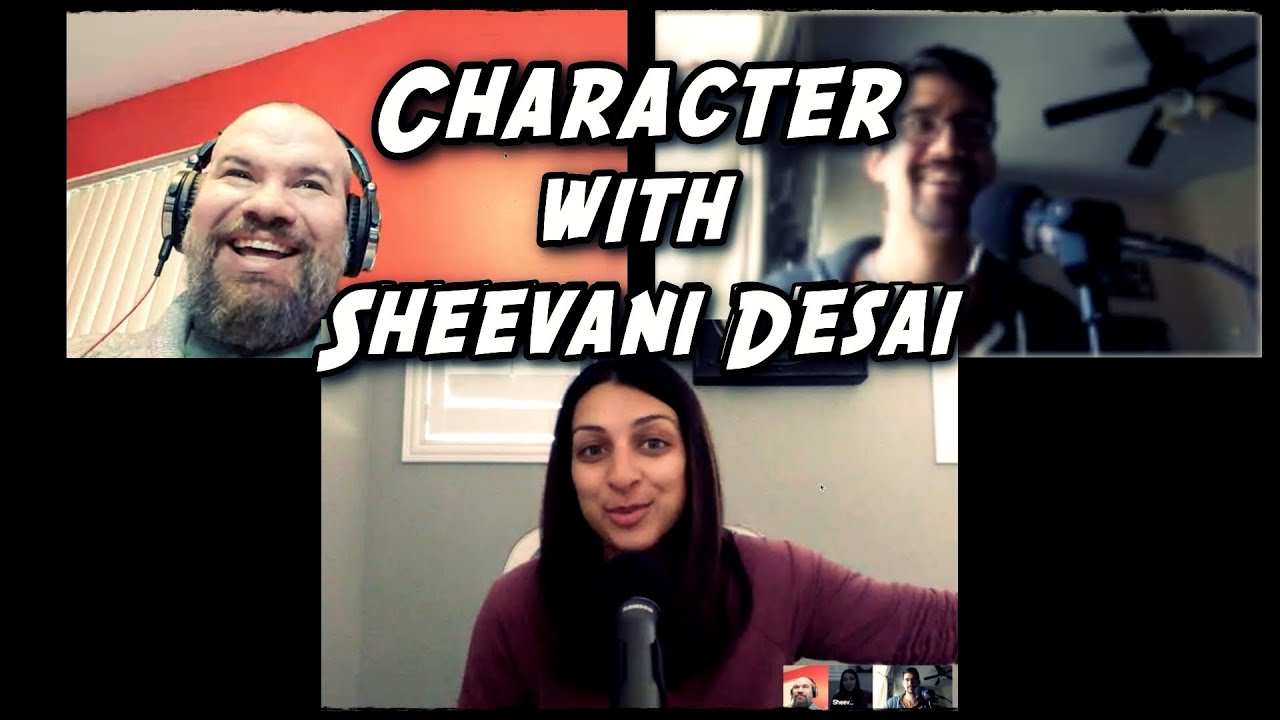
52:55Character Work w Sheevani Desai
Sheevani Desai joins the Improv FAQ channel for a conversation focused on character work in improvisation.
 54:05
54:05F@*# World w Gary Lehman
Gary Lehman joins the Improv FAQ hosts for a discussion of the concept sometimes called "fuck world" or "crazy town" in improv scenes. The conversation explores when and whether heightening into absurd or chaotic territory serves a scene, and how performers navigate that dynamic.
 39:26
39:26The Improv Network & Camp Improv Utopia w Nick Armstrong
Nick Armstrong joins the Improv FAQ channel to discuss pandemic relief efforts for improv theatres and festivals. The conversation also covers the origins and mission of The Improv Network and Camp Improv Utopia, a retreat-style gathering for improvisers.
 48:20
48:20Long Form Edits w Pete Jacokes
Pete Jacokes joins the Improv FAQ hosts to discuss scene edits in long-form improvisation. The conversation covers the value of well-placed edits and surveys the range of edit types available to long-form performers.
 52:46
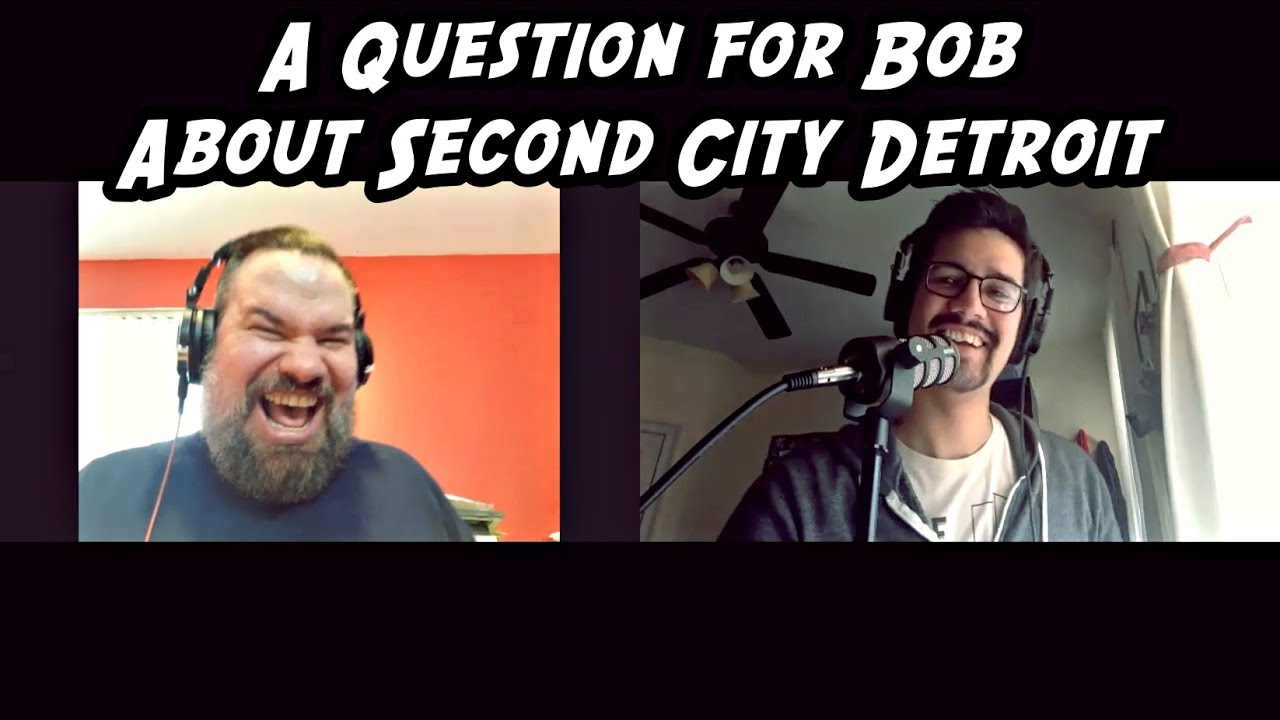
52:46A Question for Bob about Second City Detroit
An Improv FAQ episode prompted by a listener question about host Bob's experience studying at Second City Detroit. The conversation expands into a broader discussion of stage time, artistic goals, rehearsal practices, and the challenges involved in building and sustaining an improv troupe.
 52:37
52:37Narrative with Julia Schroeder
Julia Schroeder joins the Improv FAQ channel for a conversation on narrative improv. Topics include the distinctions between narrative and organic approaches, story arc construction, character development, handling exposition, and the different roles players take within narrative structures.
 43:56
43:56'Middleditch & Schwartz' talk w Mike Maghiar
A conversation on the Improv FAQ channel with guest Mike Maghiar examining the Netflix special Middleditch & Schwartz. The discussion covers the long-form improv work of Thomas Middleditch and Ben Schwartz as presented in the streaming format.
 4:25
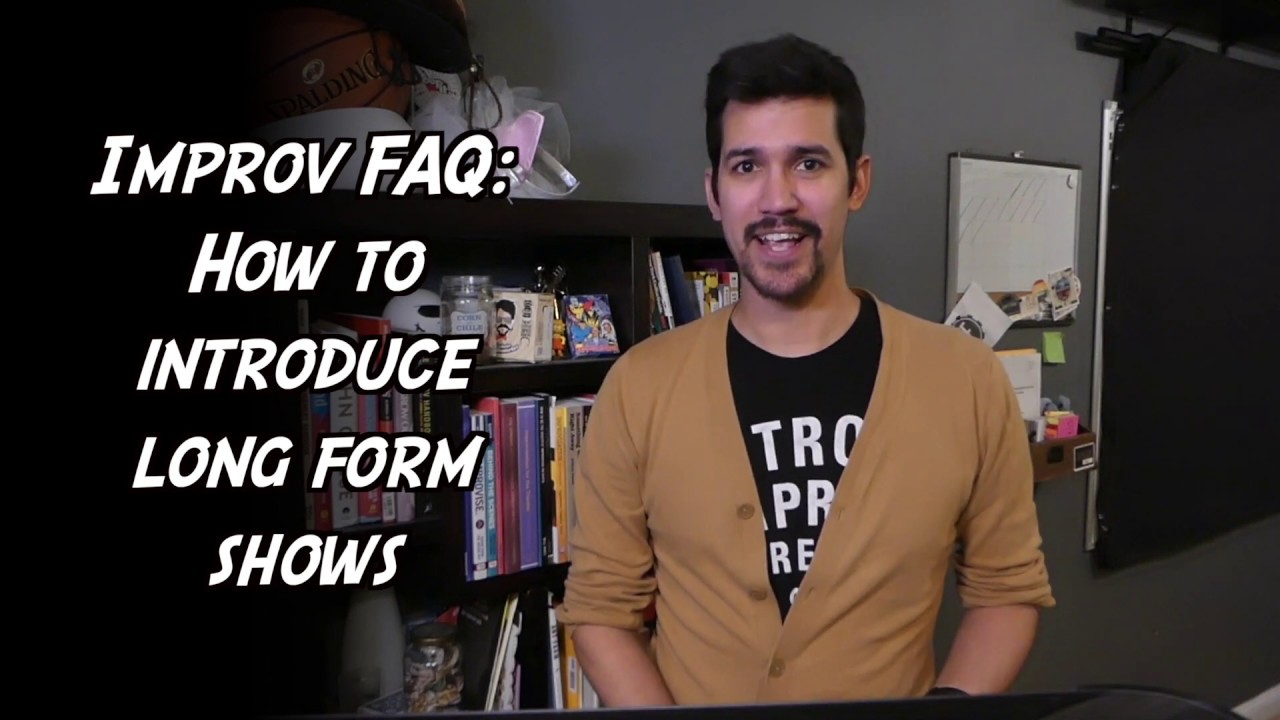
4:25How to Introduce Long Form Shows
An Improv FAQ episode offering guidance on introducing long form improv shows to an audience. Topics include setting tone and expectations, giving the audience the context they need for maximum engagement, and keeping the introduction simple.
 35:41
35:41Gilda's Club, DIF, Camp Improv Utopia w Chris Moody
An Improv FAQ episode featuring guest Chris Moody discussing three improv community organizations: Gilda's Club, the Detroit Improv Festival, and Camp Improv Utopia. Moody outlines his involvement with each and the role they play in the broader improv community.
 16:21
16:21'Gilda's Big Night In' talk w Chris Moody
An Improv FAQ conversation with guest Chris Moody about Gilda's Club, a community organization supporting people affected by cancer. The episode discusses the organization's annual fundraising event, Gilda's Big Night Out, and its transition to a virtual format in 2020.
 5:54
5:54Who What Where
An Improv FAQ episode focused on establishing the Who, What, and Where at the top of an improv scene. The discussion offers tips for building this foundational habit in practice without letting it slow down performance.
 6:40
6:40Suggestions
An Improv FAQ episode on the role of audience suggestions in improvisation. Topics include the purpose of taking suggestions, best practices for soliciting them from an audience, and strategies for using a suggestion effectively once it has been received.
 34:55
34:55Virtual Improv w/ Kim Alu
An Improv FAQ conversation with guest Kim Alu about the shift to virtual improvisation during the social distancing era. The discussion covers how performers and organizations adapted their practice to remote platforms.
 45:47
45:47Group Games
A long-format Improv FAQ discussion on group games in long form improvisation. Hosts Bob and James explore the differences between scenic and non-scenic group games, organic group games, and the distinct energy and function that group game segments bring to a long form show.
 6:57
6:57Grounded vs Boring
An Improv FAQ episode examining the distinction between grounded scenework and scenes that stall. The discussion covers practical techniques for maintaining realism in a scene without sacrificing momentum or dramatic interest.
 2:53
2:53Denial vs Saying "No"
A short Improv FAQ segment clarifying the distinction between denial and the act of saying "no" in an improv scene. The video addresses a common point of confusion for newer improvisers who conflate any negative response with the broader principle of avoiding denial.
 6:58
6:58Practice Groups & Indie Teams
An Improv FAQ episode covering the logistics and purpose of starting an improv practice group or indie team. The video distinguishes between the two formats, discusses reasons a performer might form one, and provides a practical checklist for getting a group off the ground.
 7:41
7:41How to Get Better at Improv
An Improv FAQ episode on methods for improving as an improviser beyond the classroom. The video outlines supplementary practices and habits that support development alongside formal improv training. Mick Napier's "Behind the Scenes" is referenced as a recommended resource.
 11:30
11:30Being Funny in Improv
An Improv FAQ episode examining the relationship between comedy and improvisation. The video explores the apparent contradiction in the common directive to avoid "going for laughs" within a comedic art form, and distinguishes between wanting to be funny and letting anxiety about being funny interfere with scene work. The discussion touches on how the improvisational process itself generates comedy and how comedic principles keep unscripted performance in the realm of comedy.
 12:03
12:03Improv & Sketch
An Improv FAQ episode examining the relationship between improvisation and sketch comedy. The discussion covers surface-level distinctions between the two disciplines as well as more abstract connections in how they share creative DNA.
 7:23
7:23Short Form and Long Form Improv
An overview from the Improv FAQ channel comparing short form and long form improvisation. The episode defines both categories, outlines their structural differences and shared foundations, and examines the recurring debate over which approach holds greater artistic value.
 4:18
4:18Teaching & Dictating Action
A short educational segment from the Improv FAQ channel examining why improvisers are often taught to avoid teaching and dictating action within scenes. The video is part of a sidebar series that breaks down commonly cited rules of improv, exploring the reasoning behind each guideline and how it can be used to develop stronger scene habits. The episode frames these principles not as rigid mandates but as tools for building awareness, particularly useful when improvisers from different training backgrounds perform together.
 4:17
4:17Bargaining, Negotiating, Transaction
An exploration of why bargaining, negotiating, and transactional exchanges are often discouraged in improvised scenes. The video examines the rationale behind the guideline and its potential impact on scene work, while acknowledging that context determines when the rule applies. Part of the Improv FAQ sidebar series on common improv rules.
 3:01
3:01Asking Questions
A short examination of the common improv guideline against asking questions in scenes. The video explores the reasoning behind the rule and how it can be used to build constructive scenic habits, while noting that no rule should be treated as absolute. Part of the Improv FAQ sidebar series on frequently cited improv rules.
 7:21
7:21What Is The Harold?
An introductory overview of the Harold, the long-form improvisation structure closely associated with iO Chicago. The video references key texts and historical materials including Truth in Comedy, the UCB Comedy Improvisation Manual, a 1986 Del Close interview, and Matt Fotis's academic dissertation on the form. Dyna Moe's Harold infographic is featured. From the Improv FAQ channel.
 13:56
13:56Improv Books and Resources
A survey of recommended books, podcasts, and other resources for learning improvisation, organized by experience level. Beginner recommendations include Anne Libera's The Second City Almanac of Improvisation, with intermediate and advanced selections spanning works by Mick Napier, Will Hines, and TJ and Dave. Podcast recommendations include Jimmy Carrane's Improv Nerd. From the Improv FAQ channel.
Shorts
Vertical and short-form entries grouped separately for easier browsing.
 0:51
0:51Rules Are Not Equal to Good Improv
A short educational piece from Improv FAQ examining the relationship between rules and quality in improvisation. The video challenges the assumption that following improv rules automatically produces good scene work.
 0:50
0:50Feel Some Way About It
A short from Improv FAQ on emotional commitment in scenes, encouraging improvisers to invest a genuine point of view or emotional response rather than remaining neutral to the events unfolding around them.
 0:35
0:35Connect with your Scene Partners, First and Foremost.
A short from Improv FAQ on the importance of prioritizing connection with scene partners as the primary focus in improvised scenes.
 0:38
0:38Performance Skills in #improv
A short from Improv FAQ addressing performance skills and their role in effective improvisation.
 0:31
0:31Improvisers should be really good at having #fun
A short from Improv FAQ on the role of fun as a foundational skill for improvisers. The clip frames enjoyment not as a byproduct of good improv but as a deliberate competency that performers should cultivate.
 0:37
0:37Blurred lines between #improv and #sketchcomedy
A short-form clip from the Improv FAQ channel exploring the overlap and distinctions between improvisation and sketch comedy.
 1:00
1:00#improvcomedy is more varied than you might think!
A short from Improv FAQ highlighting the breadth of styles and formats within improvisational comedy, aimed at viewers who may associate improv with a single performance style.