Acting Natural
Acting Natural is an observation exercise that reveals what performers do with their bodies when they think the room is listening to content instead of watching behavior. Players enter one at a time, share simple facts about themselves, and are then confronted with detailed observations about their body language. The exercise builds body awareness and helps actors notice habits that can quietly drain clarity onstage.
Structure
Setup
- Send about five students outside the room.
- Keep the rest of the class inside as the audience.
- Tell the students outside that they will enter one at a time.
- Each student comes to the center, says their name, shares three things about themselves, and states their date of birth.
Hidden Task
- The students speaking think the exercise is about what they say.
- The audience has a different task: ignore the content and watch the body language.
- The audience notices hands, posture, facial expression, swaying, fidgeting, and any repeated habit.
How the Round Moves
- Student one enters, speaks, and leaves.
- Student two enters immediately after, and the pattern continues until all five have gone.
- When everyone returns, the teacher reveals the real point of the exercise.
- The audience then shares specific body-language observations one person at a time.
What the Exercise Is Exposing
- Players often prepare the right words but do not notice what their bodies are doing.
- The contrast between intended message and visible behavior becomes the teaching point.
- The goal is not embarrassment. The goal is awareness.
Common Variations
- Change the speaking prompt, such as asking for a full address or a minute about a favorite food.
- Swap in different simple personal prompts as long as the real focus stays on body language.
How to Teach It
Objectives
- develop body awareness under mild social pressure
- help actors notice fidgeting, tension, and unconscious habits
- push students to look past obvious surface instructions and attend to deeper acting information
How to Explain It
One at a time, come in, stand in the middle, tell us your name, three things about yourself, and your date of birth. Everyone else, pay close attention while they speak.
Teaching Notes
- Do not reveal the observation goal until the speaking round is over. The surprise is part of what makes the students' habits visible.
- Coach the audience to stay specific. They should report what they saw, not tease the speaker.
- The discussion works best when it stays concrete: hand movement, weight shift, facial change, breath, and rhythm.
- Use the debrief to connect body awareness to real stage work, where nervous habits can pull focus away from the scene.
Common Pressure Points
- Students focus so hard on saying the right thing that their bodies become tense or repetitive.
- Audience feedback turns vague or jokey instead of observational.
- Speakers become defensive if the room sounds mocking rather than useful.
- Actors assume words carry the whole moment and underestimate how much the body is already telling the audience.
Notes That Appear Directly in Source Material
- Levy recommends telling the observers to watch hands, swaying, folded arms, and facial expression.
- The source stresses that the class comments are meant to share observations, not to poke fun.
- Levy uses the exercise to teach body awareness and to show actors that first-glance meaning is not always the deepest meaning in a scene.
History
Levy documents Acting Natural in 112 Acting Games as a classroom body-awareness exercise built around observation and post-round feedback. The current source base confirms the published acting-class version and its pedagogical goals, but it does not identify an earlier inventor beyond Levy's documented use.
Worth Reading
See all books →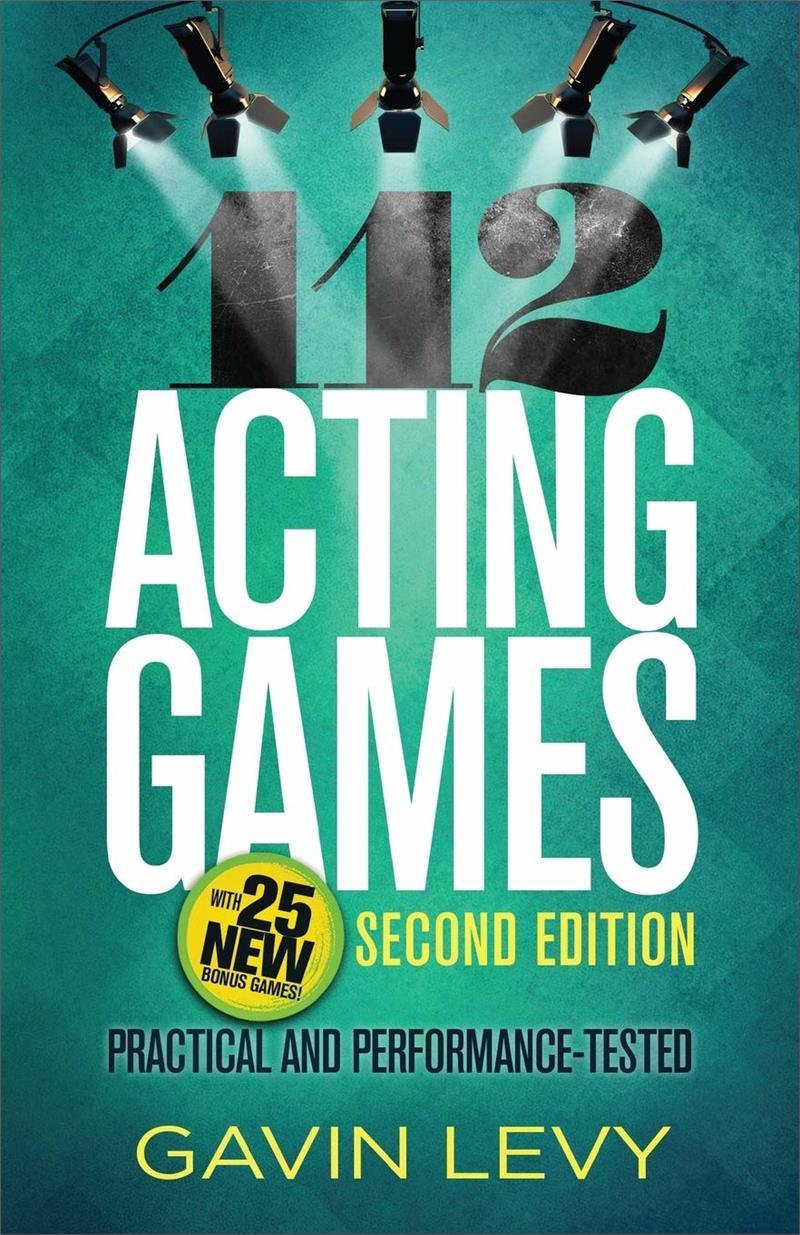
112 Acting Games
Gavin Levy
Improv for Actors
Dan Diggles

The Young Actor's Book of Improvisation
Dramatic Situations
Sandra Caruso; Susan Kosoff
Improvisation for the Theater
A Handbook of Teaching and Directing Techniques
Viola Spolin

Spontaneous Performance
Acting Through Improv
Marsh Cassady
Theater Games for Rehearsal
Viola Spolin
Related Exercises
Performance of an Audience
Performance of an Audience is an applied improvisation exercise that explores the reciprocal relationship between performer and spectator. Participants experience both roles, discovering how the quality of attention an audience gives shapes the performer's experience and how conscious, engaged witnessing differs from passive spectating. The exercise builds awareness that presence and attention are active contributions to any group interaction.
Low
Low is a status exercise in which performers practice playing the lowest-status character in a scene. The exercise trains the physicality of submission, deference, and self-deprecation. It builds awareness of how low status communicates through body language and vocal patterns, complementing high-status exercises.
Imitate
Imitate is an observation exercise in which players study and reproduce the specific physical mannerisms, vocal patterns, and behavioral habits of another person in the group. The exercise sharpens observational detail and builds the ability to embody external characteristics with precision. Close observation reveals how much personality is communicated through small, habitual movements: the way someone shifts weight, the rhythm of their speech, the angle of their head when listening. Imitate develops the skill set needed for character work grounded in real-world observation rather than invention.
Observe
Observe is an applied improvisation exercise in which participants practice deliberate, sustained observation of their environment, other people, or a group dynamic without intervening, interpreting, or acting. The exercise trains the foundational skill of seeing clearly before responding -- a capacity that underpins effective leadership, facilitation, and collaborative work.
Nonverbal Communication
Nonverbal Communication is an applied improvisation exercise in which participants interact, negotiate, and collaborate without spoken language, relying entirely on gesture, facial expression, body positioning, and physical presence. The exercise reveals how much information is transmitted nonverbally and trains participants to read and use body language with greater awareness and precision.
Making Faces
Making Faces is a warm-up exercise in which players practice exaggerated facial expressions, cycling through emotions, mirroring a partner, or responding to facilitator prompts. The exercise loosens inhibition around physical expressiveness and helps performers discover how facial choices communicate character and emotion instantly. Many performers rely primarily on voice and words; Making Faces redirects attention to the face as a primary communication instrument. The exercise serves as an accessible entry point for physical comedy work and character creation.
The Lineage
Explore the schools and structures that influenced or evolved from Acting Natural.
112 Acting Games (Levy)
How to Reference This Page
The Improv Archive. (2026). Acting Natural. Retrieved September 28, 2026, from https://improvarchive.org/exercises/acting-natural
The Improv Archive. "Acting Natural." The Improv Archive, 2026. https://improvarchive.org/exercises/acting-natural.
The Improv Archive. "Acting Natural." The Improv Archive, 2026, https://improvarchive.org/exercises/acting-natural. Accessed September 28, 2026.
The Improv Archive is a systemically maintained repository. The archive itself acts as the corporate author.