Alliances
Alliances is a spatial awareness exercise in which each player secretly selects one person in the group as their ally and another as their enemy, then moves through the space trying to keep the ally positioned between themselves and the enemy at all times. No one announces their choices, so the resulting group movement becomes complex, organic, and unpredictable as every participant simultaneously pursues their own spatial objective. The exercise produces a constantly shifting formation that resembles flocking behavior, with sudden accelerations, direction changes, and clusters forming and dissolving. Alliances develops spatial awareness, peripheral vision, and the ability to read and respond to group movement patterns without verbal communication. It also demonstrates how simple individual rules can generate complex group behavior, a principle that applies directly to ensemble scene work.
Structure
All players stand in an open space with enough room to move freely. The facilitator instructs each player to silently choose one other person as their ally and a different person as their enemy. These choices remain secret throughout the exercise.
On the facilitator's signal, everyone begins moving through the space with the goal of keeping their ally between themselves and their enemy at all times. Players must move continuously, adjusting their position as both their ally and their enemy shift. No running is allowed, and players should maintain awareness of the entire group to avoid collisions.
The exercise runs for several minutes as the group dynamics settle into patterns and then shift again. The facilitator may pause the action at intervals to check in or to ask players to observe the current formation. The exercise concludes when the facilitator calls a stop, at which point players can reveal their choices and discuss the movement patterns that emerged.
How to Teach It
How to Explain It
"Everyone walk through the space. You are going to secretly form an alliance with one other person. That person does not know they are your ally. Without speaking, without pointing, without breaking your movement: keep yourself equidistant between your ally and one other person you have also secretly chosen. Everyone has different choices. The patterns that emerge are the exercise."
Alliances works best with groups of eight or more. Smaller groups produce movement patterns that are too easy to read, reducing the exercise's complexity and challenge.
Introduce the exercise with clear, simple rules. Emphasize that choices must remain secret and that there is no talking during the movement phase. The secrecy is essential because it prevents players from negotiating or forming actual alliances, forcing everyone to rely on spatial reasoning alone.
Watch for players who stop moving when they achieve their desired position. Coach them to keep adjusting, since the system is inherently unstable and every player's movement affects everyone else. Stillness means the player has stopped responding to the group.
After the exercise, facilitate a discussion about what patterns emerged. Ask players whether they noticed clusters, chains, or orbiting behaviors. Connect these observations to scene work by discussing how individual choices create emergent group dynamics on stage.
A common variation reverses the rules: keep the enemy between yourself and your ally. This produces a different movement quality, often more cautious and circuitous. Another variation adds a third relationship, such as choosing someone to mirror, adding another layer of spatial complexity.
For applied improv settings, this exercise illustrates systems thinking and interdependence. Each person's movement affects the entire group, demonstrating how individual decisions in organizations create ripple effects across teams.
Worth Reading
See all books →
Business Improv
Experiential Learning Exercises to Train Employees
Val Gee

The Ultimate Improv Book
A Complete Guide to Comedy Improvisation
Edward J. Nevraumont; Kurt Smeaton; Nicholas P. Hanson

Group Improvisation
The Manual of Ensemble Improv Games
Peter Campbell Gwinn; Charna Halpern
Theater Games for Rehearsal
Viola Spolin
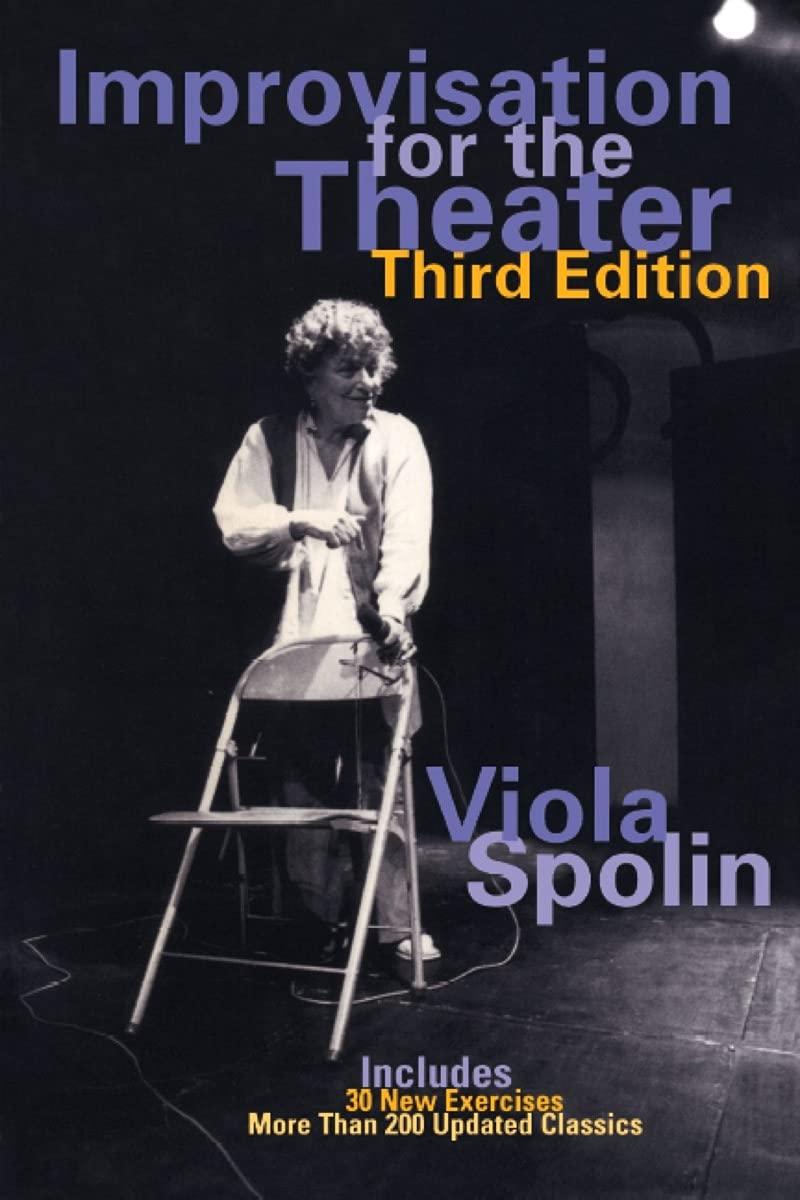
Improvisation for the Theater
A Handbook of Teaching and Directing Techniques
Viola Spolin
Theater Games for the Lone Actor
Viola Spolin
Related Exercises
Assassins
Assassins is a group awareness exercise in which each player secretly watches one specific person in the space. When the facilitator gives a signal, every player simultaneously points to the person they have been watching. The exercise reveals the web of attention in the room and is used to discuss group dynamics, observation, and the experience of being seen.
Triangles
Triangles is a movement exercise in which each player secretly selects two other people in the space and attempts to maintain an equilateral triangle with them as all players move simultaneously. Because everyone's target pairs are different and unknown to others, the formation shifts continuously with no fixed resolution. The exercise demonstrates how invisible individual choices produce complex collective patterns, and builds sustained spatial awareness and attention to others.
Predator/Defender
Predator Defender is an applied improvisation exercise from Putting Improv to Work in which each player secretly chooses one person as their predator and another as their defender. On the signal to move, everyone must keep their defender between themselves and their predator at all times, creating a dynamic, self-organizing system of constant movement.
Silent Organization
Silent Organization is an applied improvisation exercise in which the group must arrange themselves in a specific order without using any words, relying only on eye contact, gestures, and nonverbal negotiation. The exercise reveals how much communication is possible without language and how groups self-organize under constraint.
Flock Dance
Flock Dance is a group movement exercise in which all players move through the space together like a murmuration of birds or a school of fish, with leadership passing organically from player to player without spoken negotiation. Whoever is at the front of the group leads; as the group turns, a different player takes the front and assumes leadership automatically. The exercise trains ensemble sensitivity, the ability to lead and follow simultaneously, and group responsiveness without verbal coordination.
How to Reference This Page
The Improv Archive. (2026). Alliances. Retrieved September 28, 2026, from https://improvarchive.org/exercises/alliances
The Improv Archive. "Alliances." The Improv Archive, 2026. https://improvarchive.org/exercises/alliances.
The Improv Archive. "Alliances." The Improv Archive, 2026, https://improvarchive.org/exercises/alliances. Accessed September 28, 2026.
The Improv Archive is a systemically maintained repository. The archive itself acts as the corporate author.