Arm Tangle
Arm Tangle is a group problem-solving exercise in which players stand in a circle, reach across to grasp the hands of two different people, and then work together to untangle the resulting knot without releasing their grip. Also known as the Human Knot, the exercise builds group communication, spatial reasoning, and patient collaborative problem-solving.
Structure
Setup
Players stand in a circle, shoulder to shoulder. Each player extends both hands into the center.
Progression
Each player takes the hand of someone who is not standing directly beside them: left hand to one person, right hand to another. Once all hands are connected, the circle is a tangle.
The group must now untangle itself by stepping over, ducking under, and rotating through the connected chain without releasing any grip. Players may loosen their wrist hold to avoid discomfort, but hands must stay connected.
The goal is to return to a single unbroken circle, or to multiple interlocked circles if the tangle cannot resolve to one.
Conclusion
The exercise ends when the group untangles successfully or when forward progress has stopped and a debrief is more useful than continued effort.
How to Teach It
How to Explain It
"Reach into the middle. Take someone's left hand with your left hand and someone different's right hand with your right. Don't grab the person next to you. Once everyone's connected, your job is to untangle without letting go."
Objectives
This exercise develops group communication, collective problem-solving, and the ability to manage complexity without a single leader directing all decisions.
Common Notes
"Talk it through. What do you see? Who needs to go where?"
"Take your time. Rushing creates more tangles."
Common Pitfalls
Groups often try to solve the whole tangle at once rather than identifying and addressing one section at a time. The most common failure is rushing through a step and dropping hands. Encourage deliberate, sequential moves.
Worth Reading
See all books →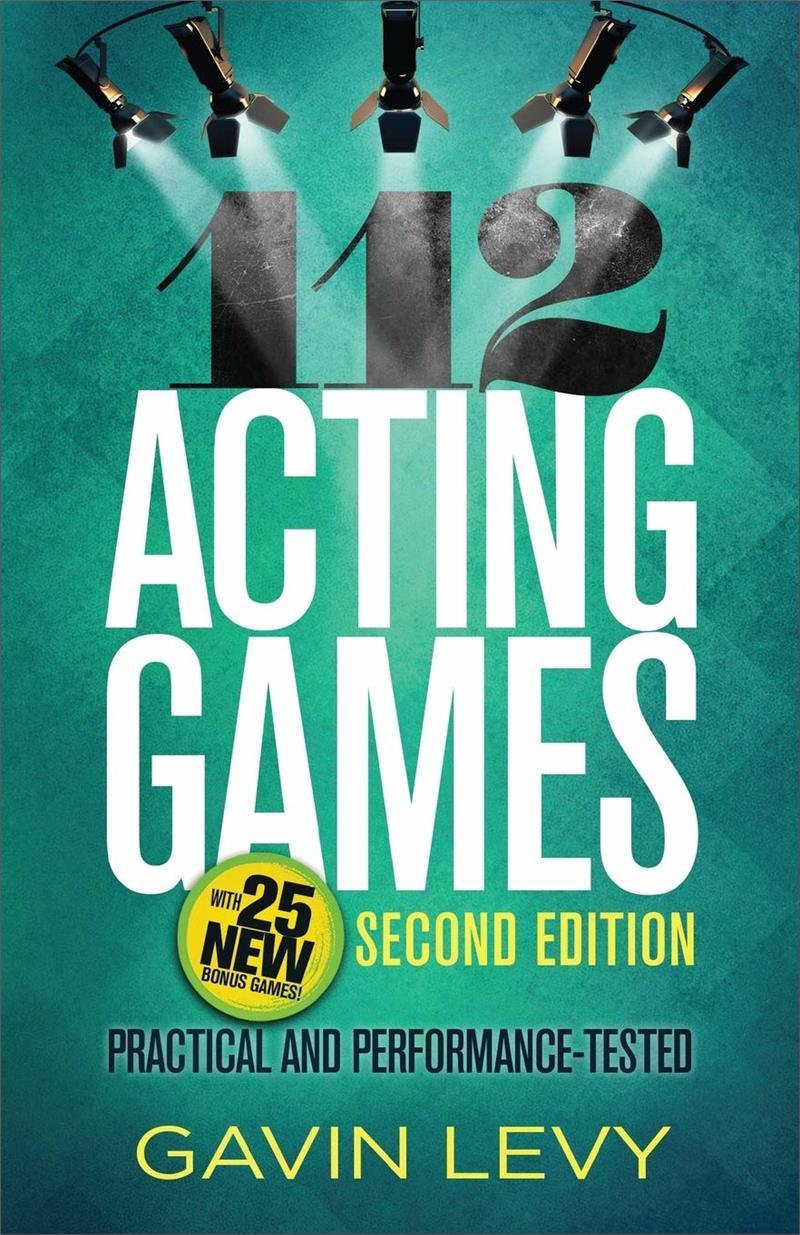
112 Acting Games
Gavin Levy

Group Improvisation
The Manual of Ensemble Improv Games
Peter Campbell Gwinn; Charna Halpern

Playing Along
37 Group Learning Activities Borrowed from Improvisational Theater
Izzy Gesell

Business Improv
Experiential Learning Exercises to Train Employees
Val Gee
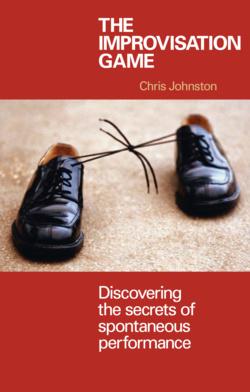
The Improvisation Game
Discovering the Secrets of Spontaneous Performance
Chris Johnston

Improvisation Starters
A Collection of 900 Improvisation Situations for the Theater
Philip Bernardi
Related Exercises
Human Knot
Human Knot is a group problem-solving exercise in which players reach across a circle to grab two different people's hands, then untangle the resulting knot without releasing their grip. The exercise requires patience, spatial reasoning, and collaborative communication. It is one of the most widely used team-building exercises across disciplines.
Circle of Knots
Circle of Knots is a group problem-solving exercise in which players reach across the circle to take two different hands, then work together to untangle the resulting human knot. The exercise requires patience, spatial reasoning, and collaborative communication. It is closely related to Arm Tangle and commonly used as an icebreaker.
Arm Link
Arm Link is a trust and coordination exercise in which two players link arms and navigate physical tasks together. The connection requires constant nonverbal communication and mutual adjustment, building sensitivity to a partner's weight, timing, and intention.
Hands in Circles
Hands in Circles is an applied group exercise in which participants stand in a circle and connect hands palm-to-palm with their neighbors. One person initiates a tap on a neighbor's palm, and the tap travels around the circle from person to person. The exercise builds basic group rhythm, shared attention, and the experience of something collectively maintained that would collapse if any one person dropped focus.
Squeezer
Squeezer is a circle exercise in which players stand holding hands and pass a squeeze around the group as quickly as possible. The squeeze can change direction or split into multiple signals. The exercise builds physical connectivity, group rhythm, and nonverbal communication skills.
Triangles
Triangles is a movement exercise in which each player secretly selects two other people in the space and attempts to maintain an equilateral triangle with them as all players move simultaneously. Because everyone's target pairs are different and unknown to others, the formation shifts continuously with no fixed resolution. The exercise demonstrates how invisible individual choices produce complex collective patterns, and builds sustained spatial awareness and attention to others.
The Lineage
Explore the schools and structures that influenced or evolved from Arm Tangle.
112 Acting Games (Levy)
How to Reference This Page
The Improv Archive. (2026). Arm Tangle. Retrieved September 28, 2026, from https://improvarchive.org/exercises/arm-tangle
The Improv Archive. "Arm Tangle." The Improv Archive, 2026. https://improvarchive.org/exercises/arm-tangle.
The Improv Archive. "Arm Tangle." The Improv Archive, 2026, https://improvarchive.org/exercises/arm-tangle. Accessed September 28, 2026.
The Improv Archive is a systemically maintained repository. The archive itself acts as the corporate author.