Bappety Boo
Bappety Boo is a focus and elimination exercise in which the person in the center of a circle points to someone and counts to a set number. The pointed-to player and their neighbors must complete an assigned physical task before the count finishes. Players who fail are eliminated or take the center. The game sharpens reaction time and group attention.
Structure
Setup
Players form a circle. One player stands in the center with a designated count (typically 5 or 10). Before the exercise begins, the group learns a small set of "poses" - coordinated physical actions assigned to each name (e.g., "Elephant" = center player makes a trunk while neighbors flap their arms as ears; "Cowboy" = center player aims a finger-gun while neighbors raise hands). The facilitator introduces two or three poses before play begins.
Round Play
The center player points at someone, calls a pose name (e.g., "Elephant!"), and begins counting aloud from the agreed number down to zero. The pointed-to player AND their immediate left and right neighbors must complete their respective roles in the pose before the count hits zero. Any player who fails, hesitates, or does the wrong part takes the center.
Variation: Elimination
In a competitive version, failed players are eliminated and the circle contracts. Play continues until two players remain - they can be declared joint winners, or the last center player wins.
Variation: New Poses
The facilitator can introduce additional poses mid-exercise to increase the cognitive load. Alternatively, players can vote on silly custom poses to build group ownership of the game.
Timing the Count
The center player controls the count speed. A generous facilitator counts slowly for beginners; competitive rounds use a rapid count. Coaches can adjust difficulty on the fly to keep the challenge level appropriate for the group.
How to Teach It
How to Explain It
"Stand in a circle. I'm going to teach you three poses - each one requires three people: the person pointed at and their two neighbors. When I point at you and call a pose, you and your neighbors have until I count down from five to complete your parts. Ready? Here are the poses..."
Teach the poses one at a time, rehearsing each slowly before combining them.
Why It Matters
Bappety Boo trains the ability to split attention - players must listen for their name, identify their role in the pose, AND move the body simultaneously. This mirrors the demands of ensemble improv, where performers must track scene information while executing physical choices. The group accountability (three people share each task) teaches players they are not performing alone.
Common Coaching Notes
- Teach poses thoroughly first. Rushing past the learning phase causes confusion that derails the exercise. Spend time getting all three roles right before adding the count.
- Use the count strategically. Start with a slow count (from 10) for new groups, a fast count (from 5) for groups that need more urgency.
- Celebrate clean poses. When all three players nail it, acknowledge it briefly. It reinforces what successful coordination looks like.
- Watch the neighbors. New players often focus only on the center person. Remind the circle: "Your neighbors' success is your responsibility."
Debrief Questions
- What made it hard to respond in time?
- When did you start thinking about your part in the pose?
- How is this similar to listening in a scene?
Worth Reading
See all books →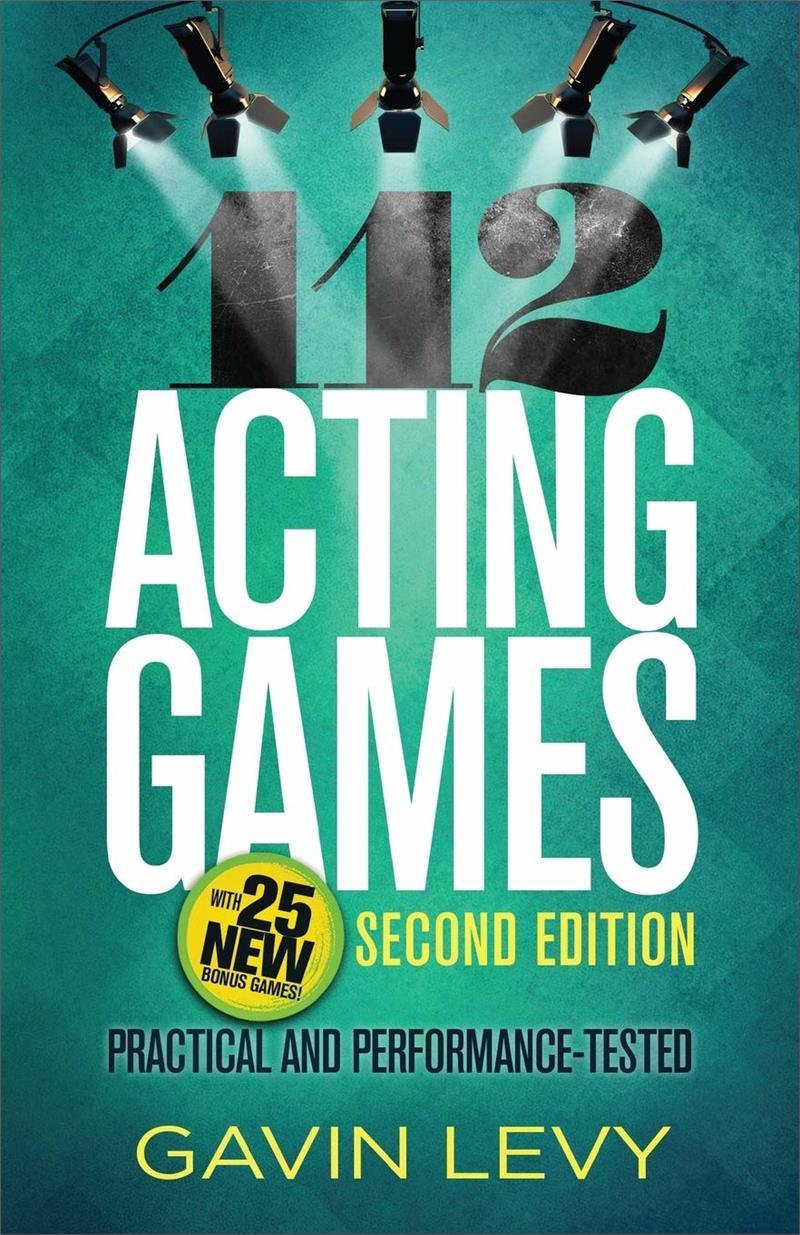
112 Acting Games
Gavin Levy
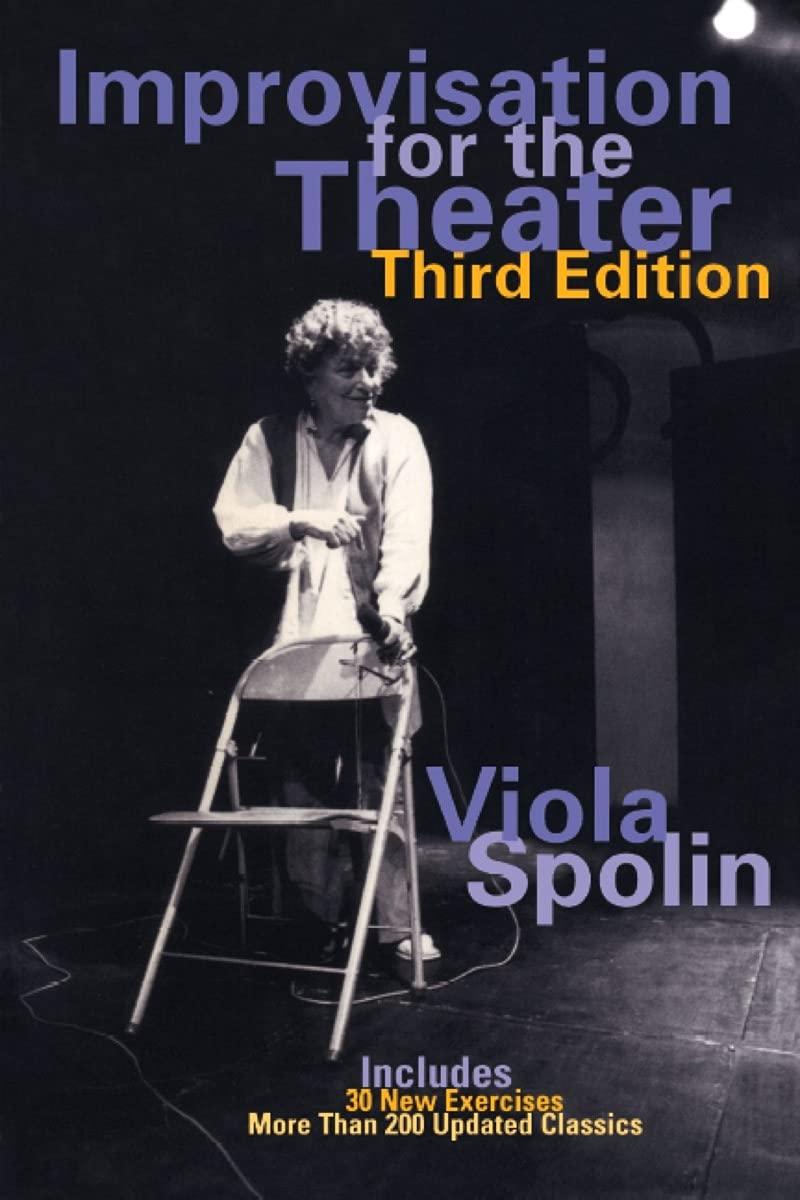
Improvisation for the Theater
A Handbook of Teaching and Directing Techniques
Viola Spolin
The Improvisation Game
Discovering the Secrets of Spontaneous Performance
Chris Johnston
Theater Games for Rehearsal
Viola Spolin

Business Improv
Experiential Learning Exercises to Train Employees
Val Gee

The 5 Elements of Improv
How to Take Your Improv to the Next Level
Andrew M. Spragge; Karen L. Eichler
Related Exercises
Elephant
Elephant is a high-energy circle exercise in which a center player points to someone in the circle and calls out an animal name. The targeted player and their two immediate neighbors must quickly form a three-person physical representation of that animal before the center player finishes a count. Different animals require different configurations: the center player forms the trunk for an elephant while the neighbors create the ears, or the center player mimes holding a fishing rod while the neighbors become the fish. Incorrect or slow responses send a player to the center. The exercise builds reaction speed, peripheral awareness, physical commitment, and comfort with looking foolish.
Bippety Bop
Bippety Bop (1) is a focus and elimination game in which the center player points to someone and says either "Bippety Bop" or "Bop." The target must stay silent for "Bop" and say "Bop" before the pointer finishes "Bippety Bop." Errors send the target to the center. The game trains split-second listening and impulse control.
Bibbidy Bibbidy Bop
Bibbidy Bibbidy Bop is a fast-paced circle game in which the person in the center points to someone and says a phrase. The pointed-to player and their neighbors must complete a physical pose before the center player finishes saying "Bibbidy Bibbidy Bop." Whoever fails takes the center. The game sharpens focus, listening, and reaction speed.
Bunny
Bunny is a high-energy circle exercise in which players pass a rhythmic pattern around the group through a combination of chanted sounds and synchronized gestures. The player designated as the bunny performs a central action, typically holding both hands beside the head like ears while chanting "bunny bunny," while the two players on either side perform complementary supporting gestures. The bunny then passes to another player across the circle, and the pattern repeats with increasing speed. The exercise builds group rhythm, peripheral awareness, and comfort with looking foolish. It is widely used as a warm-up in both theatrical and corporate training contexts, valued for its ability to lower inhibitions, demand focus, and generate collective energy through structured silliness.
Count Off
Count Off is a group focus exercise in which players attempt to count to a target number, one person speaking at a time, without any predetermined order or pattern. If two or more players speak simultaneously, the count restarts from one. No gestures, signals, or eye contact are permitted to coordinate turns. The exercise trains group sensitivity, the ability to read collective impulse, and the patience to find the right moment to contribute. Count Off reveals the ensemble's current level of attunement: a group that can consistently reach high numbers has developed a shared awareness that transfers directly to scene work.
Clown 12345
Clown 12345 is a clowning exercise that progresses through five numbered stages of physical and emotional exposure, developing performers' comfort with presence, visibility, and playful self-expression. Each stage increases the degree to which the performer is fully available to be seen, culminating in full clown engagement with no protective distance between the performer and the audience.
How to Reference This Page
The Improv Archive. (2026). Bappety Boo. Retrieved September 28, 2026, from https://improvarchive.org/exercises/bappety-boo
The Improv Archive. "Bappety Boo." The Improv Archive, 2026. https://improvarchive.org/exercises/bappety-boo.
The Improv Archive. "Bappety Boo." The Improv Archive, 2026, https://improvarchive.org/exercises/bappety-boo. Accessed September 28, 2026.
The Improv Archive is a systemically maintained repository. The archive itself acts as the corporate author.