Breathing
Breathing is a foundational warm-up exercise in which performers practice controlled inhalation and exhalation to release physical tension, quiet mental chatter, and center their focus before rehearsal or performance. Variations include diaphragmatic breathing, counted breath patterns, and synchronized group breathing in which an ensemble inhales and exhales together. The exercise builds awareness of the body as an instrument, training performers to recognize and release habitual tension patterns that restrict vocal production, physical freedom, and emotional availability. Breathing exercises appear across virtually every performance training tradition, from Viola Spolin's theatre games to Augusto Boal's actor preparation sequences, and remain one of the most universally practiced warm-up activities in both theatrical and applied improvisation contexts.
Structure
Players stand or sit in a relaxed position, feet shoulder-width apart if standing, hands resting at the sides or on the abdomen. The facilitator guides the group through a series of breath cycles.
The basic cycle begins with a slow inhalation through the nose, filling the diaphragm rather than the chest. The facilitator counts the duration of the inhale (typically four counts), instructs players to hold the breath briefly (two counts), then release through the mouth over a longer exhale (six to eight counts). This pattern repeats for several rounds.
Variations increase complexity. In counted breathing, the facilitator gradually extends the count for each phase. In tension-release breathing, players tense a specific muscle group during the inhale and release it completely on the exhale, progressing systematically from feet to face. In synchronized group breathing, the ensemble attempts to breathe as a single organism, matching rhythm without verbal coordination.
The exercise concludes with a moment of stillness in which players observe the quality of their attention and physical state before transitioning to the next activity.
How to Teach It
Objectives
- settle the group before more demanding warm-ups begin
- shift players out of shallow chest breathing and into fuller breath support
- release visible tension in the jaw, shoulders, hands, and abdomen
- build shared attention before the room moves into partner or ensemble work
How to Explain It
Stand comfortably and let the breath drop lower than your chest. We are going to breathe in slowly, hold for a moment, and let the exhale be longer than the inhale.
Keep your shoulders easy. If you feel yourself forcing the breath, do less and make the breath smoother instead.
Playing Notes
- Start with the plainest version first: inhale, brief hold, long exhale.
- Ask players to place a hand on the abdomen if they keep lifting the shoulders.
- Keep the count slow enough that the room relaxes instead of competing to hit the number.
- Use tension-release breathing only after the base pattern is calm and clear.
- Let the final round end in a few seconds of stillness before moving on.
When The Exercise Loses Clarity
- Players pull the breath high into the chest. Why it happens: they are trying to breathe bigger instead of breathing lower and calmer.
- The room rushes the count. Why it matters: the exercise turns into performance instead of release and focus.
- Players tense the whole body during tension-release work. Why it happens: they have not isolated the target muscle group.
- The coach moves on too quickly. Why it matters: the exercise only does its job when the room has time to settle.
Notes That Appear Directly in Source Material
- 112 Acting Games documents a progressive tension-release sequence in which players tense and release the body one area at a time while breathing in and out.
- Improv for Actors recommends letting comfort guide the standing position and using a slow counted sequence to deepen relaxation rather than forcing endurance.
- Games for Actors and Non-Actors includes breathing patterns tied to body movement, reinforcing breath awareness as part of full-body preparation.
Worth Reading
See all books →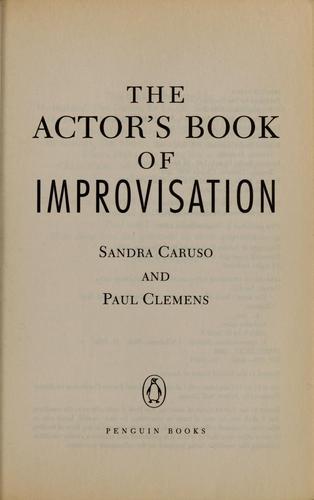
The Actor's Book of Improvisation
Sandra Caruso; Paul Clemens

Theatrical Improvisation
Short Form, Long Form, and Sketch-Based Improv
Jeanne Leep

Devising Performance
A Critical History
Deirdre Heddon; Jane Milling

Devising Theatre
A Practical and Theoretical Handbook
Alison Oddey

Mask Improvisation for Actor Training and Performance
the compelling image
Sears A. Eldredge

Acting Up!
An Innovative Approach to Creative Drama for Older Adults
Marcie Telander; Flora Quinlan; Karol Verson
Related Exercises
Stretching
Stretching is a physical warm-up practice in which performers release tension and increase range of motion through guided or self-directed body movement before a rehearsal or performance. The practice grounds players in their bodies, signals the transition from everyday life into creative readiness, and reduces the risk of physical strain during exercises that involve movement, physicality, or sustained ensemble work.
Primal Screams
Primal Screams is a vocal and physical warm-up exercise in which players release tension through full-body vocalization. Participants produce loud, uninhibited sounds, shedding self-consciousness and activating the vocal instrument before a rehearsal or performance.
Heartbeat
Heartbeat is a focus and relaxation exercise in which players find their own pulse and use the rhythm as a centering tool. The heartbeat becomes an anchor for concentration and physical presence, quieting external distractions and connecting performers to their own bodies before work begins. The exercise creates a transition from the outside world into the rehearsal or performance space, establishing the focused, present state that improvisation requires.
Volcano
Volcano is a group warm-up exercise in which the ensemble builds collective vocal and physical energy gradually from silence to a full explosive release, then returns to silence. The exercise calibrates the group's shared energy and teaches performers to build and release intensity together as a single unit. It functions as an energizer and ensemble-synchronization exercise.
Loosen Up
Loosen Up is an applied improv physical warm-up exercise that targets the release of habitual physical tension, protective body posture, and the physical holding patterns that individuals bring into group settings. The exercise uses guided physical movement, shaking, and release to help participants arrive more fully in their bodies before group work begins, reducing the physical constriction that inhibits spontaneity, voice, and physical expressiveness.
Trust Exercise
Trust Exercise is an ensemble warm-up in which players practice physical vulnerability and mutual support through structured trust-fall and trust-lift configurations. One player allows their body to be caught, supported, or passed by the group, developing the physical and psychological openness that ensemble ensemble work requires. The exercise builds ensemble cohesion by making reliance on others literal and concrete.
The Lineage
Explore the schools and structures that influenced or evolved from Breathing.
112 Acting Games (Levy)
How to Reference This Page
The Improv Archive. (2026). Breathing. Retrieved September 28, 2026, from https://improvarchive.org/exercises/breathing
The Improv Archive. "Breathing." The Improv Archive, 2026. https://improvarchive.org/exercises/breathing.
The Improv Archive. "Breathing." The Improv Archive, 2026, https://improvarchive.org/exercises/breathing. Accessed September 28, 2026.
The Improv Archive is a systemically maintained repository. The archive itself acts as the corporate author.