Loosen Up is an applied improv physical warm-up exercise that targets the release of habitual physical tension, protective body posture, and the physical holding patterns that individuals bring into group settings. The exercise uses guided physical movement, shaking, and release to help participants arrive more fully in their bodies before group work begins, reducing the physical constriction that inhibits spontaneity, voice, and physical expressiveness.
Structure
Setup
Participants stand with adequate personal space. The facilitator introduces the exercise as a physical reset -- an invitation to release the tension accumulated from the day before entering the work of the session.
Progression
The facilitator guides participants through a progressive loosening sequence: beginning with the extremities (shaking out the hands, rotating the wrists, rolling the shoulders), moving through the torso (gentle spinal rotations, releasing the chest and upper back), and ending with the feet, ankles, and legs.
Throughout the sequence, the facilitator encourages sound to accompany movement -- sighs, vocalizations, or loose vocal sounds that help release breath and voice along with physical tension.
Conclusion
The exercise ends after a full-body loosening sequence, with participants invited to take a moment of stillness to notice the difference between their body's state at the start and its state now.
How to Teach It
Objectives
Loosen Up targets the physical constriction that participants bring into group settings and that inhibits full physical and vocal expressiveness. It establishes a physical baseline of openness before the ensemble begins scene work, voice work, or character-based exercises.
How to Explain It
"Let's start by getting out of your head and into your body. Whatever you're carrying in your shoulders, your jaw, your chest -- we're going to shake it out. There's no right way to do this. Just let the tension move."
Scaffolding
Begin with the least socially exposed areas of the body (hands, shoulders) before moving to areas where release requires more vulnerability (jaw, pelvis, breath). Allow extended time in any area where participants appear to be holding significant tension.
Common Pitfalls
Participants often perform loosening rather than actually releasing, moving through the gestures without genuine muscular release. Coach the group to attend to sensation rather than appearance -- not to look like they are loosening up, but to feel the difference in their body as tension releases.
In Applied Settings
Learning Objectives
Loosen Up trains participants to arrive in a group setting with physical openness rather than the protective physical constriction that most adults carry from daily professional life. The exercise develops physical awareness and the capacity for voluntary tension release -- skills that support presence, voice quality, physical expressiveness, and the willingness to take physical or social risks in group settings.
Workplace Transfer
Professional environments create and sustain significant physical tension: desk posture, email attention, meeting performance, and the social management required in hierarchical groups all produce characteristic holding patterns in the jaw, shoulders, chest, and abdomen. These patterns constrain voice, expressiveness, and the physical spontaneity that applied improv activities require. Loosen Up creates a brief but deliberate reset that prepares participants to engage more fully in the physical and social dimensions of the session that follows. Facilitators who skip this step often encounter groups whose physical constriction limits the quality of their participation throughout the session.
Facilitation Context
Loosen Up is used as an opening warm-up in corporate workshops, team-building sessions, leadership development programs, and any applied improv facilitation where participants are arriving directly from desk work, transit, or high-performance professional environments. It works for groups of any size and requires only standing room. It is particularly valuable for groups that include senior leaders or executives who may be unaccustomed to physical warm-up activities in professional settings.
Debrief Framing
A formal debrief is not typically required for Loosen Up. The facilitator may briefly invite participants to notice the difference in their physical state before transitioning to the main activity. If used with a group that is discussing physical well-being, workplace ergonomics, or body-based communication, a brief group reflection on where tension was held and what released it can be a useful bridge into the session's content.
Skills Developed
Worth Reading
See all books →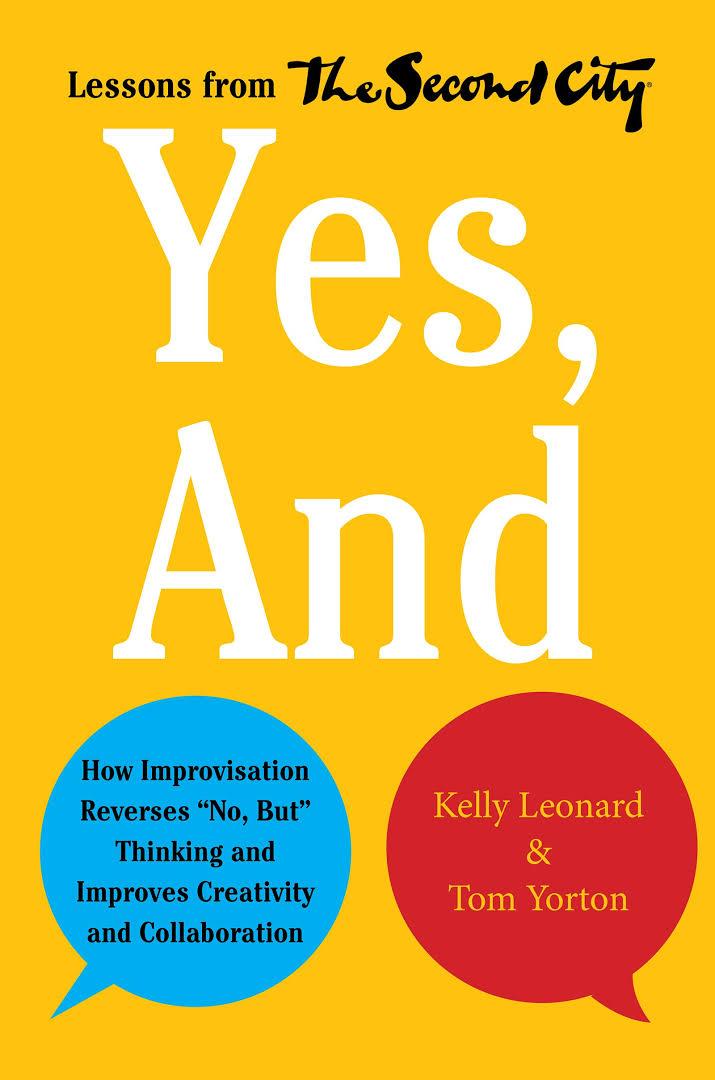
Yes, And
How Improvisation Reverses No, But Thinking and Improves Creativity and Collaboration
Kelly Leonard; Tom Yorton

Business Improv
Experiential Learning Exercises to Train Employees
Val Gee

The Second City Unscripted
Revolution and Revelation at the World-Famous Comedy Theater
Mike Thomas

The Routledge Companion to Improvisation in Organizations
Miguel Pina e Cunha; Dusya Vera; António Cunha Meneses

Improve
How I Discovered Improv Comedy and Conquered Social Anxiety
Alex Graudins

Applied Improvisation
Leading, Collaborating, and Creating Beyond the Theatre
Theresa Robbins Dudeck; Caitlin McClure
Related Exercises
Stretching
Stretching is a physical warm-up practice in which performers release tension and increase range of motion through guided or self-directed body movement before a rehearsal or performance. The practice grounds players in their bodies, signals the transition from everyday life into creative readiness, and reduces the risk of physical strain during exercises that involve movement, physicality, or sustained ensemble work.
Breathing
Breathing is a foundational warm-up exercise in which performers practice controlled inhalation and exhalation to release physical tension, quiet mental chatter, and center their focus before rehearsal or performance. Variations include diaphragmatic breathing, counted breath patterns, and synchronized group breathing in which an ensemble inhales and exhales together. The exercise builds awareness of the body as an instrument, training performers to recognize and release habitual tension patterns that restrict vocal production, physical freedom, and emotional availability. Breathing exercises appear across virtually every performance training tradition, from Viola Spolin's theatre games to Augusto Boal's actor preparation sequences, and remain one of the most universally practiced warm-up activities in both theatrical and applied improvisation contexts.
Let Go
Let Go is an applied improv exercise in which participants practice releasing attachment to a fixed idea, plan, or direction and accepting a changed course offered by the group or a partner. Drawn from applied improv practice, the exercise trains adaptability and the psychological skill of redirecting investment from a discarded option toward a new one without resistance, resentment, or prolonged negotiation.
Primal Screams
Primal Screams is a vocal and physical warm-up exercise in which players release tension through full-body vocalization. Participants produce loud, uninhibited sounds, shedding self-consciousness and activating the vocal instrument before a rehearsal or performance.
Barney
Barney is an energy and movement warm-up exercise in which players adopt an exaggerated, lumbering physical character and interact with the group through simple, playful commands. The exercise asks participants to embody a large, slow, friendly creature (often described as a dinosaur or monster) and move through the space with maximum physical commitment and minimum self-consciousness. The inherent silliness of the character lowers inhibitions quickly, making Barney effective as an early warm-up for groups that are new to physical work or uncomfortable with large physical choices. The exercise builds comfort with exaggerated movement, vocal projection, and the willingness to look ridiculous in front of others, all foundational skills for improv performance.
Exposure
Exposure is an applied improv exercise in which two groups stand in lines facing each other and simply look at one another in silence. Once the discomfort of sustained mutual gaze becomes visible, the facilitator invites participants to name what they are noticing in their own experience. The exercise makes vulnerability and the discomfort of being seen conscious and discussable, preparing groups for deeper collaborative or expressive work.
The Lineage
Explore the schools and structures that influenced or evolved from Loosen Up.
Business Improv (Gee & Gee)
How to Reference This Page
The Improv Archive. (2026). Loosen Up. Retrieved September 28, 2026, from https://improvarchive.org/exercises/loosen-up
The Improv Archive. "Loosen Up." The Improv Archive, 2026. https://improvarchive.org/exercises/loosen-up.
The Improv Archive. "Loosen Up." The Improv Archive, 2026, https://improvarchive.org/exercises/loosen-up. Accessed September 28, 2026.
The Improv Archive is a systemically maintained repository. The archive itself acts as the corporate author.